MELON WINE
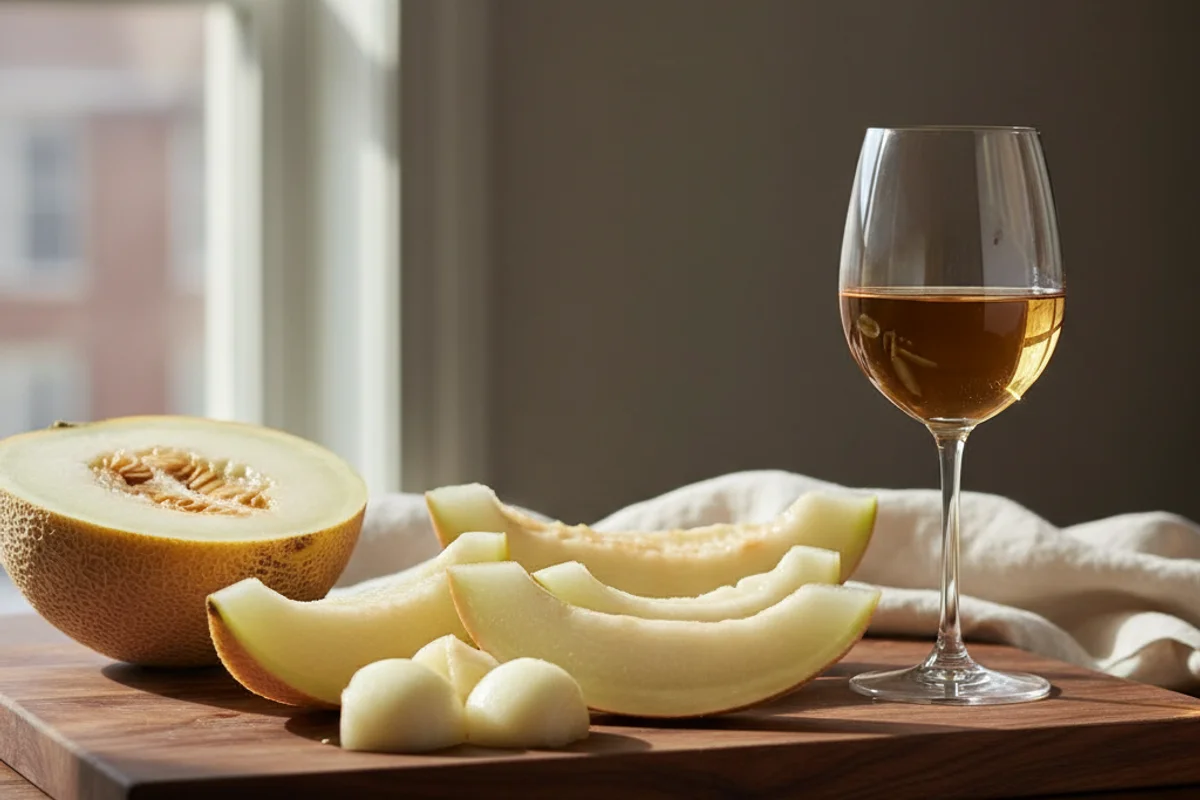
Melon is mostly water — which sounds like a problem until you realize that water is exactly what wine is made from. The trick is coaxing out the delicate, almost floral sweetness hiding inside that flesh before fermentation steamrolls it. Honeydew brings a cool, green-tinged gentleness. Cantaloupe goes warmer and musky. Mix them and you get something that smells like a farmers market in a glass. This recipe works with any melon you can find, and the white grape juice concentrate acts as a quiet backbone, giving the finished wine something to stand on without shouting “grape.”
The beginner trap: Melon aromatics are fragile — rushing fermentation at too high a temperature will cook off the delicate fruit notes you worked to capture, leaving a wine that tastes thin and vaguely alcoholic.
Ingredients
- 3–4 lbs very ripe melon, any variety (fresh or frozen), peeled, seeded, and chunked
- 1 lb granulated white sugar, plus a little extra for gravity adjustments
- 1 can (12 oz) frozen white grape juice concentrate, thawed
- 3½ quarts water
- 2 tsp acid blend (or 2 tsp lemon juice as a grocery-store stand-in)
- 1 crushed Campden tablet (one-half teaspoon potassium metabisulfite powder works too)
- 1 tsp yeast nutrient
- 1 packet Champagne wine yeast (or any dry wine yeast rated for light fruit wines)
Method
- Peel, seed, and cut your melon into rough chunks, then place them inside a fine mesh straining bag, tie it shut, and set it in the bottom of your primary fermenter.
- Crush the bagged melon with your hands until most of the flesh is broken up and juicy.
- Bring the water to a boil, dissolve the sugar completely into it, then pour the hot sugar water over the bag of melon in the primary.
- Cover the primary and let the must cool to room temperature — this takes several hours, so be patient.
- Once cool, stir in the grape juice concentrate, acid blend, Campden tablet, and yeast nutrient.
- Check the specific gravity with your hydrometer; add small amounts of sugar and stir until the reading reaches 1.088, then cover the primary and leave it alone for 24 hours.
- After 24 hours, sprinkle in the yeast, cover again, and give the bag a gentle squeeze once a day to help extract juice.
- When the specific gravity drops to 1.020, lift the bag out and let it drip-drain back into the primary without squeezing — then discard the pulp.
- Let the must settle overnight, then rack the liquid into a clean one-gallon secondary fermenter, fit an airlock, and set it somewhere cool and stable.
- After two weeks, rack again into a clean vessel, top up to minimize headspace, and refit the airlock.
- Once the wine runs clear, add a stabilizer (potassium sorbate plus a fresh Campden tablet), sweeten to taste if desired, wait 10 days, then bottle.
- Age at least 6 months before drinking, and serve chilled.
Why this works
Melon flesh is high in water and relatively low in fermentable sugar and acid, which is why this recipe leans on added sugar to hit a target gravity and acid blend to build structure. Without enough acid, a finished melon wine tastes flat and formless — technically fermented but missing the brightness that makes wine refreshing. The white grape concentrate solves a different problem: melon alone lacks the tannins and complex sugars that give wine body, so the concentrate quietly fills that gap. Champagne yeast is a good fit here because it ferments cleanly and doesn’t dump a lot of its own flavor into a delicate must, letting the melon character stay in the foreground.
Notes
Frozen melon chunks work well and are often riper and more flavorful than off-season fresh fruit — thaw completely before use and include all the liquid. If you can’t find acid blend at a homebrew shop, fresh lemon juice is a workable substitute, though it adds a slight citrus note. Any variety of melon — honeydew, cantaloupe, watermelon, crenshaw, or a mix — follows the same process with no adjustments needed.