HUCKLEBERRY WINE
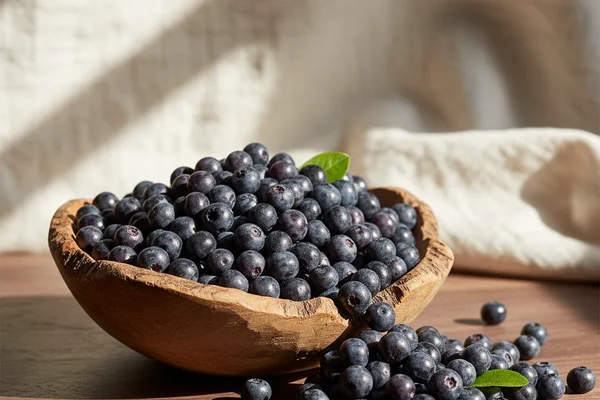
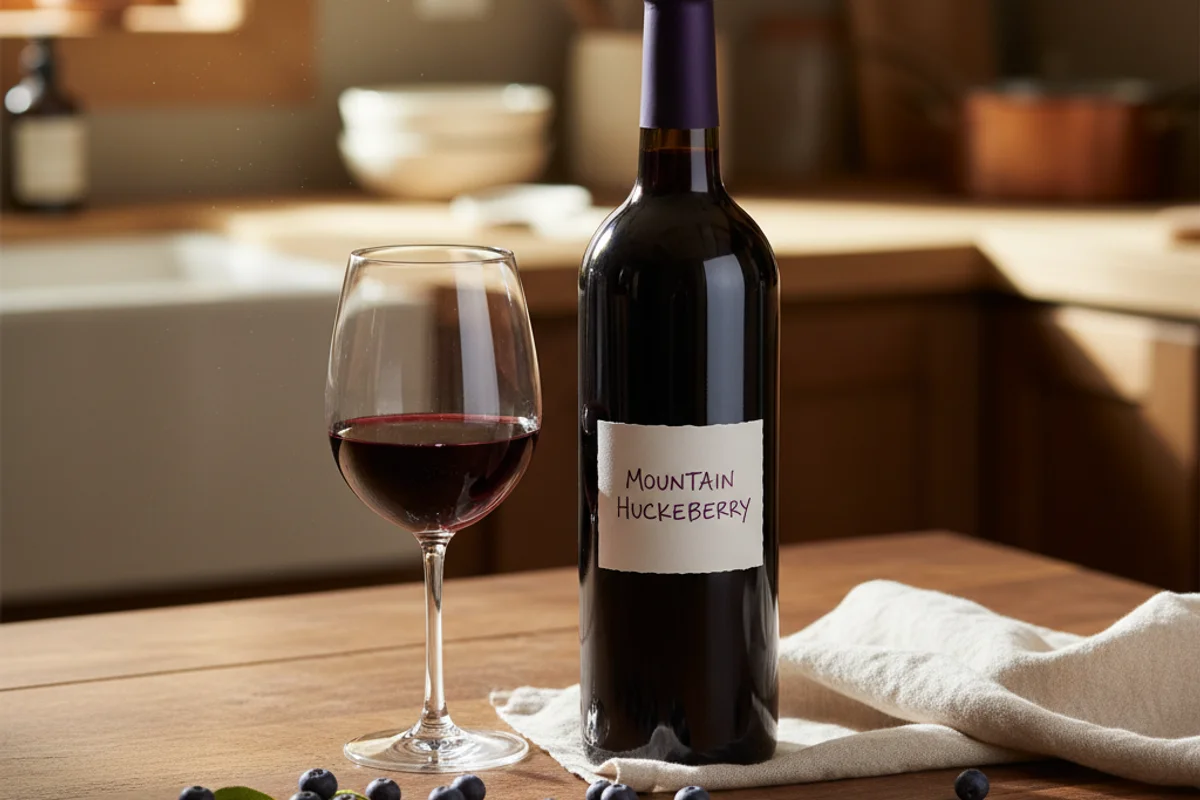
Think of huckleberries as blueberries that skipped charm school. They’re darker, seedier, and more intense — jet black at peak ripeness, with a deep, earthy sweetness that blueberries can only dream about. They grow wild across eastern North America, often hiding in plain sight next to their better-known cousins. Turn them into wine and you get something smooth, richly colored, and complex enough to make people ask what grape you used. The answer will surprise them.
The beginner trap: Squeezing the fruit bag when straining pulls bitter seed tannins into your wine — let it drip drain on its own and walk away.
Ingredients
- 4 lbs huckleberries, fresh or frozen
- 1¾ lbs granulated white sugar
- 1½ tsp acid blend (find it at any homebrew shop, or use 1 tsp lemon juice as a rough stand-in)
- 1 tsp yeast nutrient
- 1 Campden tablet, crushed
- 7¼ pts (about 3.6 quarts) water
- 1 packet Champagne wine yeast (or any dry wine yeast)
Method
- Bring the water to a full boil, then set it aside while you sort and rinse the berries, pulling out anything soft, shriveled, or unripe.
- Place the berries in your primary fermenter and crush them thoroughly with a sanitized potato masher.
- Add the sugar directly to the mashed fruit, then pour the hot water over everything and stir until the sugar fully dissolves.
- Cover the fermenter with a sanitized cloth and let it cool completely to room temperature — rushing this step can kill your yeast later.
- Once cool, stir in the acid blend, yeast nutrient, and crushed Campden tablet. Cover again and leave it alone for 24 hours.
- Activate your yeast according to the packet instructions, then pitch it into the must.
- Once fermentation kicks into high gear, stir the must twice a day for 10 days.
- Pour the must through a nylon straining bag set over your secondary fermenter and let it drip drain for 30–45 minutes — do not squeeze the bag.
- Transfer the strained juice into your secondary, fit an airlock, and move it somewhere with a stable temperature.
- Rack the wine every 60 days for 6 months, topping up the vessel and reattaching the airlock each time.
- At the final racking, either bottle straight away or stabilize the wine, sweeten to taste, wait 10 days, then bottle.
Why this works
Huckleberries carry almost no wild yeast on their skins — that’s why the recipe adds Campden first and then introduces a reliable commercial strain. You’re not fighting off rogue organisms; you’re just building a clean slate. The 24-hour wait after adding Campden lets the sulfite do its protective work before the yeast goes in. Straining without squeezing matters because those 10 seeds per berry are loaded with tannins. Gentle drip draining pulls out color and flavor while leaving harsh, astringent compounds behind in the pulp. The result — after six months of patient racking — is a wine that’s surprisingly soft for a dark berry.
Notes
Frozen huckleberries work beautifully here and are often easier to find than fresh ones; thaw them fully before mashing. If you can’t source huckleberries at all, wild or cultivated blueberries make a very close substitute at the same weight. Acid blend is available at homebrew retailers online if local shops don’t carry it.