Huckleberries
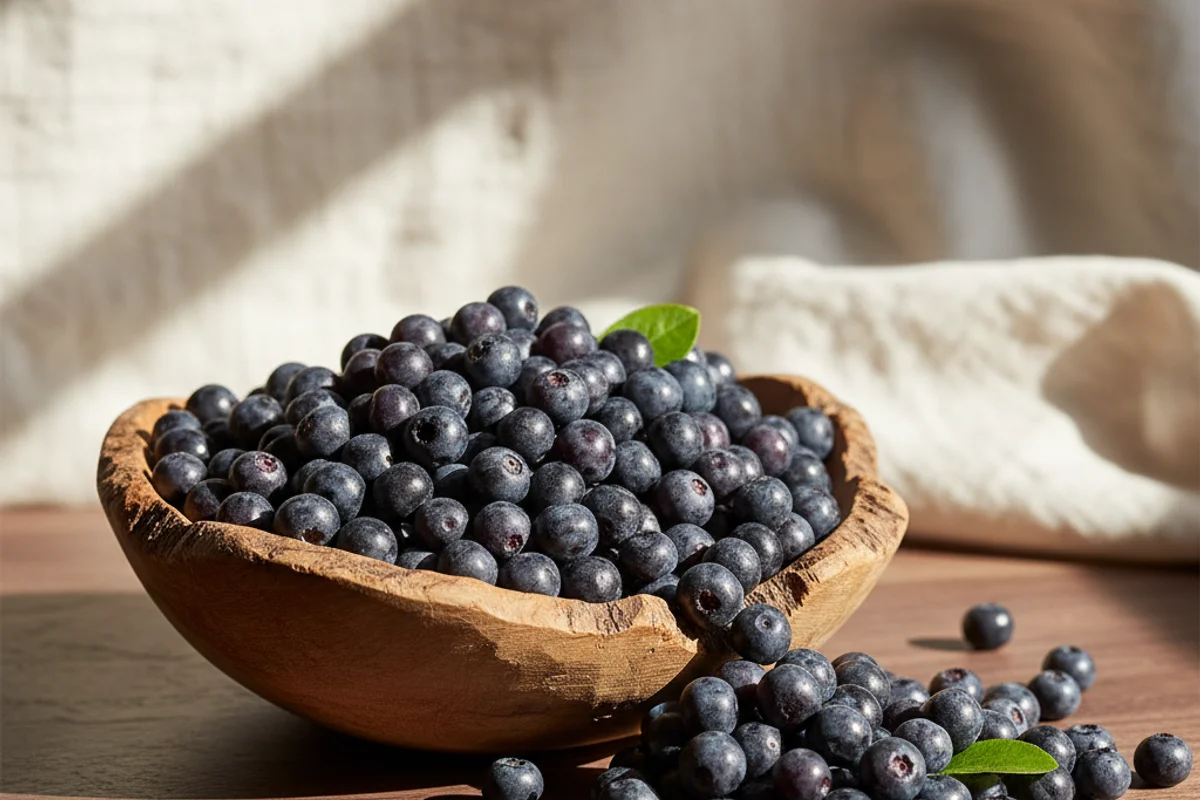
Think of the huckleberry as the blueberry’s wilder, more intense cousin — jet black at peak ripeness, with a deeper, earthier flavor and none of the mild sweetness you’d expect from a supermarket blueberry. Unlike blueberries, huckleberries carry almost no wild yeast on their skins, which actually works in your favor: you get a clean fermentation with no unexpected characters along for the ride. The finished wine is remarkably smooth, with a dark berry depth that holds up beautifully even after six months of patient aging.
The beginner trap: Squeezing the fruit bag during straining — it forces bitter seed tannins and pulp solids into your wine, muddying the flavor you worked months to develop.
Ingredients
- 4 lbs huckleberries, fresh or frozen
- 2½ lbs granulated white sugar
- 1½ tsp acid blend (available at homebrew shops; substitute 1 tsp lemon juice per ½ tsp as a grocery-store workaround)
- 1 tsp yeast nutrient
- 1 Campden tablet, crushed
- 7¼ pts (about 3.6 quarts) water
- 1 packet Champagne wine yeast (Red Star or Lalvin EC-1118 work well)
Method
- Bring the water to a full boil. While it heats, sort through the berries and discard any that look soft, shriveled, or unripe, then rinse them well.
- Place the berries in your primary fermenter and crush them thoroughly with a sanitized potato masher or the back of a large spoon.
- Add the sugar to the crushed berries, then pour the boiling water over everything and stir until the sugar fully dissolves.
- Cover the fermenter with a sanitized cloth and let the must cool to room temperature (around 70°F).
- Once cool, add the acid blend, yeast nutrient, and crushed Campden tablet. Stir well, re-cover, and leave it alone for 24 hours.
- Activate your yeast according to the packet directions, then pitch it into the must.
- Once fermentation is active and vigorous, stir the must twice a day for 10 days.
- Pour the must through a nylon straining bag set over your secondary fermenter. Let it drip-drain for 30–45 minutes — do not squeeze the bag.
- Transfer the strained juice into your secondary fermenter, fit an airlock, and set it somewhere stable.
- Rack the wine every 60 days for 6 months, topping up with a small amount of similar wine or water each time to minimize headspace, then refit the airlock.
- At the final racking, either bottle directly or stabilize with potassium sorbate, sweeten to taste, wait 10 days, then rack into bottles.
Why this works
Huckleberries naturally lack the waxy bloom of wild yeast that coats most foraged fruit. That means the Campden tablet isn’t fighting a huge microbial load — it’s mostly knocking out any stray bacteria or environmental yeast picked up during handling. The 24-hour rest after adding sulfite lets the gas dissipate before you pitch your chosen yeast, so the Champagne strain gets a clean environment to dominate. Champagne yeast is a strong finisher — it tolerates higher alcohol levels and keeps chugging through a dense, sugar-rich must that might stall a weaker strain. The long, slow aging cycle (six months of racking every two months) gives tannins from the skins and seeds time to precipitate out, which is exactly why the finished wine ends up so smooth.
Notes
Frozen huckleberries work great here and are often easier to find than fresh — freezing breaks down the cell walls, so you actually get better juice yield when you crush them. If you can’t find huckleberries at all, wild blueberries (fresh or frozen, sold at most grocery stores) make a very close substitute with similar body and color. If the finished wine tastes flat after aging, a small addition of acid blend at bottling time can lift the flavor noticeably.