Huisache
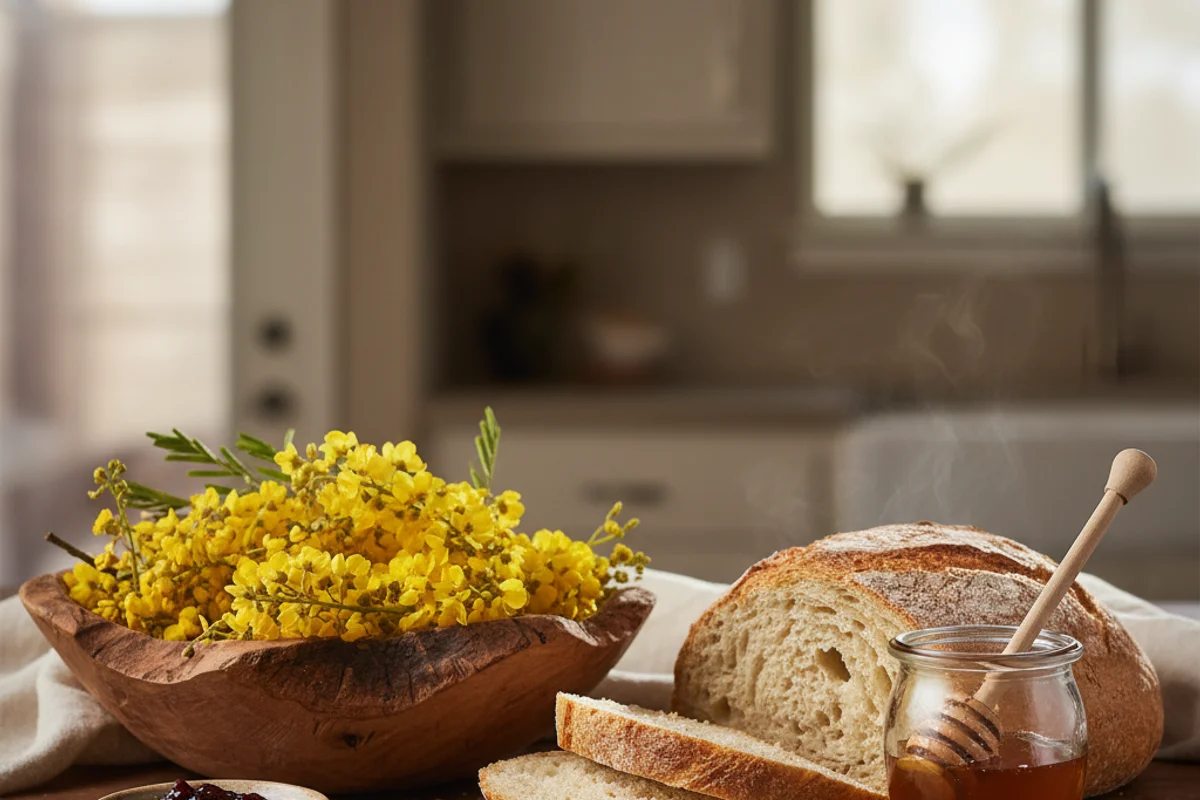
If you’ve ever walked through the Texas Hill Country in late February and caught a wave of sweetness in the air before you spotted a single yellow bloom, that’s huisache — Acacia farnesiana, the Sweet Acacia. Its small, pom-pom flowers pack a fragrance that sits somewhere between honeysuckle and warm vanilla, and they translate that character directly into wine. The result is pale, delicate, and genuinely surprising — the kind of glass that makes people ask what grape you used.
The beginner trap: Flower wines rely entirely on aroma, so skipping or rushing the long clearing and aging stages leaves you with a flat, thin wine that never develops its signature fragrance.
Ingredients
- 1½ to 2 quarts loosely packed huisache (Sweet Acacia) flowers, fresh
- 2 lbs granulated white sugar
- 1 can (11 oz) frozen 100% white grape juice concentrate
- 1½ tsp acid blend (find at homebrew shops, or substitute 1 tsp citric acid)
- ⅛ tsp grape tannin (or 1 unsweetened black tea bag, steeped and cooled)
- 6¼ pints (about 3 quarts + 1 cup) water, divided
- 1 Campden tablet, crushed
- 1 tsp yeast nutrient
- 1 packet Hock or Champagne wine yeast (Lalvin EC-1118 works well)
Method
- Rinse the flowers gently under cool water, then load them into a nylon straining bag. Drop in about a dozen clean marbles to weigh the bag down, tie it closed, and set it in your primary fermenter.
- Heat 1 quart of the water in a saucepan and stir in the sugar until fully dissolved.
- Pour the frozen grape juice concentrate into your primary, then add the hot sugar water and the remaining cool water — this brings the temperature down quickly.
- Add the acid blend, grape tannin, crushed Campden tablet, and yeast nutrient. Stir well, then cover the fermenter and wait 10–12 hours before adding yeast.
- Activate the yeast according to packet directions, then stir it into the must. Re-cover the fermenter and move it to a warm spot (68–75°F).
- Stir the must once daily. When the specific gravity reads 1.020, lift the bag, let it drip-drain without squeezing, and remove it.
- Transfer the wine to a glass secondary fermenter (carboy), fit an airlock, and move it somewhere slightly cooler.
- Rack the wine after 30 days, then again 30 days after that — top up with water each time and refit the airlock.
- Once fermentation is fully done and the wine has cleared, wait another 90 days, then rack one final time.
- Bulk age an additional 90 days, then stabilize, sweeten to taste (a finishing gravity around 1.010 is excellent), and bottle. Wait at least 6 months before opening a bottle.
Why this works
Flower wines extract their flavor from volatile aromatic compounds — esters and terpenes — that live in the petals. These compounds are fragile. High heat destroys them, and that’s why the flowers are never boiled; they simply steep in the liquid at room temperature. The long, slow clearing period matters for a different reason: pollen is microscopically fine and stays suspended long after the wine looks clear. Racking patiently lets gravity do the work. The white grape juice concentrate adds a neutral sugar and trace grape character that fills out the body without competing with the flower aromatics — think of it as a scaffold the floral notes can climb.
Notes
Huisache grows wild across Texas, the Gulf Coast, Arizona, and much of Mexico and Central America — if you’re outside that range, check with native plant societies or specialty nurseries. Acid blend is available at any homebrew supply shop or online; in a pinch, use ½ tsp citric acid plus ½ tsp tartaric acid. Do not squeeze the flower bag when removing it — squeezing forces bitter green plant material into the wine.