JAPANESE PLUM WINE
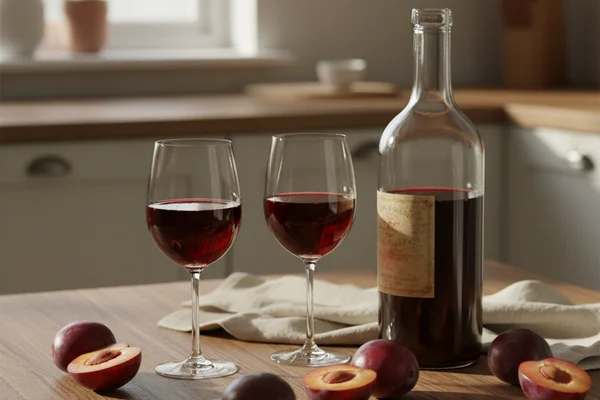
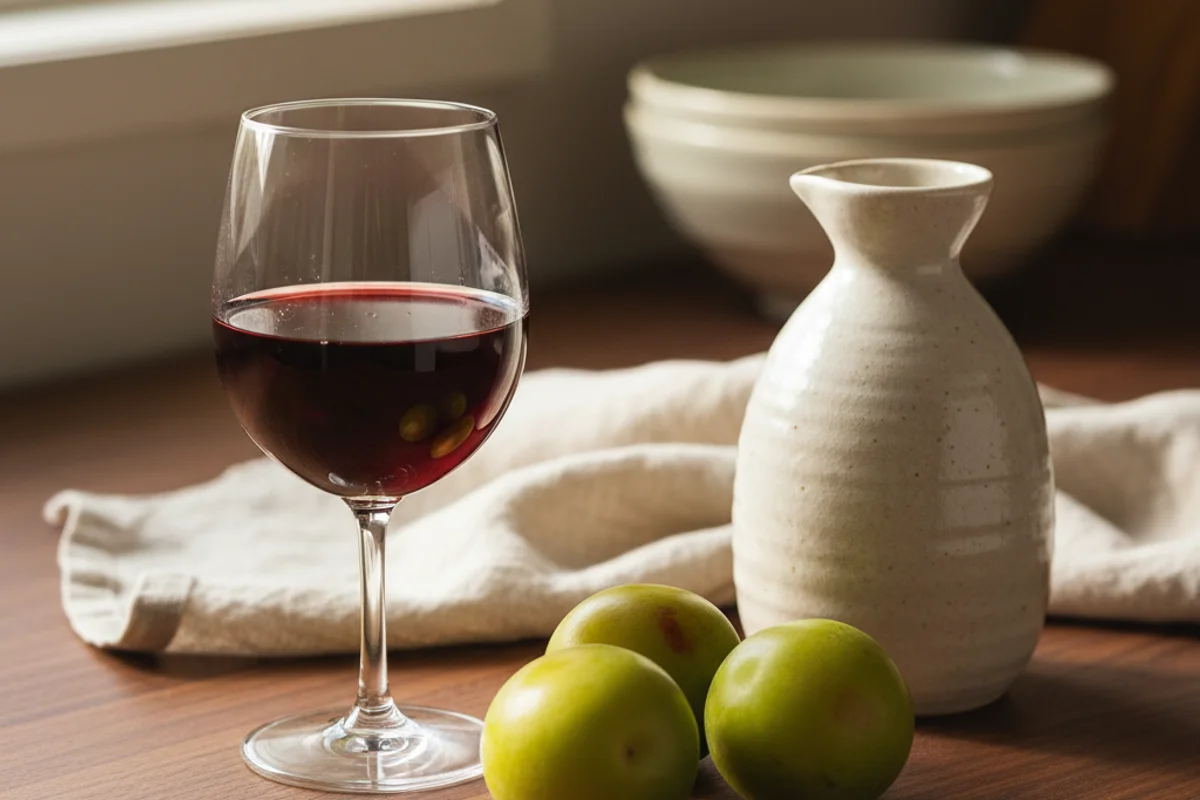
Think of the best commercial Japanese plum wine you’ve ever tasted — that pale gold color, the honeyed sweetness, and that quiet whisper of almond underneath it all. Now imagine making it yourself. Japanese plums (Prunus salicina) bring a floral, juicy quality that grapes simply can’t replicate. This recipe coaxes every bit of that character out of the fruit through patient extraction, a long aging process, and a clever trick involving toasted almonds steeped right in the wine. Plan ahead: this one rewards patience more than almost any other fruit wine you’ll make.
The beginner trap: Rushing the timeline — this wine needs close to two full years from start to bottle before it tastes the way it should.
Ingredients
- 6 lbs ripe Japanese plums, fresh or frozen (any sweet yellow or red variety; grocery-store plums work fine)
- 1 lb 10 oz granulated white sugar, divided
- 1¼ cups 100% white grape juice concentrate (frozen concentrate from the grocery store works perfectly)
- 1½ oz sliced almonds, toasted
- 1 tsp acid blend (available at homebrew shops; substitute 1 tsp lemon juice as a rough stand-in)
- 1 tsp pectic enzyme
- ¼ tsp wine tannin (or 1 unsweetened black tea bag, steeped and cooled)
- 1 Campden tablet, crushed
- 1 tsp yeast nutrient
- 1 packet Côte des Blancs or K1V-1116 wine yeast
- Water to make 1 gallon total
Method
- Bring ½ gallon of water to a boil. While it heats, wash the plums, remove stems and pits, and chop the fruit, saving every drop of juice.
- Place the chopped fruit and juice into a nylon mesh straining bag and set it inside a sanitized primary fermenter marked by pints up to one gallon.
- Add the grape concentrate, the boiling water, and half the sugar to the fermenter. Stir until the sugar fully dissolves, then cover and let it cool to lukewarm (around 70–75°F).
- Add the crushed Campden tablet, stir, re-cover, and wait 12 hours.
- Squeeze the fruit bag by hand to crush the plums, then lift the bag and let it drip for about 2 minutes. Add water to bring the liquid up to 7 pints.
- Dip and lift the bag repeatedly, 4 to 6 times, letting it drain for 2 minutes each time. Submerge the bag in the liquid, then take a specific gravity (S.G.) reading and write it down.
- Add the acid blend, tannin, pectic enzyme, and yeast nutrient. Stir well, re-cover, and wait 12 hours.
- Prepare the yeast according to packet directions and add it to the fermenter. Squeeze the fruit bag twice a day for 7 days.
- After 7 days, lift the bag and let it drip-drain for 2 to 3 hours, then gently squeeze out the remaining juice. Add all the drained juice back to the fermenter.
- Use your hydrometer chart to calculate how much additional sugar to add to bring the S.G. up to 1.095. Add that sugar and stir until dissolved.
- Let the must settle overnight, then rack into a sanitized 1-gallon secondary fermenter and fit an airlock — do not top up yet.
- After 7 days, top up the secondary to the neck and refit the airlock.
- After 1 month, rack again, top up, and refit the airlock.
- After 2 more months, place the toasted almonds in a small sanitized mesh or jelly bag weighted with 4 clean marbles. Drop the bag into a clean secondary fermenter, then rack the wine into that vessel. Store any overflow wine in a sealed jar in the refrigerator for topping up later. Refit the airlock and set aside for 2 more months.
- Rack the wine out of the almond secondary, leaving the almond bag behind. Top up, refit the airlock, and begin bulk aging. Check airlock water levels monthly.
- After 6 months of bulk aging, check for sediment. If the wine is clear, stabilize it, sweeten to taste, wait 10 days, and bottle. If sediment is present, rack first, then sweeten, wait 10 days, and bottle.
- Age the bottled wine for at least 12 more months before opening. Serve well chilled.
Why this works
The almond step isn’t just for flavor nostalgia — toasted almonds release benzaldehyde, the same aromatic compound found in stone fruit pits. It’s the chemical reason commercial Japanese plum wine smells the way it does. The repeated dunking-and-draining technique in the early steps acts like a gentle liquid extraction, pulling color, sugar, and flavor out of the fruit without squeezing in harsh tannins from the skins too early. Pectic enzyme breaks down the fruit’s pectin, which would otherwise leave the finished wine hazy no matter how long you waited. Finally, the split sugar addition — some at the start, the rest calculated later — lets fermentation begin at a manageable sugar level before the full load is added, giving the yeast a better chance to finish cleanly.
Notes
Frozen plums work very well here and may actually be easier to work with — freezing ruptures the fruit cells and speeds up juice release during extraction. If you can’t find Japanese plums specifically, red or black grocery-store plums are a solid substitute; avoid Italian prune plums, which will push the flavor in a drier, darker direction. If acid blend isn’t available locally, most homebrew supply websites carry it cheaply and ship quickly.