Plum Wine
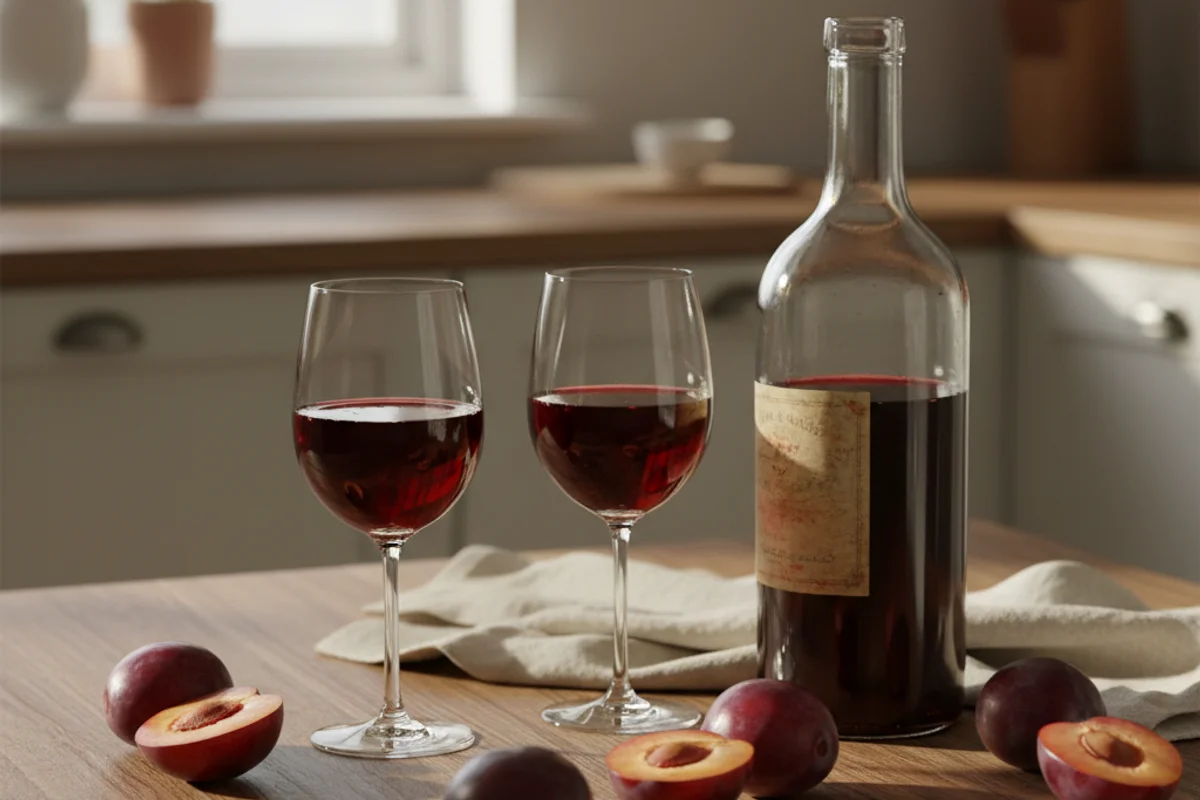
Bite into a ripe plum and you get that one-two punch of sweet flesh and tart skin — and that same tension is exactly what makes plum wine so rewarding in the glass. Done right, it lands somewhere between a light red and a rosé: stone-fruit aroma, a hint of floral, and just enough edge to keep things interesting. It takes patience — plum wine clears slowly and ages beautifully — but the payoff is real. This recipe gives you two paths: a dry table wine and a sweeter, higher-alcohol version for those who want something closer to a dessert pour.
The beginner trap: Skipping pectic enzyme or adding it too late — plums are loaded with pectin, and without enzyme working on the fruit before fermentation starts, you’ll be staring at a hazy wine for months longer than necessary.
Ingredients
Dry Table Wine (Recipe 1)
- 6 lbs plums, fresh or frozen, pitted and chopped
- 1½ lbs granulated white sugar
- Water to make 1 gallon
- 1½ tsp acid blend (or 1 tsp citric acid + ½ tsp tartaric acid)
- 1 tsp pectic enzyme
- ¾ tsp yeast nutrient
- ¼ tsp yeast energizer (optional but helpful — substitute with an extra ¼ tsp yeast nutrient if unavailable)
- ⅛ tsp grape tannin (or 2 oz strongly brewed black tea, unsweetened)
- 1 packet wine yeast (Lalvin 71B or EC-1118 work well)
- Potassium metabisulfite (for stabilizing) (Campden tablets work — use 1 tablet per gallon)
Sweet Dessert Wine (Recipe 2)
- 6 lbs plums, fresh or frozen, pitted and chopped
- 3½ lbs granulated white sugar, divided into thirds
- Water to make 1 gallon
- 1½ tsp acid blend
- 1 tsp pectic enzyme
- ½ tsp yeast nutrient
- ½ tsp yeast energizer
- ¼ tsp grape tannin (or 2 oz strongly brewed black tea)
- 1 packet wine yeast
Method
Dry Table Wine
- Bring water to a boil. Wash, pit, and roughly chop the plums, then place them in your primary fermentation bucket.
- Pour the boiling water over the fruit and stir in all the sugar until fully dissolved. Cover and let the must cool to 70°F.
- Once cooled, stir in the acid blend, pectic enzyme, grape tannin, yeast nutrient, and yeast energizer. Cover and wait 12 hours before adding yeast.
- Sprinkle in the yeast, recover the bucket, and ferment for 5–7 days, stirring the must twice daily.
- Strain out the solids, transfer the liquid to a glass carboy or secondary fermenter, and fit an airlock.
- Rack the wine after 30 days, top up to minimize headspace, refit the airlock, and repeat every 30 days until the wine runs clear.
- Wait two more weeks after it clears, then rack one final time, stabilize with potassium metabisulfite, and bottle.
Sweet Dessert Wine
- Bring water to a boil. Pit, chop, and place plums in your primary bucket. Pour boiling water over the fruit.
- Stir in half of the sugar until dissolved, then cover and cool to 70°F.
- Add acid blend, pectic enzyme, tannin, nutrient, and energizer. Cover and wait 12 hours, then pitch the yeast.
- Ferment 5–7 days with twice-daily stirring. Strain, stir in half of the remaining sugar, then siphon into your secondary and fit the airlock.
- After 30 days, rack, dissolve the last portion of sugar directly into the wine, top up, and refit the airlock.
- Rack every 30–45 days until the wine clears, then wait two more weeks, rack again, stabilize, and bottle.
Why this works
Plums are high in both pectin (a structural carbohydrate in the fruit’s cell walls) and natural acids, which is a blessing and a curse. The pectin is what makes plum wine cloud up and resist clearing — it forms a haze that no amount of racking will fix on its own. Pectic enzyme breaks those long pectin chains apart before fermentation gets going, which gives the wine a fighting chance at clearing naturally. The staged sugar additions in Recipe 2 serve a different purpose: yeast gets stressed by very high sugar concentrations right out of the gate, which can stall fermentation. Adding sugar in rounds keeps the yeast happy and working, pushing the final alcohol higher without the risk of a stuck ferment.
Notes
Frozen plums work exceptionally well here — freezing ruptures the cell walls and releases more juice, which means better color, more flavor extraction, and faster fermentation. If your plums are on the sweeter side (like Italian prune plums in late summer), taste the must before adding all the acid blend and adjust down slightly. Both wines are drinkable at 6 months but noticeably better at 12; if you can hold out for 2 years on the dessert version, you won’t regret it.