MADRONE BERRY WINE (1)
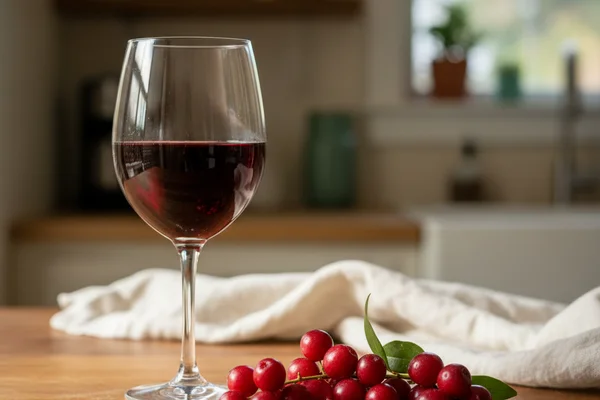
Madrone berries are the Pacific Northwest’s best-kept secret — small, waxy, brick-red fruits that ripen on arbutus trees each fall and pack a tannic punch somewhere between a cranberry and a ripe plum. When fermented, they produce a wine with real structure: a deep garnet color, earthy mid-palate, and enough backbone to age gracefully. The orange zest and raisins aren’t decoration — they round out the berry’s sharp edges and feed the yeast with natural sugars and nutrients that madrone’s lean fruit profile can’t deliver on its own.
The beginner trap: Squeezing the fruit bag too hard at press time will force harsh, bitter tannins into your wine — gentle pressure only.
Ingredients
- 4 lbs madrone berries, fresh (stems removed, any unripe fruit discarded)
- ½ lb raisins or sultanas, roughly chopped
- 2½ lbs granulated white sugar
- 1 sweet orange (zest and fruit slices, pith removed)
- 7 pints (3.5 quarts) water, divided
- 1 tsp pectic enzyme
- 1 tsp yeast nutrient
- 1 packet wine yeast (Lalvin EC-1118 or Red Star Premier Classique work well)
Method
- Sort through the berries carefully, discarding any stems and unripe fruit. Set the cleaned berries aside.
- Bring 2 quarts of the water to a boil, then stir in the sugar until fully dissolved.
- Add the berries to the sugar water, return to a boil, then reduce heat and simmer for 12–15 minutes.
- Remove from heat. Zest the orange directly into the hot berry mixture, then set aside to cool completely.
- While the berries cool, remove the remaining orange peel and pith, then slice the fruit thinly.
- Once the mixture is cool, hold a nylon straining bag over your primary fermenter and pour the berry mixture into the bag.
- Add the orange slices and chopped raisins to the bag, then tie it closed and leave the bag sitting in the fermenter.
- Pour in the remaining 3 pints of water, then add the yeast nutrient and pectic enzyme. Stir well and cover the fermenter.
- After 12 hours, add your activated wine yeast. Re-cover the fermenter.
- Squeeze the bag gently twice a day throughout vigorous fermentation to extract flavor and color.
- When bubbling slows, hang the bag over a bowl to drip-drain. Give it one final gentle squeeze, then transfer all the liquid — fermenter and bowl — into a clean secondary fermenter and seal with an airlock.
- Rack into a clean vessel every 30 days, topping up to minimize headspace and refitting the airlock each time, until the wine runs clear.
- Let the wine rest in a dark place for 4 months, checking occasionally that the airlock hasn’t dried out.
- Rack once more, stabilize with potassium sorbate and potassium metabisulfite, then sweeten to taste if desired.
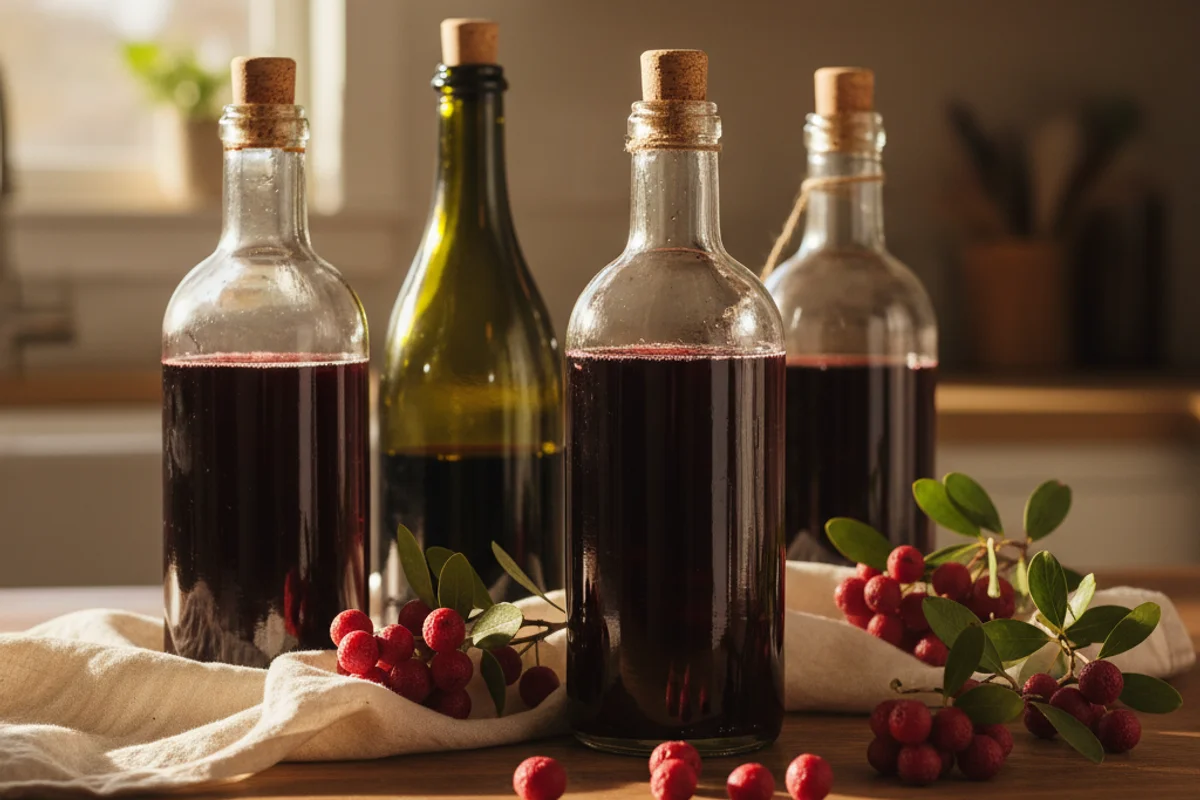
- Wait 14 days and watch for any signs of renewed fermentation. If all is quiet, rack carefully into bottles and store in a dark place for at least 6 more months before opening.
Why this works
Madrone berries are high in tannins and relatively low in fermentable sugar, which is why this recipe leans on added sugar to hit a reasonable starting gravity. The brief simmer extracts color and flavor compounds without over-cooking them into a jammy mess. Pectic enzyme is doing real work here — madrone skins contain pectin that would otherwise leave your finished wine stubbornly hazy, no matter how long you wait. The raisins add body, a small sugar boost, and natural nutrients that keep the yeast happy through a long, slow fermentation. That 6-month bottle age isn’t optional vanity; the tannins genuinely need time to soften.
Notes
Madrone berries are foraged, not grocery-store staples — check farmers’ markets in fall across the Pacific Northwest and Northern California, or look for specialty foraging suppliers online. If you freeze the berries first, the freeze-thaw cycle breaks down cell walls and improves juice extraction, so frozen fruit is actually a slight advantage here. Sultanas and golden raisins are interchangeable with dark raisins; the flavor difference in the finished wine is minimal.