MADRONE BERRY WINE
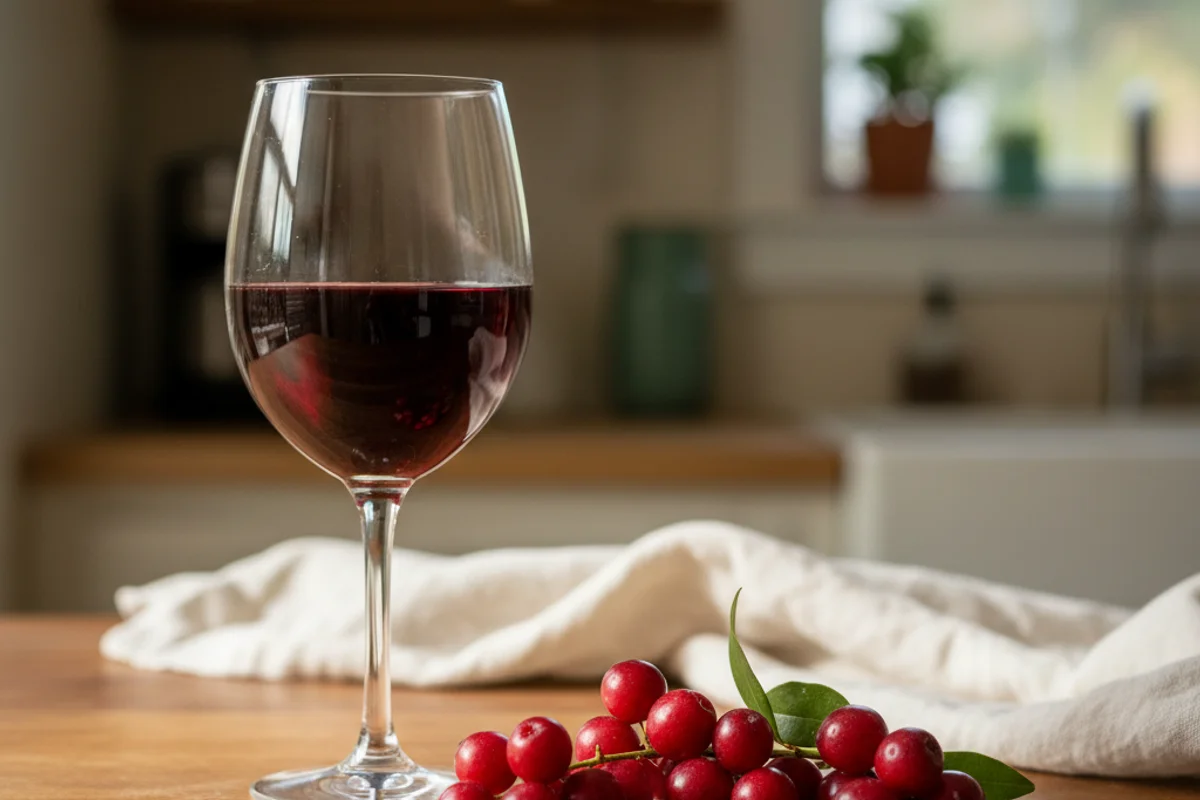
Pacific Madrone (Arbutus menziesii) grows wild along the West Coast, dropping clusters of small red berries that look cheerful and taste… humbling — astringent, earthy, and not exactly snackable straight off the tree. But cook them down with sugar, orange zest, and a handful of raisins, and something shifts. The tannins soften, a cranberry-like tartness comes forward, and you’ve got the foundation for a genuinely interesting country wine. Plan ahead: this one rewards patience the way a good brisket does — time does the heavy lifting.
The beginner trap: Skipping the simmering step and fermenting the raw berries will lock in harsh astringency that aging alone won’t fix.
Ingredients
- 4 lbs fresh madrone berries (or 1 lb dried; see Notes)
- ½ lb raisins or sultanas, chopped
- 1 lb 13 oz (about 3¾ cups) granulated sugar
- 1 sweet orange
- 7 pints (3.5 quarts) water, divided
- 1 tsp pectic enzyme
- 1 tsp yeast nutrient
- 1 packet wine yeast
Method
- Sort through the berries, discarding any unripe ones and all stems, then rinse them well.
- Bring 2 quarts of water to a boil, stir in the sugar until fully dissolved, then add the berries, return to a boil, and simmer on low heat for 12–15 minutes.
- While the berries simmer, zest the orange, then remove the remaining peel and slice the fruit into thin rounds; set the zest and slices aside separately.
- Remove the berry pot from heat and stir in the orange zest; let the mixture cool to room temperature.
- Hold a nylon straining bag open over your primary fermenter and pour the cooled berry mixture into the bag.
- Add the orange slices and chopped raisins to the bag, then tie it closed and leave the bag sitting in the fermenter.
- Pour in the remaining 3 pints of water, then add the yeast nutrient and pectic enzyme; stir well and cover the fermenter.
- After 12 hours, activate your yeast according to the packet instructions and add it to the fermenter; cover again.
- Twice a day during active fermentation, gently squeeze the fruit bag to push color and flavor into the liquid.
- Once bubbling slows noticeably, hang the bag over a bowl to drip-drain, then transfer the liquid to a secondary fermenter (carboy) and fit an airlock.
- Gently squeeze any remaining juice from the bag and add it to the carboy; top up with water if needed to reduce headspace, then refit the airlock.
- Rack into a clean carboy every 30 days, topping up and refitting the airlock each time, until the wine runs clear.
- Move the carboy to a dark spot for 4 months, checking now and then that the airlock seal is holding.
- Rack once more, stabilize with potassium sorbate and campden tablet if desired, and sweeten to taste; wait 14 days and watch for any signs of renewed fermentation.
- If the wine stays still, rack carefully into bottles and store in a dark place for at least 6 more months before opening.
Why this works
Madrone berries are loaded with tannins and pectin — the same compounds that make underripe fruit pucker your mouth. Simmering the berries in sugar-water does two things at once: heat breaks down cell walls so color and flavor compounds release into the liquid, and the sugar starts drawing out water-soluble tannins in a more controlled way than cold-soaking would. The pectic enzyme then goes to work on the pectin, breaking it into smaller fragments so it drops out of suspension rather than leaving you with a permanently hazy wine. Orange zest adds aromatic oils and a bit of acid, while raisins contribute unfermentable sugars and body that the lean madrone juice needs.
Notes
Dried madrone berries work well if fresh aren’t available — use 1 lb dried in place of 4 lbs fresh, increase sugar to 2½ lbs, and increase water to 7½ pints; skip the simmering step and pour boiling water directly over the dried berries in the fermenter instead. Madrone berries aren’t sold in grocery stores; check with foraging communities or Pacific Northwest farmers markets in fall. If you can’t source them at all, dried rosehips make a structurally similar wine and are widely available online.