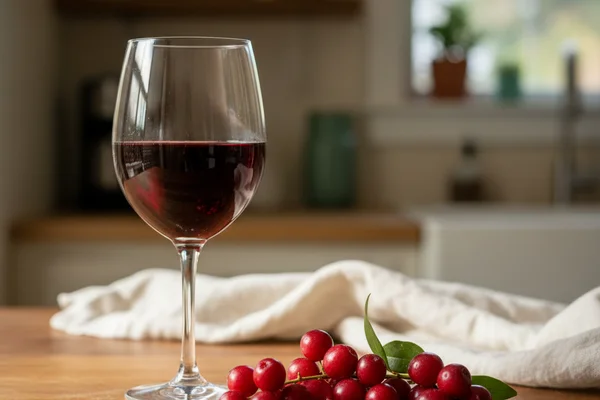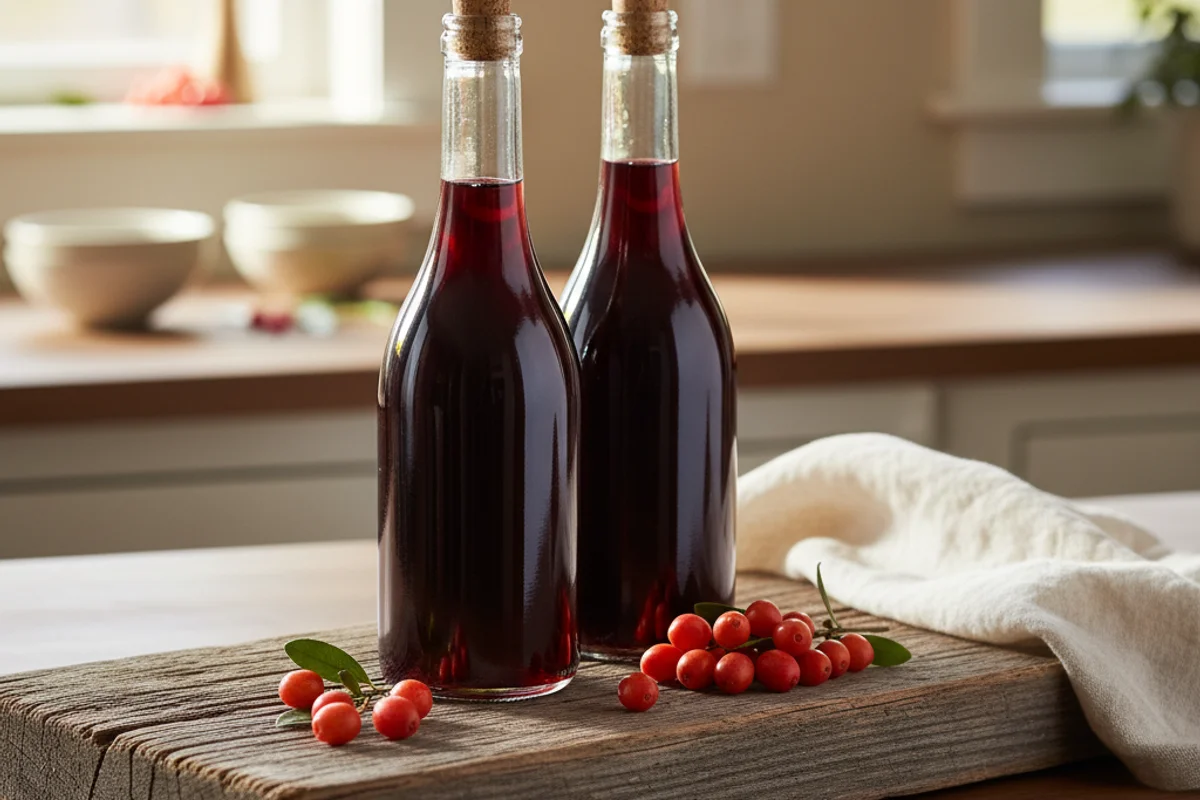
MADRONE BERRY WINE (2)
Madrone berries are the Pacific Coast’s best-kept secret — small, red-orange fruits with a dry, tannic backbone and a subtle sweetness that deepens dramatically when dried. Think of them as nature’s slow-burn flavor bomb. Combined with raisins for body, a bright orange for citrus lift, and a long aging window, this wine builds into something genuinely complex. It won’t dazzle you young, but give it the time it asks for and you’ll be rewarded with a deep, earthy red that drinks like a rustic Italian table wine.
The beginner trap: Rushing the aging — this wine needs a full six months in the bottle after racking, and opening it early means drinking something harsh and unfinished.
Ingredients
- 1 lb dried madrone berries (see Notes for sourcing)
- ½ lb raisins or sultanas, chopped
- 2½ lbs granulated sugar
- 1 sweet orange (zest and juice)
- 7½ pints (about 15 cups) water, divided
- 1 tsp pectic enzyme
- 1 tsp yeast nutrient
- 1 packet wine yeast (Lalvin 71B or EC-1118 work well)
Method
- Bring 1 quart of water to a boil. While it heats, chop the raisins and zest the orange; combine them in your primary fermenter.
- Wash the dried berries and remove any stems, then add them to the fermenter with the raisins and zest. Pour the boiling water over everything and cover the vessel.
- Bring another quart of water to a boil, stir in the sugar and the juice of the orange until fully dissolved, then pour that hot syrup into the fermenter. Cover again.
- Once the mixture has cooled to room temperature, add the remaining 3½ pints of water, the yeast nutrient, and the pectic enzyme. Stir well and cover.
- After 12 hours, activate your yeast according to the packet instructions and stir it in. Cover the fermenter.
- Stir twice daily while fermentation is active and vigorous — this keeps the fruit cap wet and the yeast happy.
- When bubbling slows and fermentation calms down, pour the must through a nylon straining bag into your secondary fermenter, squeezing the bag firmly to extract all the liquid.
- Fit an airlock and move the vessel somewhere dark. Rack into a clean secondary, top up to minimize headspace, and refit the airlock every 30 days until the wine runs clear.
- Let the cleared wine rest in a dark place for 4 months, checking occasionally that the airlock seal is holding.
- Rack one final time, stabilize with potassium sorbate and potassium metabisulfite if desired, then sweeten to taste. Wait 14 days and watch for any signs of re-fermentation.
- If the wine stays stable, rack it carefully into bottles and store in a dark place for at least 6 more months before drinking.
Why this works
Dried berries are a concentrated flavor shortcut — the drying process removes water and intensifies sugars, tannins, and aromatic compounds, so you get more character per pound than fresh fruit would deliver. The raisins pull double duty: they add fermentable sugar and body-building tannins. Pectic enzyme is doing critical work here, breaking down the pectin naturally present in fruit skins that would otherwise leave your finished wine frustratingly hazy. The two-stage hot water addition hydrates the fruit before the sugar goes in, which helps extract color and flavor without cooking off delicate aromatics. Time does the rest — long aging lets harsh tannins polymerize and soften into something smooth.
Notes
Dried madrone berries are a specialty item — check foraging or native plant suppliers online, or look at Pacific Northwest specialty food retailers. If you can’t source them, dried arbutus berries (a closely related species sold in some European import shops) are a reasonable stand-in. Frozen fresh madrone berries can also work; double the weight to roughly 2 lbs to compensate for water content, and skip the rehydration step.