MARASCHINO CHOCOLATE SWEET MEAD
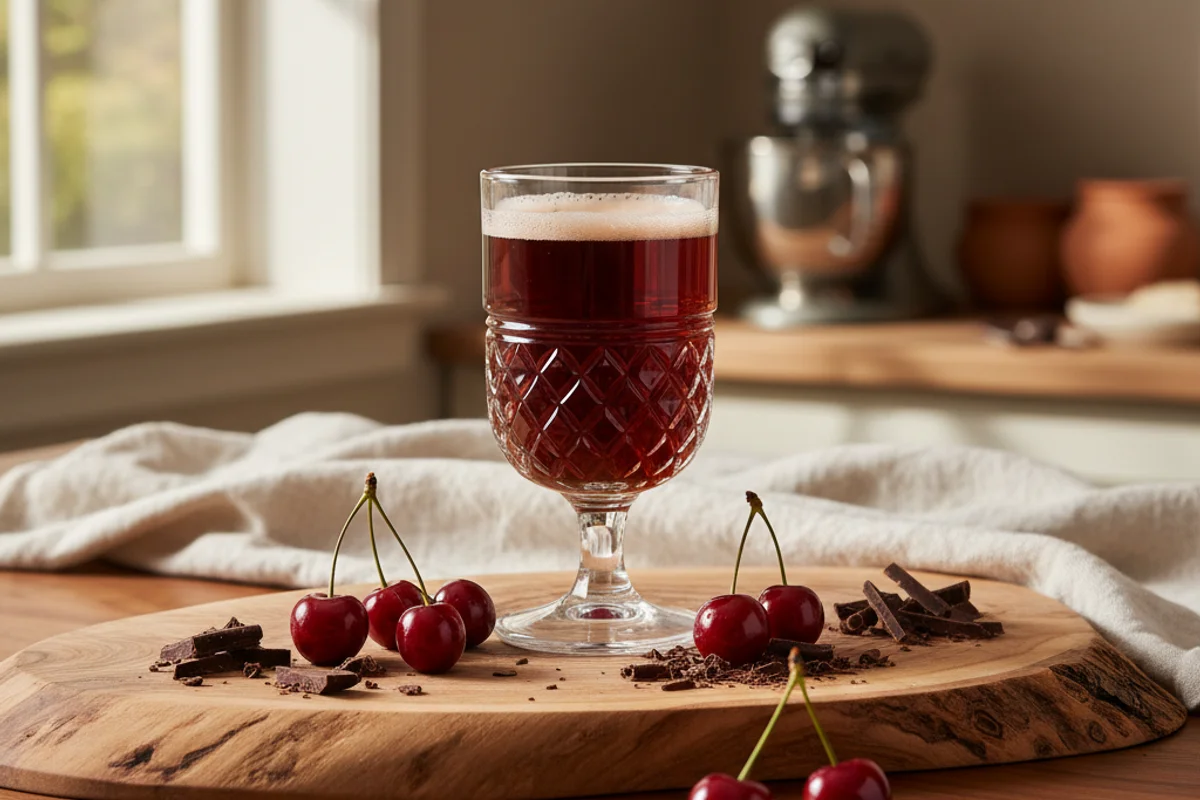
Picture a candy shop and a meadery somehow sharing the same address. That’s the flavor territory this mead occupies — bright, sweet maraschino cherry up front, with a deep cocoa note running underneath like a bass line you feel more than hear. Honey ties it all together into something that tastes more like a confection than a fermented beverage. Fair warning: this one demands patience. The payoff at the end of a proper aging period is genuinely surprising.
The beginner trap: Skipping or cutting short the aging time — the cocoa powder’s essential oils taste harsh and bitter in young mead, and no amount of back-sweetening will fix that.
Ingredients
- 4 lbs wildflower or clover honey
- 2 lb 5 oz jar maraschino cherries (Mezzetta’s or any brand without benzoic acid or potassium sorbate — read the label)
- 4 oz (by weight) unsweetened cocoa powder (Hershey’s or any grocery-store brand)
- 2¼ tsp acid blend
- 1¼ tsp yeast nutrient
- ⅛ tsp yeast energizer
- 3/16 tsp grape tannin (or 1 cooled cup of strong plain black tea as a substitute)
- 1/16 tsp potassium metabisulfite (Campden powder)
- Water to reach 1 gallon total volume
- 1 packet Lalvin 71B or EC-1118 yeast (widely available at homebrew shops)
- 1 nylon mesh straining bag
Method
- Combine honey and 1 quart of water in a large pot. Heat to 140°F and hold there for 25 minutes, skimming any foam that rises to the surface. Remove from heat and let it cool to room temperature.
- Drain the cherry syrup directly into the cooled honey mixture. Roughly chop the cherries, load them into the straining bag, tie it shut, and set it aside in a bowl.
- Pour the cocoa powder into 1 pint of warm water and blend until fully combined with no dry clumps remaining.
- Add the acid blend, yeast nutrient, yeast energizer, grape tannin, and potassium metabisulfite to the cocoa mixture and stir well to combine everything.
- Pour the cocoa mixture into the honey mixture and stir. Top up with water in your primary fermenter until you reach 1 gallon.
- Activate your yeast in a small amount of warm water per the packet instructions, then add it to the must. Drop in the bag of cherries and cover the fermenter loosely.
- Punch the cherry bag down several times each day. After a few days the cherries will look spent and soft — at that point, gently squeeze the bag just enough to recover the easy liquid, then remove it. Do not squeeze hard or the mead may never clear properly.
- Once fermentation slows noticeably, transfer the mead to a 1-gallon secondary vessel and seal with an airlock. Rack after fermentation finishes completely, or after 3 months at the latest even if bubbling continues.
- Rack again 60 days later and top up with distilled water to minimize headspace. Repeat this rack-and-top-up process after another 60 days.
- Bulk age for 1 full year to let the cocoa oils break down, then bottle. Age in bottle for an additional 9–12 months before opening the first one.
Why this works
Cocoa powder is full of fat-based essential oils — the same compounds responsible for real chocolate flavor. In a water-based liquid those oils disperse but don’t dissolve cleanly, and early on they taste harsh and astringent. Time and very slow oxidation gradually break down those oil compounds into mellower aromatic molecules, which is why this mead needs well over a year before it tastes the way it should. The honey also starts at an extremely high sugar concentration (around SG 1.152), which stresses yeast. That’s why a robust, high-tolerance strain like 71B is essential — it can push through the sugar density and still leave residual sweetness rather than fermenting completely dry.
Notes
Benzoic acid is the hidden enemy in this recipe — it acts as a yeast inhibitor just like potassium sorbate, so always check the cherry jar’s ingredient label before you buy. If you can’t find Mezzetta’s, any preserved maraschino cherry without benzoic acid or sorbate will work. Topping up with distilled water during aging will not meaningfully dilute flavor or alcohol at this scale.