MAYHAW WINE
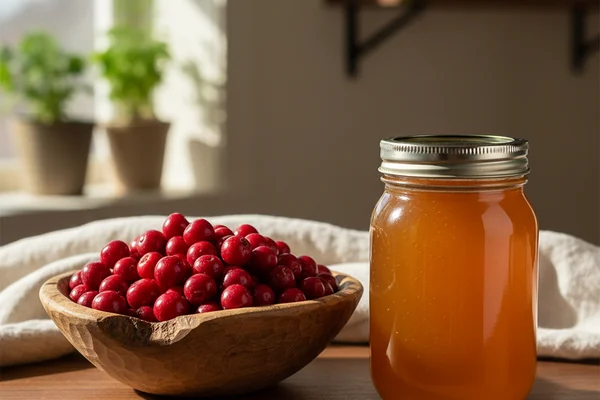
Think of a crab apple that decided to grow up in the Deep South swamps, ripen in May instead of fall, and join the rose family. That’s the mayhaw — a small, tart, cranberry-red fruit that makes a wine with a pale blush color, bright acidity, and a flavor somewhere between apple cider and rosé. It’s regional, seasonal, and almost entirely off the radar outside the Gulf Coast states. That obscurity is its superpower. This is a one-gallon recipe, but if you can get your hands on a bigger haul of fruit, scale up without hesitation.
The beginner trap: Rushing the bottle — mayhaw wine needs a full year of aging after bottling to lose its sharp edge and develop real character.
Ingredients
- 3 quarts ripe mayhaws, fresh or frozen
- 1 lb 13 oz (about 3¾ cups) granulated sugar
- 6½ pints (13 cups) water
- 1 tsp pectic enzyme
- ¼ tsp grape tannin (or 1 cup unsweetened strong black tea as a substitute)
- 1½ tsp yeast nutrient
- 1 packet wine yeast (Lalvin EC-1118 or 71B work well)
Method
- Trim the stems from the fruit, rinse well, and discard anything soft or damaged. Place the fruit in your primary fermenter and crush it thoroughly with a clean potato masher or a piece of hardwood.
- Pour the sugar over the crushed fruit. Bring the water to a full boil, then pour it directly over the sugar and fruit mixture.
- Cover the fermenter and let it cool to room temperature (below 75°F / 24°C). This usually takes 2–4 hours.
- Once cool, stir in the pectic enzyme, grape tannin, and yeast nutrient. Cover again and leave it alone for 12 hours.
- Sprinkle in the wine yeast, stir well, and cover loosely. Stir the must twice daily for 8 days.
- Strain the liquid into a sterilized 1-gallon secondary fermenter, pressing the pulp gently to extract juice without forcing bitter solids through. Fit an airlock and move to a dark place for 6 weeks.
- Rack into a clean sterilized secondary, top up with water to minimize headspace, refit the airlock, and return to the dark for 4 months.
- Rack again, top up, and store in the dark for another 8 months. Check the airlock every couple of months to make sure the water hasn’t evaporated.
- If the wine hasn’t cleared on its own, fine it with a gelatin solution, wait 2 weeks, then rack one final time. Once the wine is clear, bottle it.
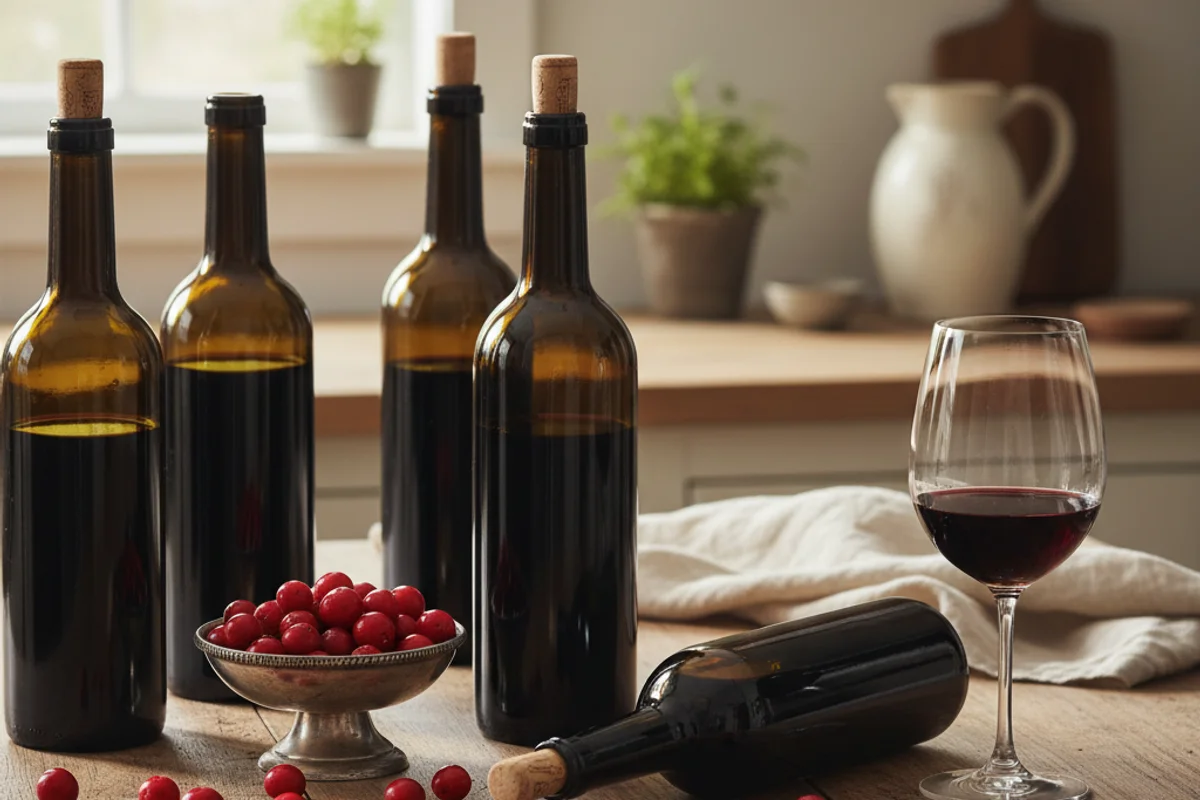
- Age in the bottle for at least 6 months — a full year is better. Taste it periodically; it will tell you when it’s ready.
Why this works
Mayhaws are high in pectin, the same gelling agent that makes jam thick. In wine, pectin creates a stubborn haze that won’t drop out no matter how long you wait. Pectic enzyme (pectinase) breaks those long pectin chains apart, letting the particles clump together and fall to the bottom. That’s why you add it before fermentation starts — once alcohol is present, the enzyme works more slowly. The grape tannin (or tea) adds a small amount of phenolic structure, which gives the wine grip and helps with long-term stability. The extended aging isn’t optional fussiness: mayhaw’s high acid and modest tannin need time to mellow and integrate into something genuinely pleasant to drink.
Notes
Frozen mayhaws work just as well as fresh — freezing actually ruptures the cell walls and can improve juice extraction. If you can’t find mayhaws locally, check online retailers that ship Gulf Coast regional fruits, or substitute crab apples with a slight reduction in sugar. Grape tannin powder is available at any homebrew shop; if you skip it entirely, the wine may taste a bit flat and age less gracefully.