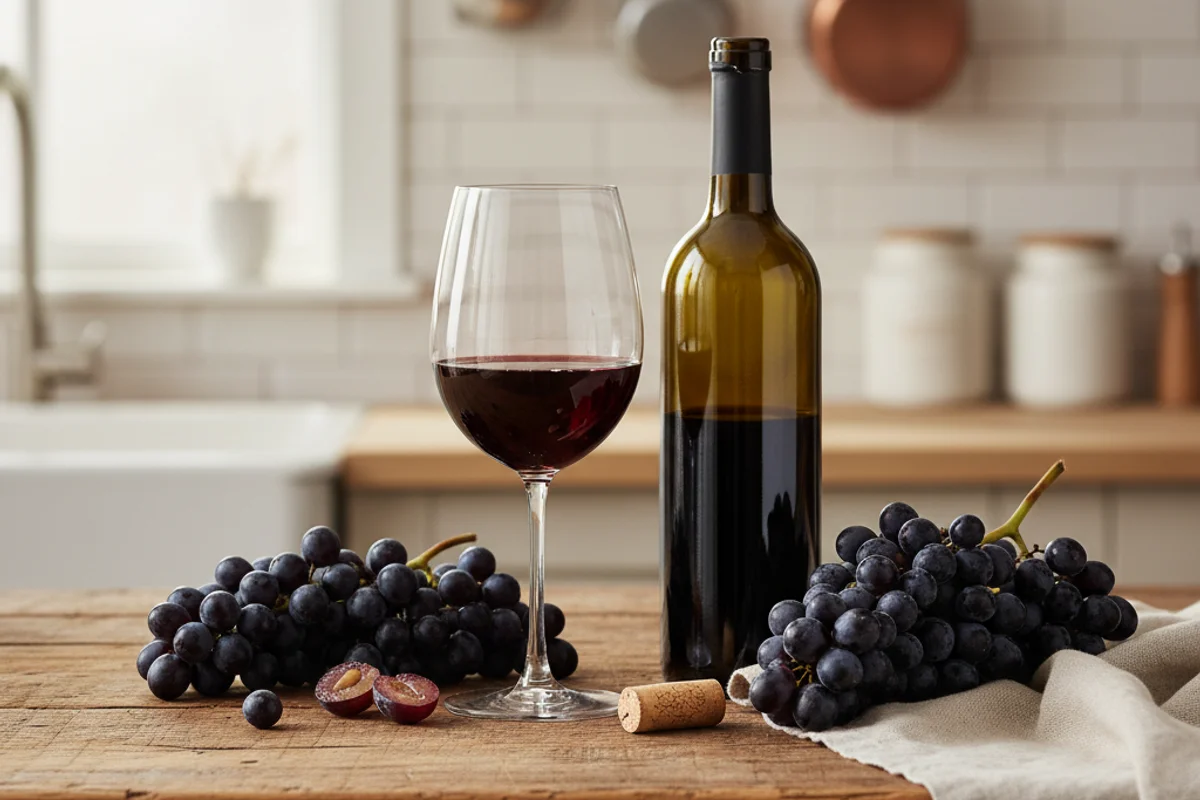
MERLOT WINE
Merlot is the easygoing cousin in the Bordeaux family — softer tannins, plush dark fruit, a hint of chocolate and plum that rounds out before Cabernet Sauvignon even warms up. It drinks young but ages gracefully, which makes it one of the most rewarding grapes a home winemaker can work with. This recipe goes the full route: oak powder for structure, a malo-lactic fermentation to swap sharp malic acid for softer lactic acid, and a disciplined racking schedule that lets the wine find its legs over several months. The result is a serious red that can stand on its own or blend beautifully with Cab or Syrah.
The beginner trap: Skipping malo-lactic fermentation monitoring — if you bottle before MLF finishes, residual bacteria will keep working in the bottle and ruin the wine.
Ingredients
- 70–75 lbs fresh Merlot grapes (crushed and destemmed)
- 4 tsp pectic enzyme
- 1¼ tsp potassium metabisulfite (Campden substitute), divided across several additions
- 3–3½ tsp yeast nutrient
- 3 tbsp oak powder (Oak-Mor or any food-grade wine oak powder)
- 1 packet malo-lactic bacteria culture
- 1 packet Bordeaux wine yeast (or White Labs WLP740 Merlot Red Wine Yeast)
Method
- Sort through your grape clusters and discard any damaged or moldy fruit. Crush and destem all the grapes into your primary fermenter.
- Stir in the pectic enzyme and ¼ tsp potassium metabisulfite. Cover the fermenter and let the must rest overnight.
- The next day, check and adjust the acid if needed. Stir in the yeast nutrient and oak powder, then add your activated yeast and stir to combine.
- Cover the primary fermenter loosely. Punch the grape cap down twice a day to keep it submerged and prevent spoilage.
- When free SO₂ drops below 15 ppm (aim for 10 ppm), add the malo-lactic culture and stir it in gently.
- When the specific gravity reaches 1.000, strain the solids through a press and collect all remaining juice.
- Transfer the pressed wine to a sanitized 5-gallon carboy and fit an airlock. Let it settle for one month.
- After one month, rack the wine into a clean sanitized carboy, top up to minimize headspace, and reattach the airlock.
- Track malo-lactic fermentation (MLF) using a paper chromatography kit. When MLF is complete, rack again and stir in ¼ tsp potassium metabisulfite.
- Rack four more times, one month apart. Add ¼ tsp potassium metabisulfite at the second and fourth of these rackings.
- The wine should clear on its own. If it hasn’t after all rackings, let it sit two more months, rack once more, add a small sulfite dose, wait 14–21 days, then bottle.
- Cellar the bottled wine for at least 6 months before opening.
Why this works
Two big things happen here beyond basic fermentation. First, the oak powder adds tannin and a subtle woody character that Merlot’s naturally soft structure needs for balance and aging potential. Second — and more importantly — malo-lactic fermentation (MLF) is a bacterial process where harsher malic acid (think green apple tartness) gets converted to softer lactic acid (think yogurt). This rounds out the wine’s texture dramatically. The repeated racking schedule isn’t busywork: each rack removes dead yeast cells and sediment that, if left too long, can break down and produce off-flavors. Patience and sanitation are doing most of the heavy lifting here.
Notes
Potassium metabisulfite is sold at homebrew shops as “pot meta” or Campden tablets (use 1 tablet per ¼ tsp called for). If you can’t find Oak-Mor, any food-grade wine oak powder or medium-toast oak chips will work — just follow the package rate for 5 gallons. MLF chromatography kits are available online from most homebrew retailers and are well worth the small cost for a wine this serious.