MINT JELLY WINE
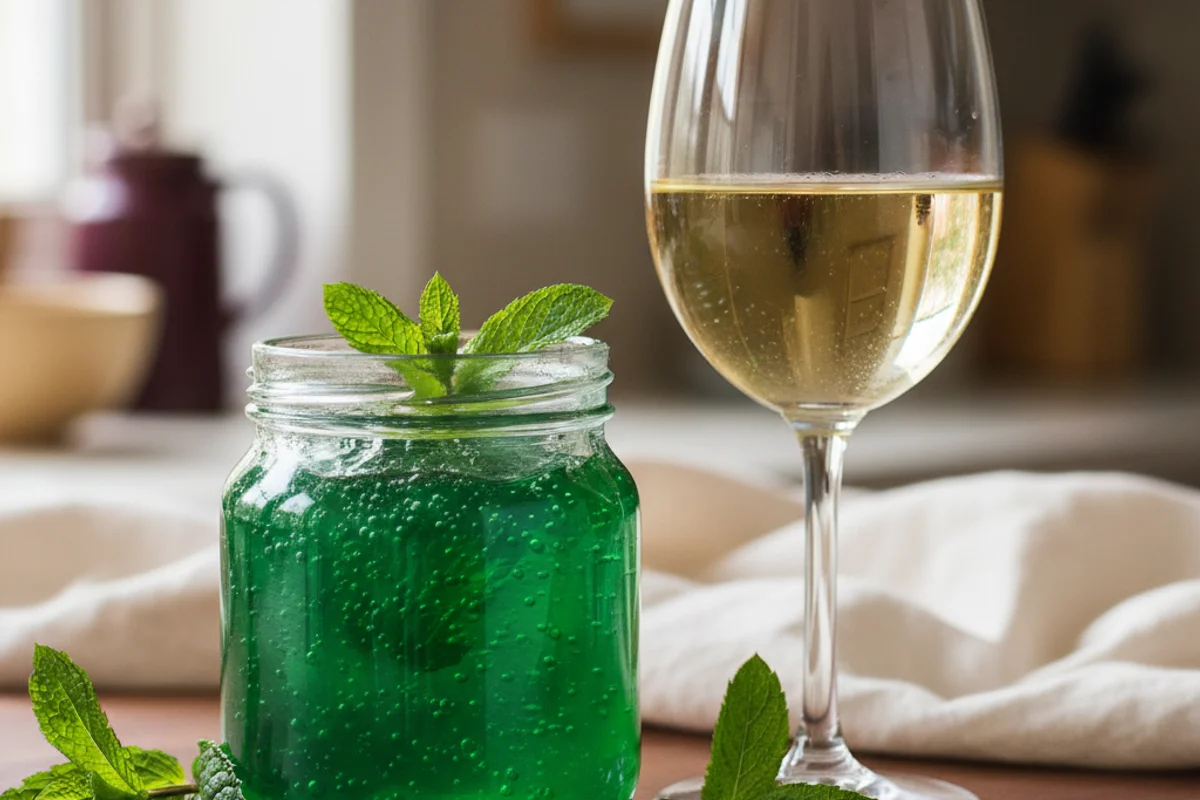
That jar of mint jelly sitting in the back of your fridge? It’s already halfway to wine. Mint brings a clean, herbal brightness that plays surprisingly well in a glass — floral on the nose, cool on the finish, and crisp enough to serve alongside a spring meal. The trick is leaning into that brightness rather than fighting it. White grape concentrate adds body and rounds out the sugar base, giving you something that actually tastes like a wine and not just a dissolved condiment. Done dry, it’s refreshing. Done slightly sweet, it’s genuinely interesting.
The beginner trap: Skipping the full 24-hour enzyme rest before pitching yeast — jelly is loaded with pectin, and rushing past this step will leave your finished wine permanently hazy.
Ingredients
- 3 lbs mint jelly (any grocery-store brand works)
- 6 pints water, room temperature
- 12 oz granulated sugar
- 10.5 oz frozen Welch’s 100% White Grape Juice concentrate, thawed
- 2½ tsp pectic enzyme
- 2 tsp acid blend
- 1 tsp yeast nutrient
- ⅛ tsp grape tannin (or 1 cooled cup of strong plain black tea)
- 1 Campden tablet, crushed and dissolved
- 1 packet Montrachet yeast (or any dry white wine yeast)
Method
- Combine the mint jelly, room-temperature water, thawed grape concentrate, and pectic enzyme in your primary fermenter. Stir until the jelly fully dissolves, cover loosely, and let it rest for 12 hours.
- Stir in the sugar, acid blend, yeast nutrient, tannin, and dissolved Campden tablet. Re-cover and rest for another 12 hours.
- Check the specific gravity with a hydrometer — you’re aiming for 1.090. Adjust sugar up or down as needed to hit that target.
- Prepare a yeast starter according to packet directions, then pitch the activated yeast into the must. Cover and ferment at room temperature.
- Once vigorous bubbling slows down, rack the wine into a clean secondary fermenter, top up with water if needed to minimize headspace, and fit an airlock.
- Rack again after 6 weeks, then once more after 4 additional weeks.
- To keep it dry, bottle after 8 more weeks of aging. To make it sweet, add potassium sorbate and potassium metabisulfite at the second racking to stabilize, then stir in dissolved sugar to taste at the third racking before bottling.
Why this works
Mint jelly is essentially pectin, sugar, mint extract, and coloring — and pectin is the enemy of clear wine. It forms a stable gel structure that traps particles and scatters light, producing that frustrating milky haze that never settles out on its own. Pectic enzyme (pectinase) breaks those long pectin chains into shorter fragments that can actually fall out of solution. The two-stage rest — first with the enzyme, then after adding sulfite — gives the enzyme time to work before the Campden tablet raises the SO₂ level. High sulfite slows enzyme activity, so the order of operations here genuinely matters. White grape concentrate adds neutral fruit sugars plus a small amount of natural grape tannin and acid, which thickens the mouthfeel without muddying the mint character.
Notes
Any brand of mint jelly will work; apple-based mint jellies (the most common type) are fine and may add a subtle fruity background note. If you can’t find acid blend, substitute 1½ tsp of lemon juice per teaspoon of acid blend as a rough grocery-store swap. If your finished wine still shows slight haze after aging, a fining agent like bentonite added at the second racking will clear it up.