JELLY WINE
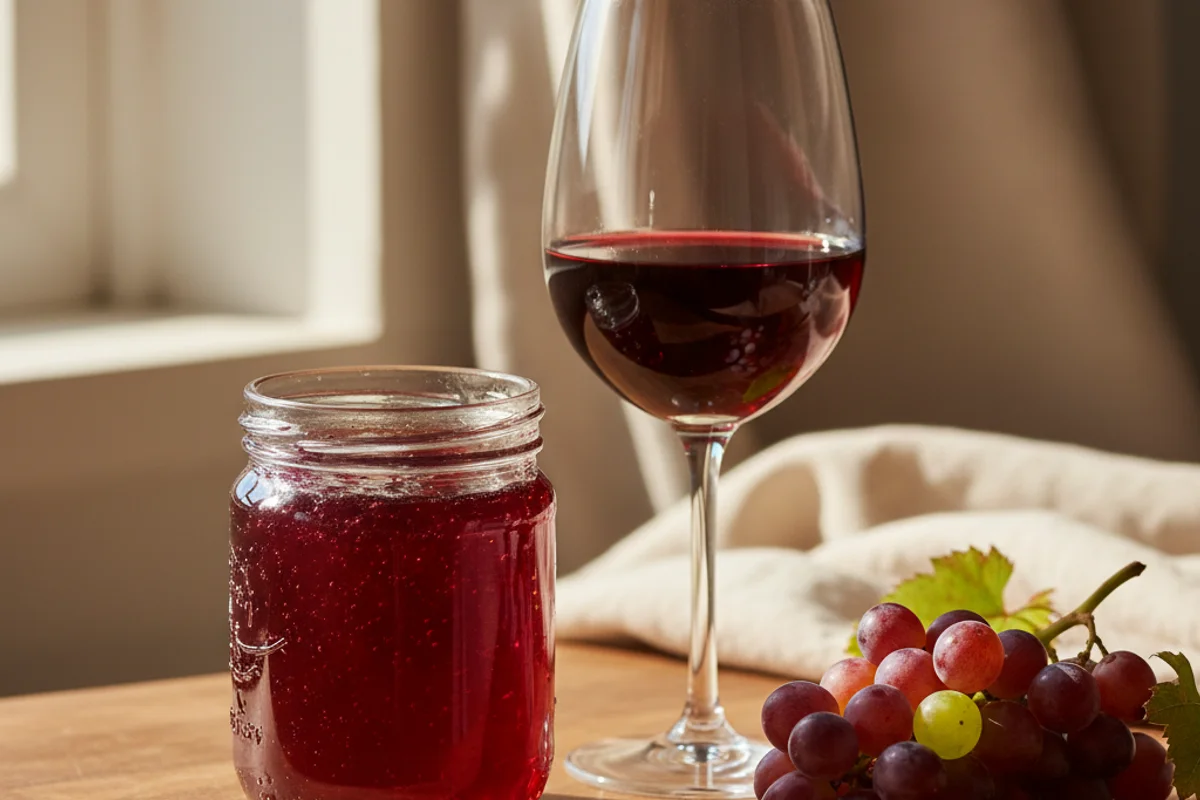
That jar of grape jelly sitting in your fridge is already halfway to wine. Jelly starts life as clarified fruit juice cooked down with sugar, acid, and pectin until it gels. Strip away the gel, feed the sugars to yeast, and you’ve got a surprisingly clean, fruit-forward wine that carries the character of whatever flavor you chose — strawberry, blackberry, apricot, you name it. The catch is that pectin, the very thing that makes jelly jelly, will turn your finished wine into a cloudy, hazy mess if you don’t deal with it head-on.
The beginner trap: Skipping the second boil after the pectic enzyme soak — that step is non-negotiable, and so is using enough enzyme to fully break down the gel before fermentation starts.
Ingredients
- 4 lbs (about 36 fl oz) any-flavor jelly — homemade preferred; if using store-bought, read the label and reject anything listing potassium sorbate, sorbic acid, sodium benzoate, or benzoic acid
- Sugar, as needed to reach a specific gravity of 1.090
- 5 tsp powdered pectic enzyme, divided (plus extra on standby for clearing)
- 2–3 tsp citric acid (use 2 tsp for high-acid fruits like grape or berry; 3 tsp for low-acid fruits like peach or apple)
- ½ tsp powdered grape tannin (or 1 cup strong-brewed black tea as a substitute)
- Water to make 1 gallon total
- 1¼ tsp yeast nutrient
- 1 packet general-purpose wine yeast (Lalvin EC-1118 or Red Star Côte des Blancs work well)
Method
- Bring 3 quarts of water to a boil in a large pot, then remove from heat and stir in all the jelly until fully dissolved.
- Cover the pot and let it cool to room temperature, about 4–5 hours.
- Pour the cooled liquid into your primary fermenter, stir in the pectic enzyme, cover loosely, and leave it undisturbed for 72 hours (3 full days).
- Transfer the liquid back into the pot, bring it to a boil, and hold a rolling boil for 5 minutes — this kills any wild microbes and drives off compounds that could interfere with fermentation.
- Place the sugar, citric acid, powdered tannin, and yeast nutrient into the empty primary fermenter.
- Pour the hot liquid over the dry ingredients and stir until the sugar is completely dissolved.
- Cover and let the must cool to room temperature; while it cools, prepare your yeast starter according to the packet directions.
- Once cool, check the specific gravity with a hydrometer and add sugar in small amounts until you hit 1.090.
- Transfer the must to your secondary fermenter but do not top it up yet; add the active yeast starter, then cover the opening with a paper towel secured with a rubber band.
- After 3 days, swap the paper towel for an airlock.
- When vigorous bubbling slows down (typically days 5–7), top up the fermenter with water or a compatible juice; this drops the final alcohol to a friendlier 11.5–12%.
- After 30 days, rack to a clean vessel, add sulfite (¼ tsp potassium metabisulfite per 5 gallons), top up, and reattach the airlock.
- Rack every 30 days, adding sulfite every other racking, until no new sediment forms and the wine looks clear.
- If the wine is still hazy after 60 days, stir in 1 additional tsp of pectic enzyme and wait 2 weeks; repeat if needed, up to a total of 7 extra teaspoons — if it still won’t clear after that, your enzyme is likely old and should be replaced.
- Once clear, stabilize with potassium sorbate and potassium metabisulfite, sweeten to taste if desired, wait 30 days, then bottle.
- Wait at least 6 months before drinking — 3 months is the minimum, but patience pays off here.
Why this works
Pectin is a long-chain carbohydrate that forms a gel network when heated in the presence of sugar and acid. That gel network is invisible to yeast — they ferment right through it — but it scatters light, which is why pectin haze can persist long after fermentation ends. Pectic enzyme (also called pectinase) is a protein that cuts those long chains into short fragments too small to scatter light. The initial 72-hour enzyme soak starts breaking the gel down at room temperature. The second boil then kills the enzyme before it can interfere with fermentation, which matters because active enzyme late in the process can strip body from the wine. Extra doses of enzyme after fermentation clean up any remaining pectin fragments that cause lingering haze.
Notes
Any flavor of jelly works here — berry jellies tend to produce the most vibrant results, while milder flavors like apple or mint jelly may need a bump in tannin to give the wine some backbone. For low-tannin fruits, increase the powdered grape tannin to ¾ tsp, or use 1½ cups of strong-brewed black tea. Always store pectic enzyme in a cool, dry place and check the expiration date before you start — degraded enzyme is the most common reason this wine won’t clear.