MOUNTAIN ASH WINE
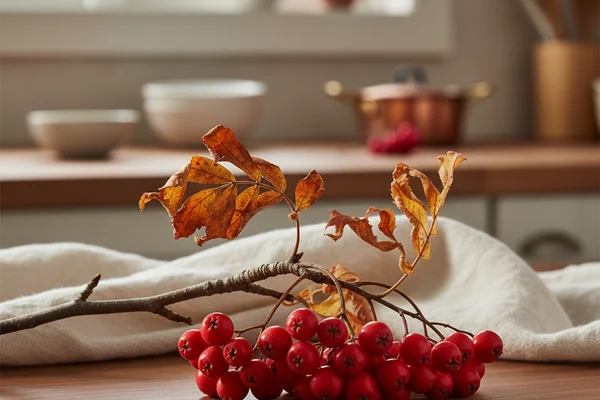
Those small, flame-red clusters you see clinging to ornamental trees in late summer are mountain ash berries — and they have a secret. Pick them before the first frost and you’ll get something sharp, tannic, and stubbornly wild. Wait until after the cold snaps hit, and something shifts. The sugars mellow, the bitterness softens, and suddenly you have fruit worth fermenting. The finished wine is dry, complex, and genuinely surprising — the kind of thing you open a year later and can’t quite believe you made from a yard tree.
The beginner trap: Picking the berries too early — before a hard frost — leaves the wine tasting harsh and bitter no matter how well you ferment it.
Ingredients
- 5 lbs mountain ash berries, frost-tempered, washed and sorted (fresh or frozen)
- 1 lb 13 oz (about 3¾ cups) white granulated sugar
- 7¼ pints (about 3.6 quarts) water
- 1 large lemon, zest and juice only
- ½ tsp pectic enzyme
- 1 tsp yeast nutrient
- 1 packet Montrachet wine yeast (or any dry wine yeast)
Method
- Bring the water to a boil, add the sugar, and stir until fully dissolved.
- While the water heats, crush the cleaned berries in your primary fermenter (a food-grade bucket works fine).
- Pour the hot sugar water over the crushed berries, cover the fermenter, and let it cool to room temperature.
- Stir in the lemon zest, lemon juice, pectic enzyme, and yeast nutrient. Cover and wait 12 hours.
- Sprinkle in the yeast, cover loosely, and wait for fermentation to start — you’ll see bubbling or foam within a day or two.
- Stir the must once daily for seven days.
- Strain the liquid into a clean secondary fermenter (a glass carboy or jug), pressing the pulp to extract juice, then fit an airlock.
- Rack the wine into a clean vessel every four months, repeating until you’ve racked three times total.
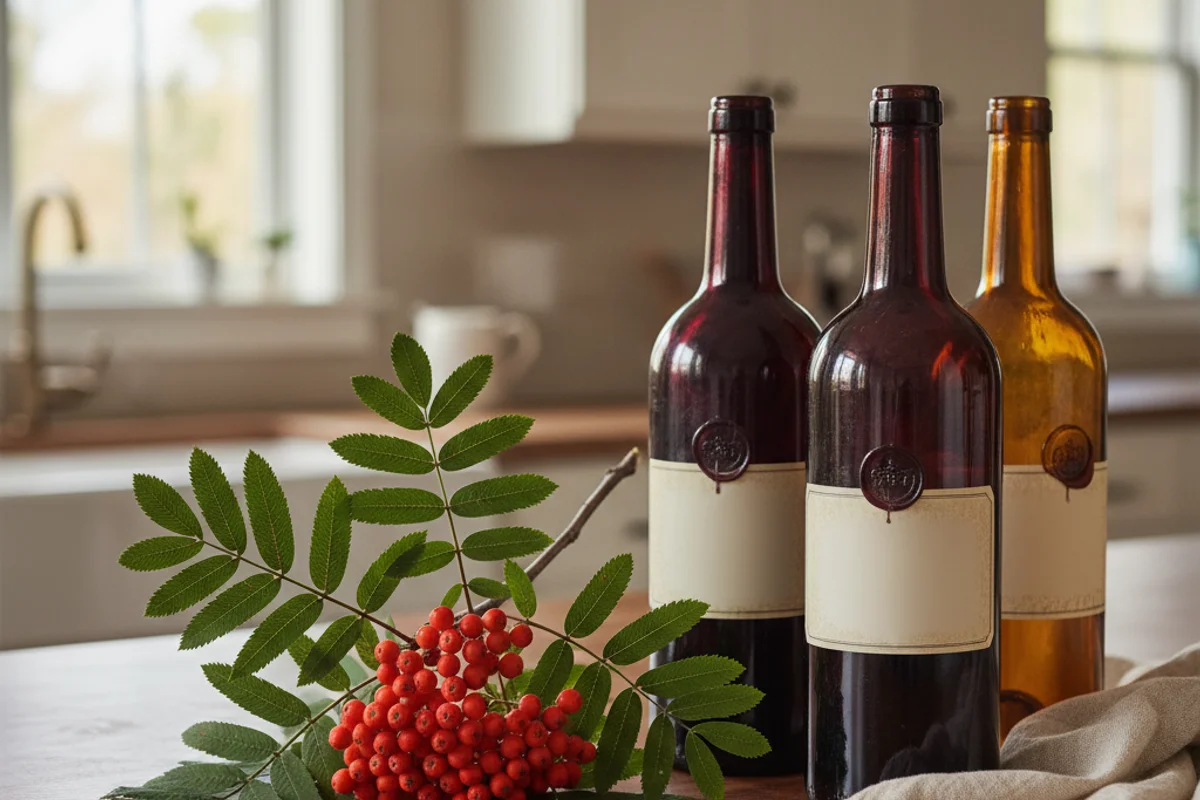
- Bottle after the third racking, then store the bottles for at least one year before opening.
Why this works
Mountain ash berries contain sorbitol, tannins, and parasorbic acid — the last one being the main reason raw berries taste so rough and can irritate the stomach. Frost (or freezing) converts parasorbic acid into the much gentler sorbic acid and breaks down cell walls, releasing sugars and softening the flavor profile. Pectic enzyme does similar structural work inside the fermenter: it breaks down pectin in the fruit flesh, which improves juice yield and prevents a cloudy, gel-like haze in the finished wine. The long aging period — a full year in bottle — lets harsh phenolic compounds polymerize and fall out of solution, turning a grippy young wine into something genuinely smooth.
Notes
If you can’t forage mountain ash berries locally, check Eastern European or Scandinavian grocery stores, which sometimes carry frozen rowan berries (the European cousin, Sorbus aucuparia) — they work well in this recipe. Freezing fresh-picked berries overnight in your home freezer mimics the frost-softening effect if you’re impatient or timing doesn’t line up with the weather. Any dry wine yeast will substitute for Montrachet if needed.