Mountain Ash
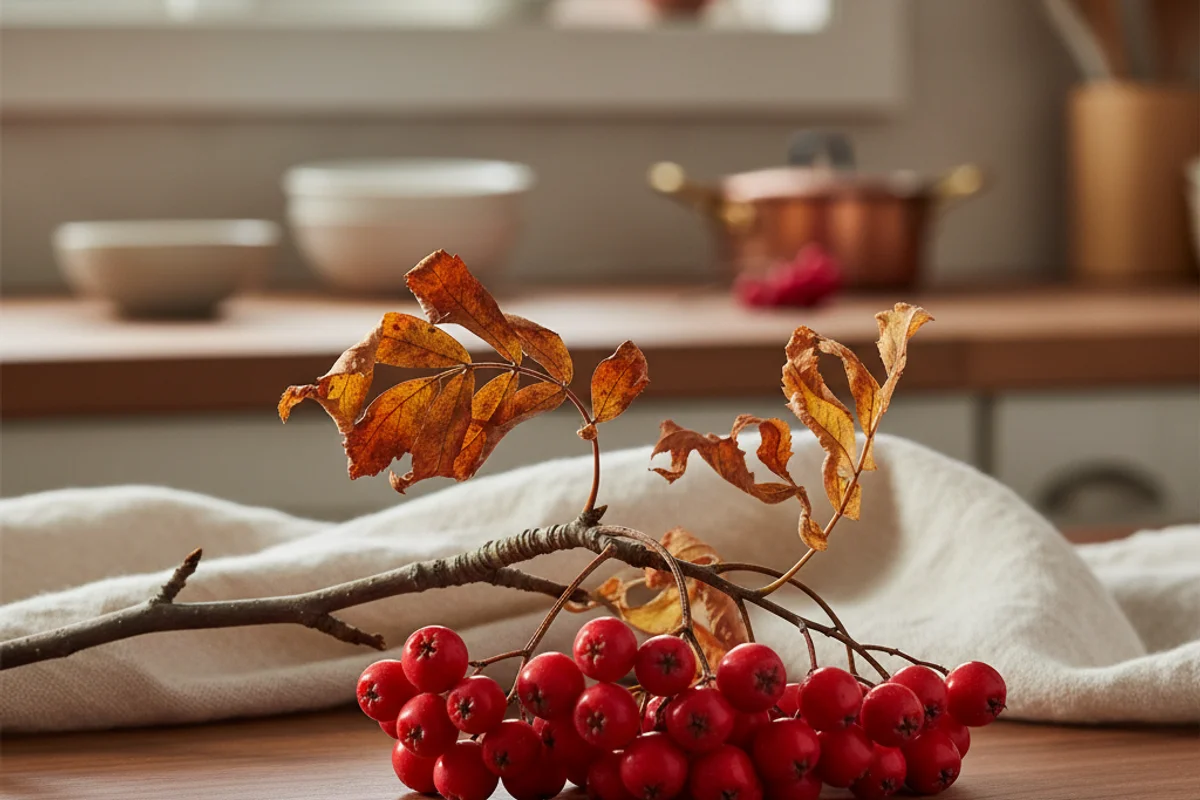
Tiny, fire-red berries hanging in dense clusters against bare autumn branches — mountain ash looks more like a holiday decoration than a wine ingredient. But don’t let the ornamental appearance fool you. These little fruits pack serious tartness and a wild, tannic edge that frost slowly softens into something complex and worth drinking. Give this wine a full year in the bottle and you’ll find a dry, rustic sipper that tastes like fall in a glass.
The beginner trap: Picking or using berries before a hard frost locks in harsh, mouth-puckering bitterness that no amount of aging will fully fix.
Ingredients
- 5 lbs mountain ash berries, fresh or frozen (see Notes)
- 2½ lbs granulated white sugar
- 7¼ pts (about 3.6 liters) water
- 1 large lemon, zest and juice only
- ½ tsp pectic enzyme
- 1 tsp yeast nutrient
- 1 packet Montrachet wine yeast (or any dry wine yeast)
Method
- Make a simple syrup by dissolving the sugar into the water and bringing it to a full boil.
- While the water heats, wash and sort the berries, discarding any that are shriveled or moldy, then crush them in your primary fermenter.
- Pour the boiling sugar water over the crushed berries, stir well, and cover the fermenter. Let it cool to room temperature.
- Once cool, stir in the lemon zest and juice, pectic enzyme, and yeast nutrient. Cover and wait 12 hours.
- Pitch the yeast, cover loosely, and stir the must once daily for one week.
- Strain the liquid into a clean secondary fermenter (carboy) and fit it with an airlock.
- Rack the wine to a clean vessel every 4 months. After the third racking, bottle the wine.
- Store the bottles for at least one full year before opening.
Why this works
Mountain ash berries are loaded with sorbic acid and bitter tannins — both of which mellow significantly with time and cold exposure. Frost damage ruptures the fruit’s cell walls, releasing sugars and breaking down some of the harsh phenolic compounds that make unripened berries nearly undrinkable. Pectic enzyme handles another problem: berries are high in pectin, which causes stubborn haze in the finished wine. Adding the enzyme before fermentation gives it time to break the pectin chains down into smaller sugars, resulting in a clearer, cleaner pour. The long aging schedule — a full year in bottle — lets residual tannins polymerize and drop out, softening what starts as a sharp, wild wine into something genuinely pleasant.
Notes
If you can’t find fresh mountain ash berries locally, frozen berries work just as well — freezing mimics the cell-rupturing effect of a hard frost, which is exactly what you want. European rowan berries (Sorbus aucuparia) are a direct substitute if American varieties aren’t available in your area. Montrachet yeast is sold at homebrew shops; Red Star Premier Blanc is the same strain under a different label and is widely available online.