MUSCADINE GRAPE WINE (1) (Makes 1 Gallon)
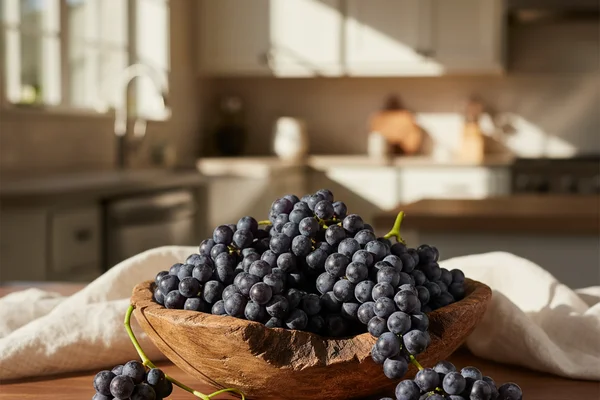
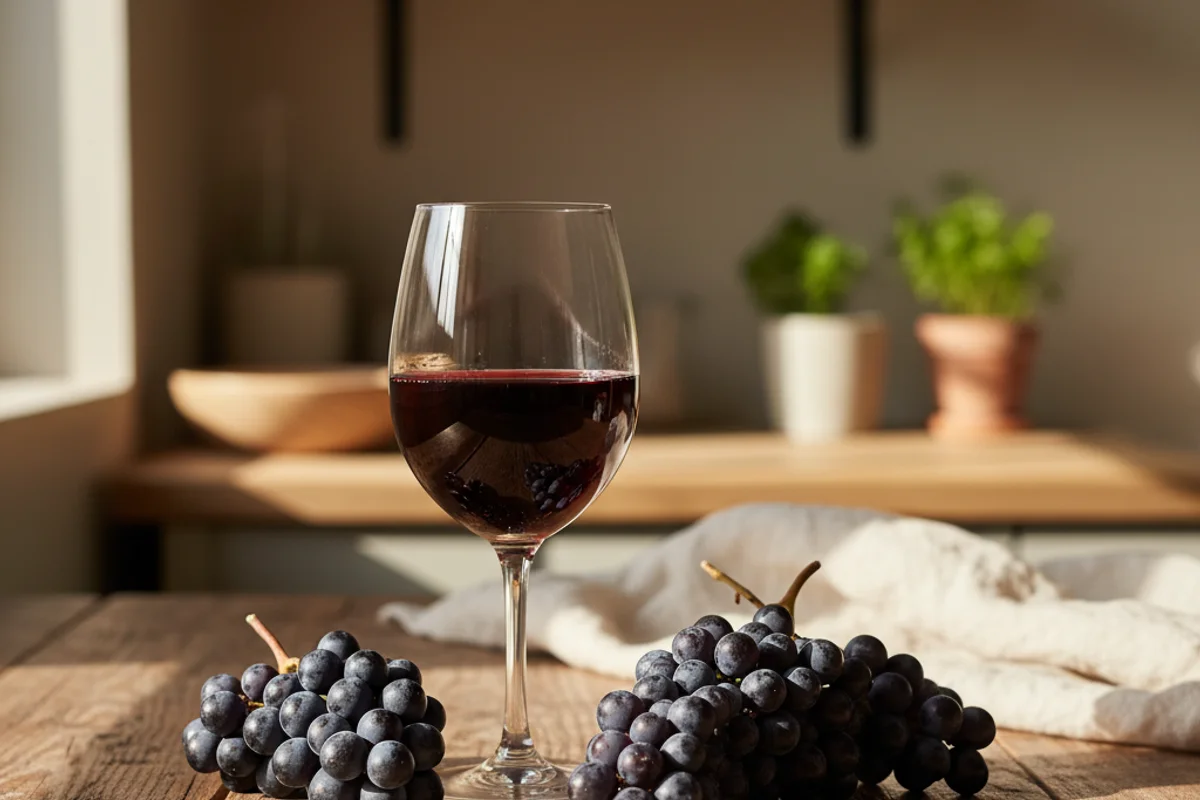
Muscadine grapes are the wild cousins nobody talks about at fancy wine dinners — and that’s their whole appeal. Native to the American South, these thick-skinned, musky beauties pack a flavor punch that’s earthy, jammy, and just a little funky in the best possible way. The resulting wine is bold and rustic, with tannins that need time to mellow and a depth that rewards patience. Give it two to four years and you’ll have something that tastes like it came from somewhere with a front porch and a good story.
The beginner trap: Skipping the acid and gravity checks before pitching the yeast almost always produces a wine that’s either flat and flabby or sharp enough to make your eyes water.
Ingredients
- 6 lbs fresh muscadine grapes (fresh or frozen; thawed frozen grapes work well)
- 2¼ lbs granulated white sugar, plus a little extra if needed to hit target gravity
- 3 qts water
- 1 tsp pectic enzyme
- 1 tsp yeast nutrient
- 1 Campden tablet, crushed
- 1 packet Montrachet wine yeast (or any dry wine yeast such as Lalvin EC-1118)
Method
- Bring the water to a boil and stir in all the sugar until fully dissolved. Set the syrup aside to cool to room temperature.
- Wash, destem, and crush the grapes by hand or with a potato masher. Load the crushed fruit into a nylon straining bag, tie it shut, and place it in your primary fermenter.
- Pour the cooled sugar-water over the bagged grapes. Stir in the crushed Campden tablet and yeast nutrient, then cover the fermenter tightly.
- After 12 hours, add the pectic enzyme and re-cover.
- Wait another 12 hours, then measure the specific gravity (target: 1.090 or above) and the acidity (target: no higher than 7 ppt tartaric). Stir in extra sugar if gravity is low; add acid blend if acid is low. High acid requires a separate correction step — dilution, cold stabilization, or blending.
- Sprinkle the yeast over the must and cover the fermenter again.
- Twice a day, gently squeeze the straining bag and stir the must. Continue for 5–7 days or until specific gravity drops to 1.020.
- Lift out the bag and press it firmly to extract as much liquid as possible. Discard the spent pulp.
- Transfer the wine to a 1-gallon glass jug (secondary fermenter), fit an airlock, and leave it undisturbed for 3 weeks.
- Rack the wine into a clean jug, top it up to minimize headspace, and refit the airlock. Rack again after 2 months, then once more after another 2 months.
- If the wine is clear, bottle it. If it’s still hazy, wait for it to clear, rack one final time, then bottle.
- Optional back-sweetening: Before bottling, stabilize the wine with potassium sorbate, wait 10–12 hours, then stir in a sugar syrup made from 2 parts sugar dissolved in 1 part warm water — use between ⅔ and 1⅓ cups of syrup per gallon to taste.
Why this works
Muscadine skins are loaded with pectin, which is why pectic enzyme is non-negotiable here. Without it, the wine will stay stubbornly cloudy no matter how long you wait. The 24-hour delay before adding the enzyme (after the Campden tablet) matters because sulfite — the active compound in that crushed tablet — can inhibit pectic enzyme on contact. Giving the sulfite time to off-gas first means the enzyme can do its job properly. The two-stage racking schedule slowly pulls the wine off dead yeast cells (lees) that would otherwise break down and add off-flavors. Time in the bottle lets harsh tannins polymerize and soften — this is why the two-to-four-year wait transforms a rough young wine into something genuinely smooth.
Notes
Frozen muscadines from a grocery store or online retailer are a great year-round option — freezing actually breaks down cell walls, making juice extraction easier. If you can’t find Montrachet yeast locally, Lalvin EC-1118 or Red Star Premier Blanc are widely available substitutes that handle high-sugar musts well. If you don’t own a hydrometer, pick one up before you start — it costs about five dollars and is the single most useful tool in home winemaking.