MUSCADINE GRAPE WINE (1)
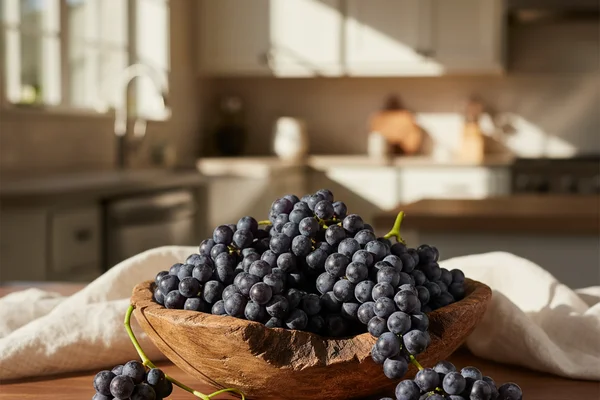
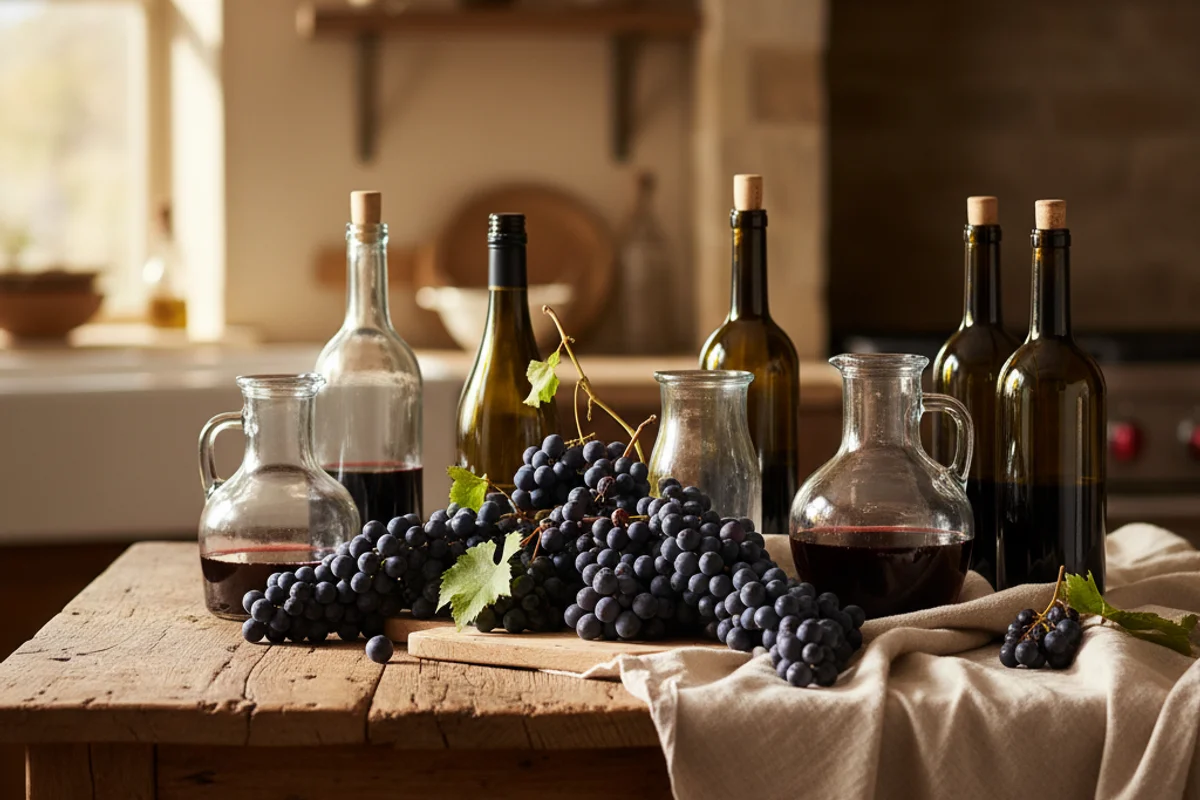
Muscadines are not your average grape. Thick-skinned, musky, and loaded with tannin, these Southern natives pack more personality per berry than almost anything else you’ll crush this season. The finished wine is dark, rich, and deeply aromatic — somewhere between a bold red and a fruit wine, with earthy undertones that soften beautifully over time. Fresh muscadines show up at farmers markets and grocery stores across the South every August and September, and they’re absolutely worth the hunt.
The beginner trap: Skipping the acid and gravity check before pitching yeast — muscadines are naturally high in acid, and adding yeast to an out-of-range must almost guarantees an unbalanced wine that no amount of aging will fix.
Ingredients
- 6 lbs ripe muscadine grapes, fresh or frozen
- 2¼ lbs granulated white sugar
- 3 qts water
- 1 tsp pectic enzyme
- 1 tsp yeast nutrient
- 1 Campden tablet, crushed
- 1 packet Montrachet wine yeast (or any dry red wine yeast)
Method
- Bring the water to a boil and dissolve all the sugar in it completely. Set aside to cool to room temperature.
- While the water cools, wash and destem the grapes, then crush them by hand — wear rubber gloves, as muscadines stain aggressively.
- Load the crushed grapes into a nylon straining bag, tie it shut, and place it in your primary fermenter.
- Pour the cooled sugar-water over the bag of grapes. Add the crushed Campden tablet and yeast nutrient, then cover the fermenter securely.
- After 12 hours, add the pectic enzyme and re-cover.
- After another 12 hours, measure specific gravity and acidity. Target a starting gravity of 1.090 or above and an acidity no higher than 7 ppt as tartaric. Adjust with additional sugar or an acid-reduction method if needed.
- Sprinkle in the yeast, cover the fermenter again, and gently squeeze the bag and stir the must twice a day for 5–7 days, or until gravity drops to around 1.030.
- Remove the bag and press the pulp firmly to extract as much liquid as possible.
- Transfer the wine to a secondary fermenter (glass carboy or food-grade jug), fit an airlock, and leave it alone for 3 weeks.
- Rack into a clean vessel, top it up to minimize headspace, then rack again after 2 months and once more 2 months after that.
- Once the wine has cleared, bottle it. If it’s still hazy, wait it out, rack one more time, then bottle.
- To back-sweeten, stabilize the wine first, wait 10–12 hours, then stir in a simple syrup (2 parts sugar dissolved in 1 part water) at a rate of ⅔ to 1⅓ cups per gallon, tasting as you go.
Why this works
Muscadines have unusually thick skins packed with tannins and natural wild yeast — the Campden tablet knocks out those wild microbes and gives your chosen yeast a clean runway. Pectic enzyme is added after the sulfite dissipates (hence the 12-hour wait) because sulfites deactivate it on contact. The enzyme breaks down pectin in the grape skins, which would otherwise turn your finished wine permanently cloudy no matter how long you wait. Montrachet yeast is a strong, reliable fermenter that handles the moderate sugar load and the muscadine’s bold flavor without getting out of its way — it ferments cleanly and lets the fruit speak.
Notes
Frozen muscadines work well here; freeze-thaw cycles break down the thick skins and actually improve juice extraction. If you can’t find muscadines, scuppernongs (a bronze variety of the same species) are a direct swap. Yeast nutrient is sold at homebrew shops and online under brands like Fermaid-O or Lalvin Go-Ferm — a basic DAP-based nutrient from any homebrew retailer works fine too. This wine is drinkable at one year but genuinely rewards patience; two to four years in the bottle transforms it.