MUSCADINE GRAPE WINE (2)
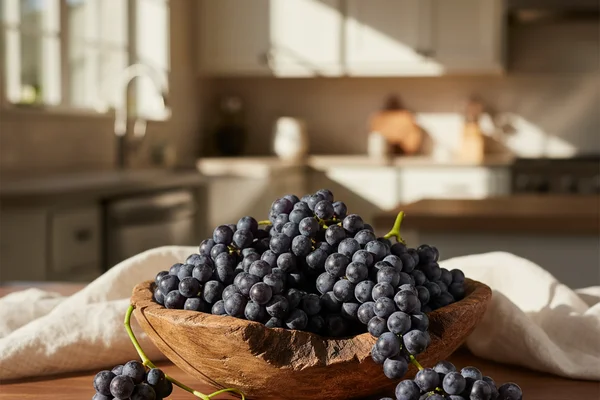
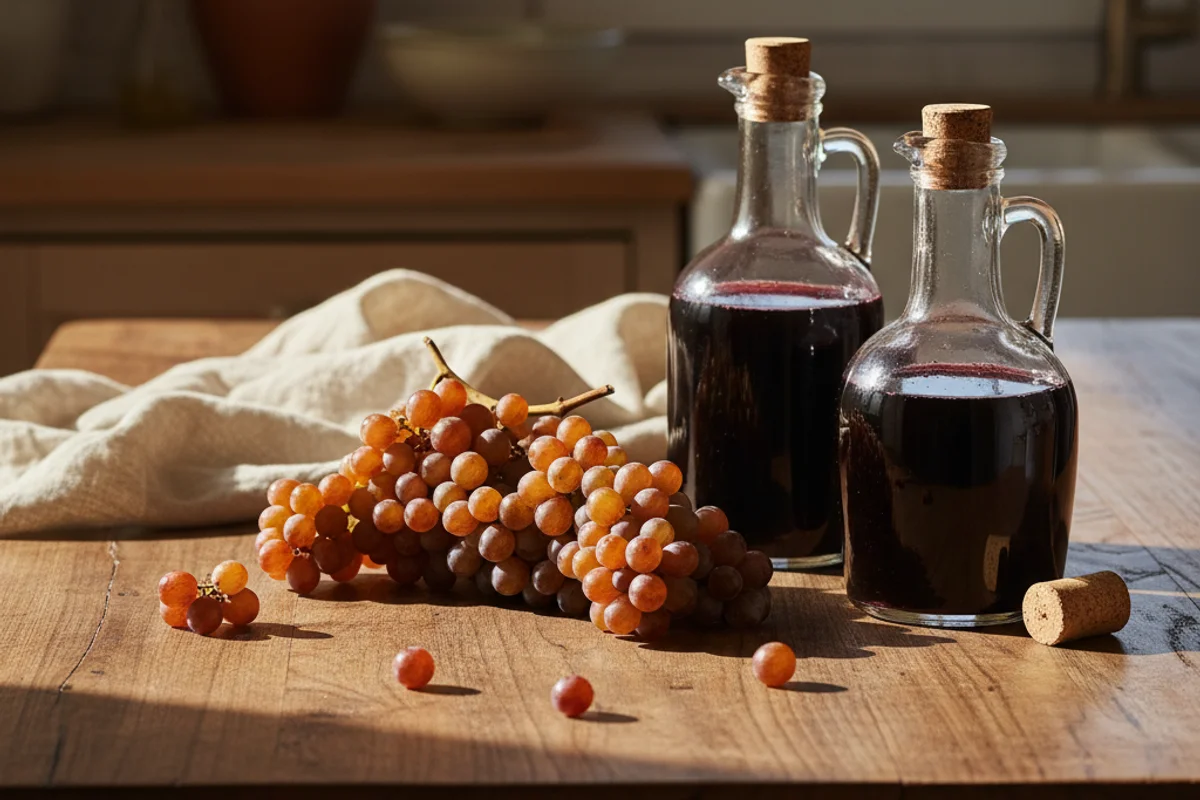
Muscadines are the wild cards of the grape world — thick-skinned, musky, and dripping with a flavor that lands somewhere between grape jelly and a warm September afternoon in the Deep South. Native to the American Southeast, these grapes carry more tannin, more acid, and more personality than your average table grape. The result in the glass is a wine that’s bold, aromatic, and genuinely unlike anything you’d pull off a store shelf. This is a skin-contact, primary-fermented recipe, which means you’re wringing every last bit of color and character out of those tough hides before moving on to a long, patient secondary fermentation.
The beginner trap: Skipping the 24-hour wait before pitching yeast means the Campden tablet (sulfite) is still active and will knock out your yeast before fermentation even starts.
Ingredients
- 6–8 lbs fresh muscadine grapes (or frozen, thawed; see Notes)
- 2½ lbs granulated white sugar
- 3 quarts water
- 1 tsp pectic enzyme (found at homebrew shops or online)
- 1 tsp yeast nutrient (or a pinch of bread yeast can substitute in a pinch, but dedicated nutrient is better)
- 1 Campden tablet, crushed (or ¼ tsp potassium metabisulfite powder)
- 1 packet Montrachet wine yeast (Red Star brand; widely available online)
Method
- Put on rubber gloves — muscadine juice stains aggressively. Wash and destem the grapes, then crush them thoroughly in your primary fermenter using a sanitized potato masher or a clean piece of lumber worked up and down through the fruit.
- Bring the water to a full boil, then pour it directly over the crushed grapes and sugar. Stir until the sugar dissolves completely.
- Add the crushed Campden tablet and the yeast nutrient, stir to combine, and cover the fermenter loosely with a clean cloth or lid. Let it sit for 12 hours.
- After 12 hours, stir in the pectic enzyme. Cover again and wait another 12 hours.
- Using a hydrometer, measure the specific gravity (target: 1.090 or above) and the acidity (target: no higher than 7 parts per thousand tartaric). Adjust if needed — add a little more sugar to raise gravity, or add water to dial back acid.
- Sprinkle the yeast over the must, cover the fermenter, and stir the mixture 2–4 times per day, pushing the floating cap of skins back down into the liquid each time.
- Check the specific gravity daily. When it drops to 1.040, strain the pulp firmly through a fine mesh bag or strainer, squeeze out as much liquid as possible, and discard the solids.
- Return the strained liquid to the fermenter, cover it, and keep checking the gravity daily until it reaches 1.030.
- Siphon the wine into a glass carboy or secondary fermenter, fit an airlock, and leave it alone for 30 days.
- Rack (siphon off the sediment into a clean vessel) and top up with a little water or similar wine to minimize air space. Repeat this racking every 30 days until the wine runs clear.
- Wait one more 30-day period after the wine clears, then stabilize with a crushed Campden tablet and ¼ tsp potassium sorbate (available at homebrew shops) to halt fermentation.
- Sweeten to your taste, bottle the wine, and store it somewhere cool and dark for at least 18 months before opening. Patience pays off here.
Why this works
Muscadines have unusually thick skins packed with tannins, color compounds, and aromatic molecules. Fermenting on the skins during primary lets alcohol — as it builds — act as a solvent, pulling those compounds into solution far more effectively than juice alone could. The boiling water does two jobs: it sanitizes the must and helps break down cell walls in the fruit, releasing more juice and flavor. Pectic enzyme breaks down pectin (a natural thickener in fruit), which prevents a stubborn haze in the finished wine and helps the whole batch clear on its own. The long aging period lets harsh tannins polymerize and soften, transforming a rough young wine into something genuinely smooth.
Notes
Frozen muscadines work well here — the freeze-thaw cycle ruptures the tough skins and actually improves juice extraction. If fresh muscadines aren’t available in your area, check Latin grocery stores or Asian markets for similar thick-skinned grape varieties as a substitute, though the flavor profile will differ. If your finished wine tastes too tart after aging, a small addition of sugar at bottling (step 12) rounds it out considerably.