MUSCADINE GRAPE WINE (3)
Makes 3 gallons
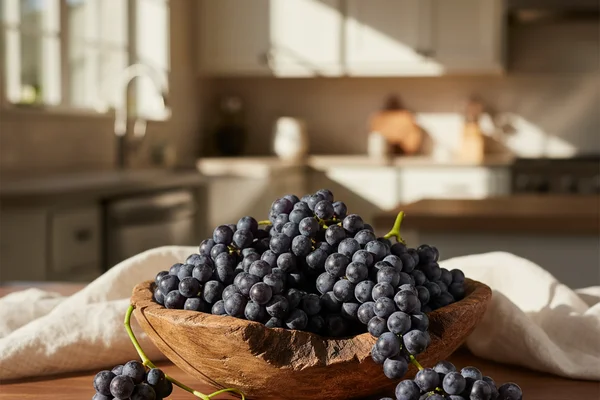
Muscadine grapes are the bold, thick-skinned rebels of the grape world — musky, jammy, and loaded with tannin. They don’t taste like anything you’d find in a California wine aisle, and that’s exactly the point. This recipe leans into that wildness, using a heavy load of fruit to build a deep, full-bodied red that starts rough and finishes remarkable. Give it a year in the bottle and it transforms. Give it three years and you’ll be hiding it from your friends.
The beginner trap: Muscadines are naturally high in acid, and the urge to dump in extra sugar to balance that tartness will stall your fermentation or kill it outright — test and adjust acid separately, and keep your sugar additions disciplined.
Ingredients
- 20–22 lbs ripe Muscadine grapes, fresh or frozen
- 5–6 lbs granulated white sugar
- 8–9 qts water
- 3 tsp pectic enzyme
- 3 tsp yeast nutrient
- 3 Campden tablets, crushed
- 1 packet Montrachet wine yeast (or any dry wine yeast)
Method
- Bring the water to a boil and dissolve all the sugar into it, then set aside to cool to room temperature.
- Wash, destem, and crush the grapes, then transfer them into your primary fermentation vessel (a food-grade bucket works fine).
- Pour the cooled sugar-water over the crushed grapes, then stir in the crushed Campden tablets and yeast nutrient. Cover the vessel tightly and let it sit for 12 hours.
- After 12 hours, stir in the pectic enzyme. Cover again and wait another 12 hours.
- Measure specific gravity and total acidity. You’re aiming for an S.G. of 1.090 or higher and total acidity no higher than 0.75%. Add more sugar if S.G. is low; adjust acid if needed using acid blend (to raise) or a reduction method (to lower).
- Activate the yeast according to the packet instructions, then add it to the must. Cover the vessel and punch down the grape cap twice a day for 5–9 days, until the S.G. drops to at least 1.020.
- Strain out the pulp and press the solids using a fruit press or a fine mesh bag to extract as much liquid as possible.
- Transfer the liquid into a 3-gallon glass carboy or secondary fermentation vessel and fit it with an airlock. Ferment until dry, targeting an S.G. of 0.990.
- Rack the wine into a clean vessel, top up to minimize headspace, then rack again after 2 months and once more 2 months after that.
- Once the wine has cleared, bottle it. If it’s still cloudy, wait, rack one more time, then bottle when clear.
- To back-sweeten before bottling, stabilize the wine first, wait 10–12 hours, then stir in 2–3 cups of simple syrup (2 parts sugar dissolved in 1 part water) to taste.
Why this works
Muscadines are naturally low in sugar but high in acid — a tough combination for wine yeast, which needs a hospitable environment to do its job. Dissolving the sugar in hot water first ensures it blends evenly into the must without creating pockets of high sugar concentration that can stress the yeast. The 24-hour staggered addition of Campden tablets followed by pectic enzyme matters because sulfites knock out wild microbes first, and pectic enzyme breaks down the pectin in grape skins to release more juice and prevent a hazy finished wine. Punching down the cap daily keeps the grape skins submerged and in contact with the fermenting liquid, pulling out color, flavor compounds, and tannins that give this wine its backbone.
Notes
Frozen Muscadines work well here — freezing ruptures the cell walls and makes crushing easier and juice extraction more efficient. If you can’t find Muscadines fresh or frozen, Concord grapes are the most accessible grocery-store substitute, though the flavor will be less wild and musky. Wear gloves when handling raw Muscadines — the juice stains skin deeply and the natural acidity can irritate sensitive skin.