MUSTANG GRAPE WINE [5] (for 5 gallons)
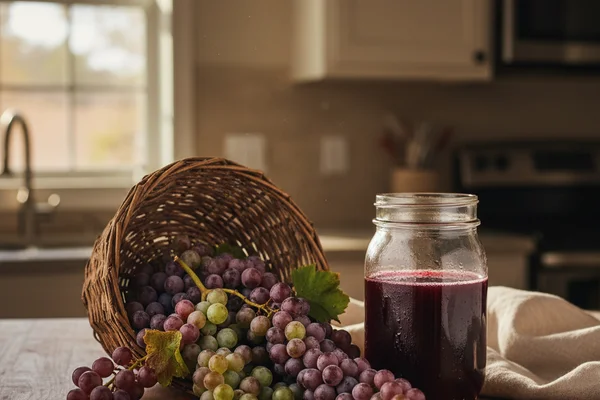
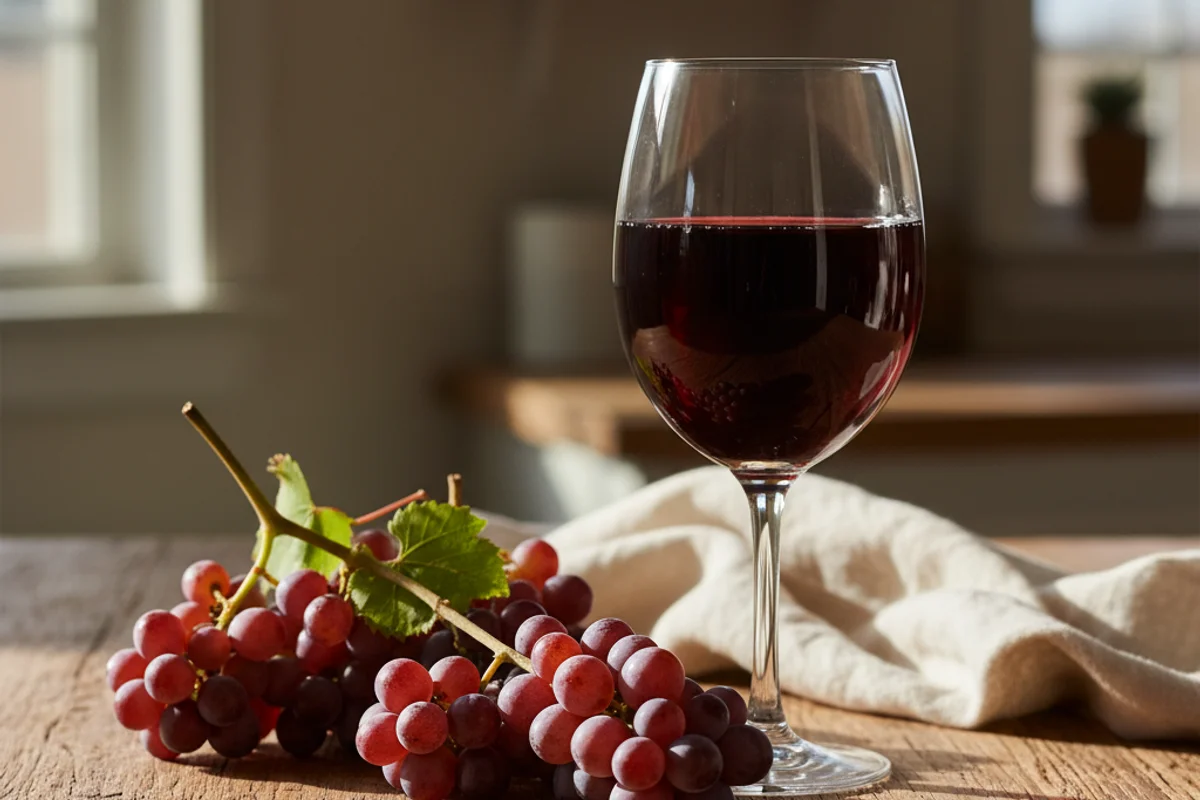
Mustang grapes are the wild child of the Texas Hill Country — thick-skinned, intensely pigmented, and loaded with enough acid to make your lips pucker on contact. Raw off the vine, they’re borderline aggressive. Fermented and given time, that same ferocity transforms into a bold, deeply colored red with rustic character that store-bought wine rarely matches. This is not a delicate Pinot Noir situation. This is a wine that knows where it came from and isn’t apologizing for it. Patience is the secret ingredient: drink it young if you want, but wait a year or two and you’ll understand why people grow these grapes on purpose.
The beginner trap: Mustang grape juice is extremely high in acid and will stain and irritate skin on contact — skip the rubber gloves even once and you’ll regret it, and skipping them entirely can cause a chemical-like burn.
Ingredients
- ½ bushel (roughly 24–26 lbs) very ripe Mustang grapes, fresh or frozen
- 12–15 lbs granulated white sugar (see Notes for split amounts by yeast)
- 4 gallons filtered or non-chlorinated water
- 6 Campden tablets, crushed (or ¼ tsp potassium metabisulfite powder)
- 3 tbsp yeast nutrient (available at homebrew shops or online)
- 1 packet Red Star Montrachet yeast (lower alcohol) or Lalvin 71B-1122 yeast (higher alcohol)
Method
- Put on rubber gloves — non-negotiable with Mustang grapes. Remove stems, rinse the grapes, and crush them by hand in a food-safe primary fermenter (plastic bucket, barrel, or crock).
- Add the 4 gallons of water, 2 lbs of sugar, yeast nutrient, and crushed Campden tablets. Stir thoroughly until the sugar fully dissolves.
- Cover the fermenter loosely and let it sit undisturbed for 24 hours to allow the sulfite to do its sanitizing work.
- After 24 hours, sprinkle in your chosen yeast and stir it in gently.
- Stir the must once every morning for 5 to 6 days, or until the grape skins and seeds form a firm floating cap on the surface.
- Once the cap is well-formed and rising consistently, remove all solids and strain the remaining juice through a fine mesh bag or clean cloth into a separate vessel.
- Add the remaining sugar — 10 lbs if using Montrachet yeast, 13 lbs if using Lalvin 71B — and stir until completely dissolved.
- Siphon (preferred) or carefully pour the juice into a 5-gallon glass carboy. Do not top it up to the neck yet; leave headspace for active fermentation.
- Fit an airlock and let fermentation run its course. When bubbling stops completely, rack the wine into a clean carboy, top it up to reduce headspace, and refit the airlock.
- Rack again after two months, then once more two months after that. Bottle without adding any sweetener.
Why this works
The staged sugar addition here is doing real work. Dumping all 12–15 lbs of sugar in at the start would stress the yeast with an overwhelmingly high-gravity environment right out of the gate, risking a stuck fermentation. Starting with just 2 lbs lets the yeast population build strength and establish a healthy colony before you challenge them with the rest of the sugar. Lalvin 71B is also worth understanding: it’s known for metabolizing a portion of malic acid through a process called partial malolactic conversion, which softens the naturally harsh acidity of Mustang grapes without a separate bacterial fermentation step. That’s a neat trick for a grape this tart.
Notes
If fresh Mustang grapes aren’t available to you, frozen wild grapes work well — freezing actually helps break down cell walls, improving juice extraction during crushing. If you can’t find Campden tablets locally, potassium metabisulfite powder from a homebrew supply store is a direct substitute (¼ tsp equals roughly 5–6 tablets). This wine is drinkable young but genuinely improves with 1–2 years of bottle aging, so make a big batch and hide some from yourself.