MUSTANG GRAPE WINE (Dry, Red) [1] Makes 1 Gallon
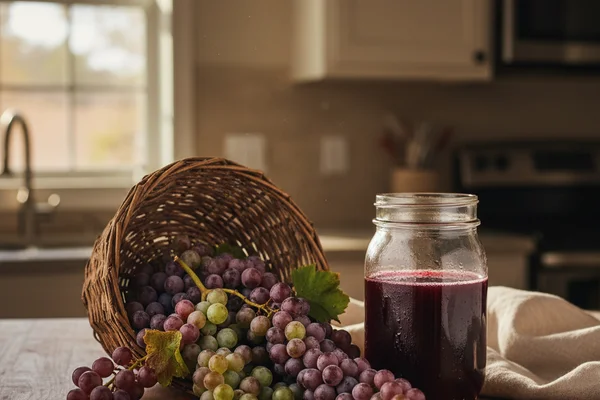
Mustang grapes are the wild child of the Texas plains — small, ink-dark, and loaded with so much acid they’ll make your lips curl on first taste. That same ferocity is exactly what makes them worth wrestling into a bottle. Given time — and we’re talking years, not months — that sharp edge mellows into something deeply earthy, tannic, and complex. Think rustic Rhône meets backyard bramble. This is not a wine for the impatient, but the payoff is real.
The beginner trap: Mustang grapes are extremely high in acid, and skipping the step of measuring and adjusting acidity before secondary fermentation will leave you with a wine that tastes sour and harsh no matter how long you age it.
Ingredients
- 6 lbs. black Mustang grapes, stems removed (fresh or frozen)
- 1½ lbs. granulated white sugar
- 6 pints (12 cups) water
- 1 Campden tablet, crushed (potassium or sodium metabisulfite — find it at any homebrew shop or online)
- 1 packet wine yeast (Lalvin EC-1118 or Red Star Premier Classique work well)
- 1 tsp. yeast nutrient (available at homebrew shops; omit only if you have no access)
Method
- Put on rubber gloves — Mustang grape juice stains skin and can irritate it. Remove all stems, rinse the grapes well, then crush them by hand or with a potato masher in a large food-safe bucket or crock.
- Add the sugar, water, and crushed Campden tablet to the crushed grapes. Stir thoroughly until the sugar dissolves, then cover the vessel with a clean cloth and leave it alone for 24 hours.
- After 24 hours, stir in the yeast and yeast nutrient. Cover loosely and let primary fermentation begin.
- Twice a day for the next 5–7 days, push the floating cap of grape skins and seeds back down into the liquid and give everything a good stir. This keeps mold at bay and pulls color and flavor from the skins.
- When vigorous bubbling slows, strain the must through a fine mesh strainer or cheesecloth into a clean container, pressing the pulp firmly to squeeze out as much liquid as possible. Discard the solids.
- Measure the acidity with an acid test kit (available at homebrew shops). Adjust downward to around 7 parts per thousand (ppt) tartaric if needed — cold stabilization or dilution with water are the two most practical methods for home winemakers.
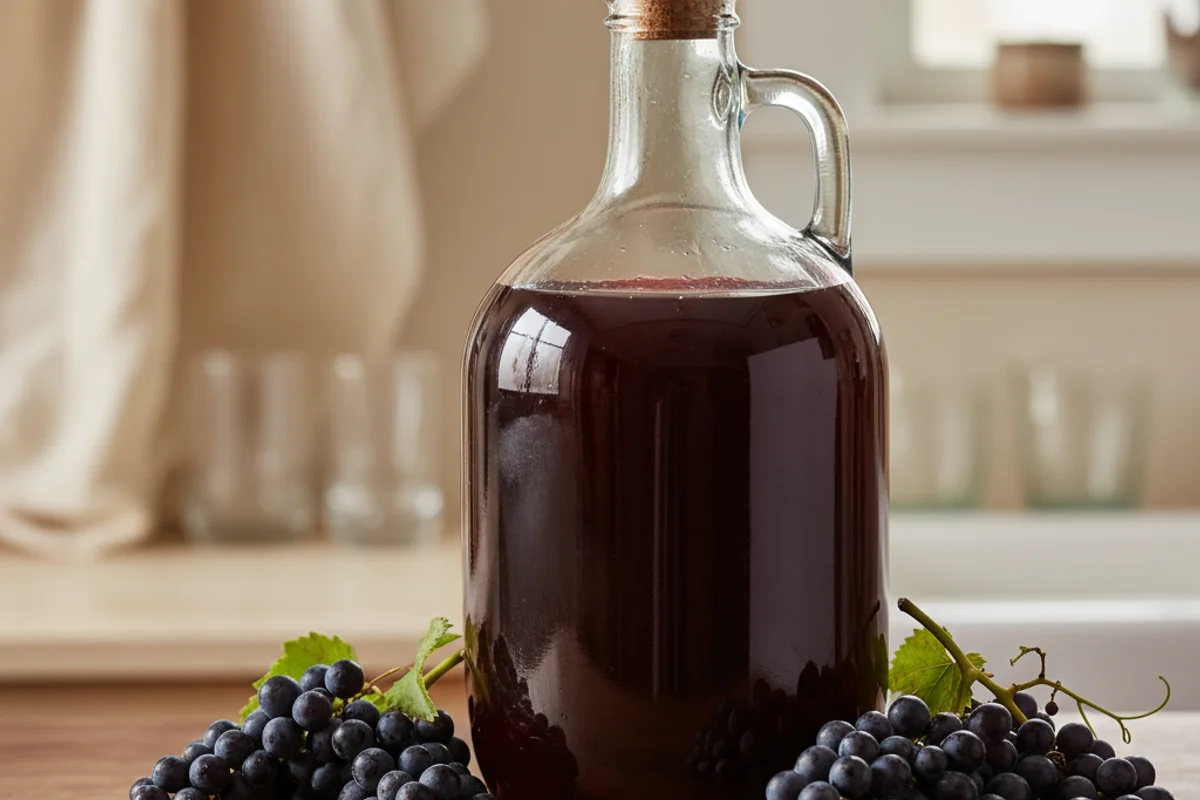
- Transfer the wine to a 1-gallon glass jug (secondary fermentation vessel), fit it with an airlock, and leave it undisturbed for three weeks.
- Rack the wine — siphon it off the sediment into a clean jug — top it up with a little water or finished wine to minimize headspace, and refit the airlock.
- Rack again three months later and add a fining agent (gelatin finings or bentonite, per package directions) to clear the wine.
- Ten days after fining, bottle the wine in clean, sanitized bottles and seal with corks.
- Wait at least one year before opening a bottle; 3–4 years of aging produces a noticeably richer, smoother result.
Why this works
Mustang grapes are chemically aggressive — they carry exceptionally high levels of malic and tartaric acids compared to cultivated wine grapes. That’s why the rubber gloves aren’t optional; the juice can actually irritate bare skin. The week-long maceration on the skins does double duty: wild grape skins are loaded with anthocyanins (the pigments that give red wine its color) and tannins, both of which need time and stirring to extract fully. Tannins act as natural preservatives and are a big reason this wine rewards long aging. As the wine sits in the bottle, harsh tannins polymerize into longer, softer chains — the same chemistry that turns a grippy young Cabernet into something velvety after years in a cellar.
Notes
Frozen Mustang grapes work well here and have a practical bonus: freezing ruptures the cell walls, making crushing easier and extraction more efficient. If you can’t source Mustang grapes locally, check Latin grocery stores or order frozen wild grapes online. For the acid adjustment step, cold stabilization (chilling the wine near freezing for a few weeks to precipitate tartrate crystals) is the least invasive method and doesn’t dilute flavor.