MUSTANG GRAPE WINE (Dry, Red) [1]
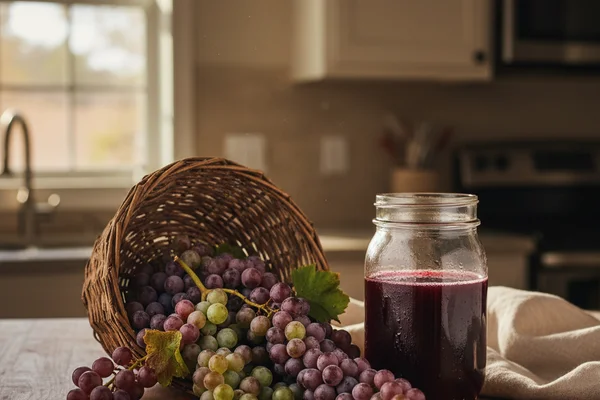
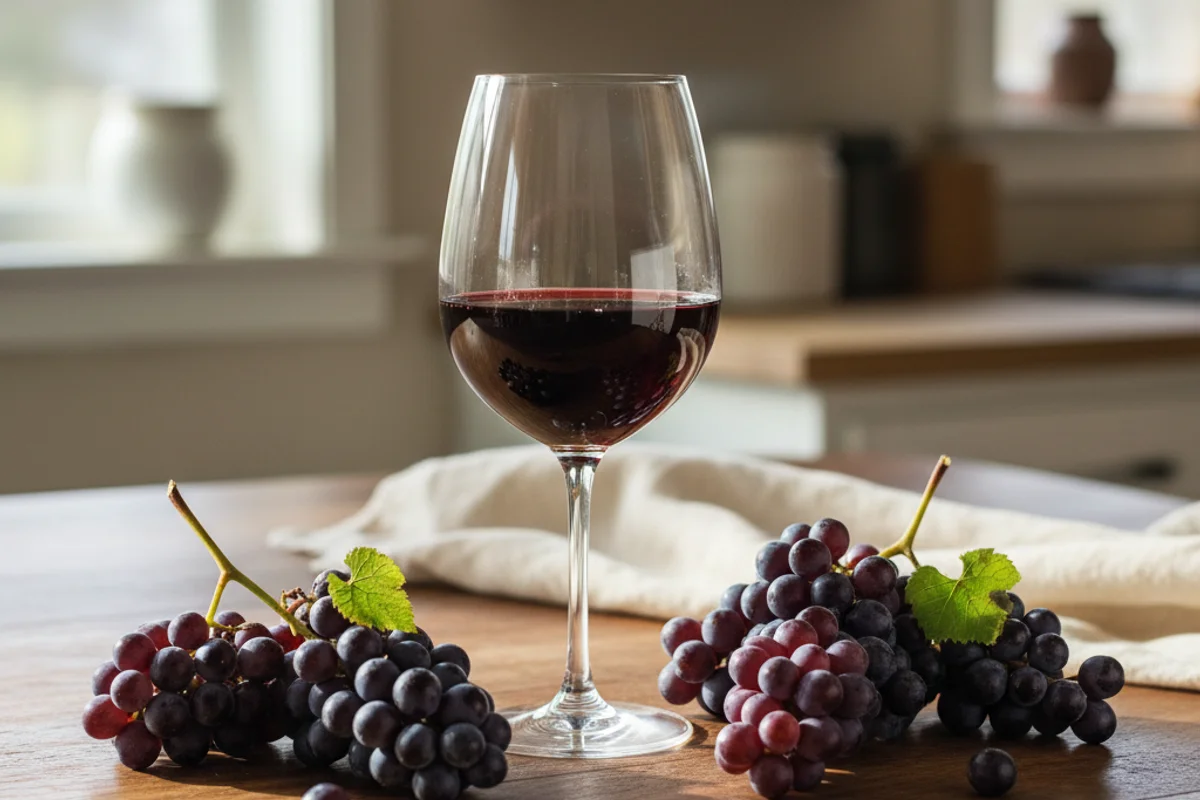
Mustang grapes are the wild child of the grape world — thick-skinned, intensely pigmented, and loaded with so much natural acid they’ll pucker your face inside out straight off the vine. Native to the American South and Southwest, these grapes produce a wine that starts bold and tannic, softens over years into something genuinely complex, and carries a deep ruby color that looks like it cost three times what it did. This is a patience game. The juice rewards you — but only if you respect its chemistry first.
The beginner trap: Mustang grapes are extremely high in acid, and skipping the acidity measurement and reduction step will leave you with a wine so tart it’s nearly undrinkable.
Ingredients
- 6 lbs. black Mustang grapes, fresh or frozen, stems removed
- 1½ lbs. granulated white sugar
- 6 pints (12 cups) water
- 1 Campden tablet, crushed (or ¼ tsp potassium metabisulfite powder)
- 1 packet wine yeast (Lalvin EC-1118 or Red Star Côte des Blancs work well)
- 1 tsp yeast nutrient
Method
- Put on rubber gloves — Mustang grape juice stains skin and can irritate it. Remove all stems, rinse the grapes thoroughly, then crush them by hand or with a potato masher into a food-safe plastic bucket or ceramic crock.
- Add the sugar, water, and crushed Campden tablet to the crushed grapes. Stir everything together well, then cover the vessel with a clean cloth and let it sit for 24 hours.
- After 24 hours, sprinkle in the wine yeast and yeast nutrient. Stir to combine.
- Twice a day for the next 5 to 7 days, push the floating cap of grape skins and seeds back down into the liquid and stir. This keeps the must from spoiling and pulls color and tannin from the skins.
- Strain the must through a fine mesh strainer or cheesecloth, pressing the pulp firmly to squeeze out as much juice as possible.
- Measure the acidity of the juice using an acid test kit (available at any homebrew shop). Adjust the acid level down to 7 parts per thousand (ppt) tartaric equivalent — dilution with water or cold stabilization are the most common methods.
- Transfer the juice into a clean secondary fermentation vessel (a glass carboy or food-safe jug), fit an airlock, and let it ferment undisturbed for three weeks.
- Rack the wine off its sediment into a clean vessel, top it up to minimize headspace, and refit the airlock.
- Three months later, rack again and add a fining agent (store-bought Sparkolloid or gelatin both work).
- Ten days after fining, bottle the wine. It’s drinkable young, but set some aside — at 3 to 4 years it becomes a genuinely different, better wine.
Why this works
Mustang grapes contain unusually high levels of tartaric and malic acid compared to cultivated wine grapes. That acid is great for microbial stability — nothing unwanted wants to grow in that environment — but left unchecked it overwhelms every other flavor. Bringing the titratable acidity down to roughly 7 ppt gives the yeast a friendlier environment and lets the fruit character actually show up in the finished wine. The extended skin contact during primary fermentation pulls anthocyanins (the pigment) and tannins out of those thick skins, building the structure that allows this wine to age so well. Time in the bottle lets harsh tannins polymerize and drop out, which is the science behind why patience pays off here.
Notes
Frozen Mustang grapes work well in this recipe — freezing ruptures the skin cells and actually makes juice extraction easier; thaw completely before crushing. If you can’t find an acid test kit locally, most homebrew supply websites carry them for under $10. If your acidity is extremely high even after adjustment, a small addition of potassium bicarbonate (½ tsp at a time, stirred in and retested) is an easy way to bring it down without diluting flavor.