MUSTANG GRAPE WINE (Semi-Sweet, Red) [3] Makes 1 Gallon
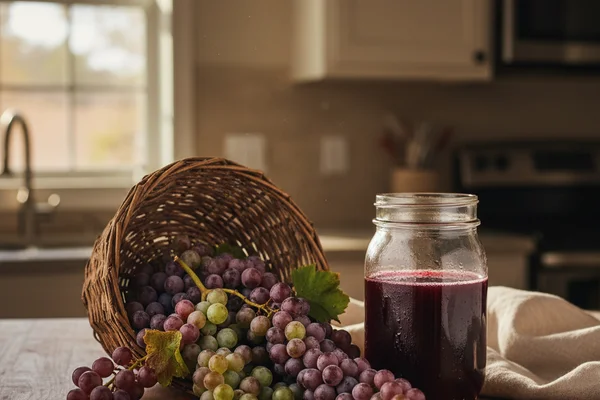
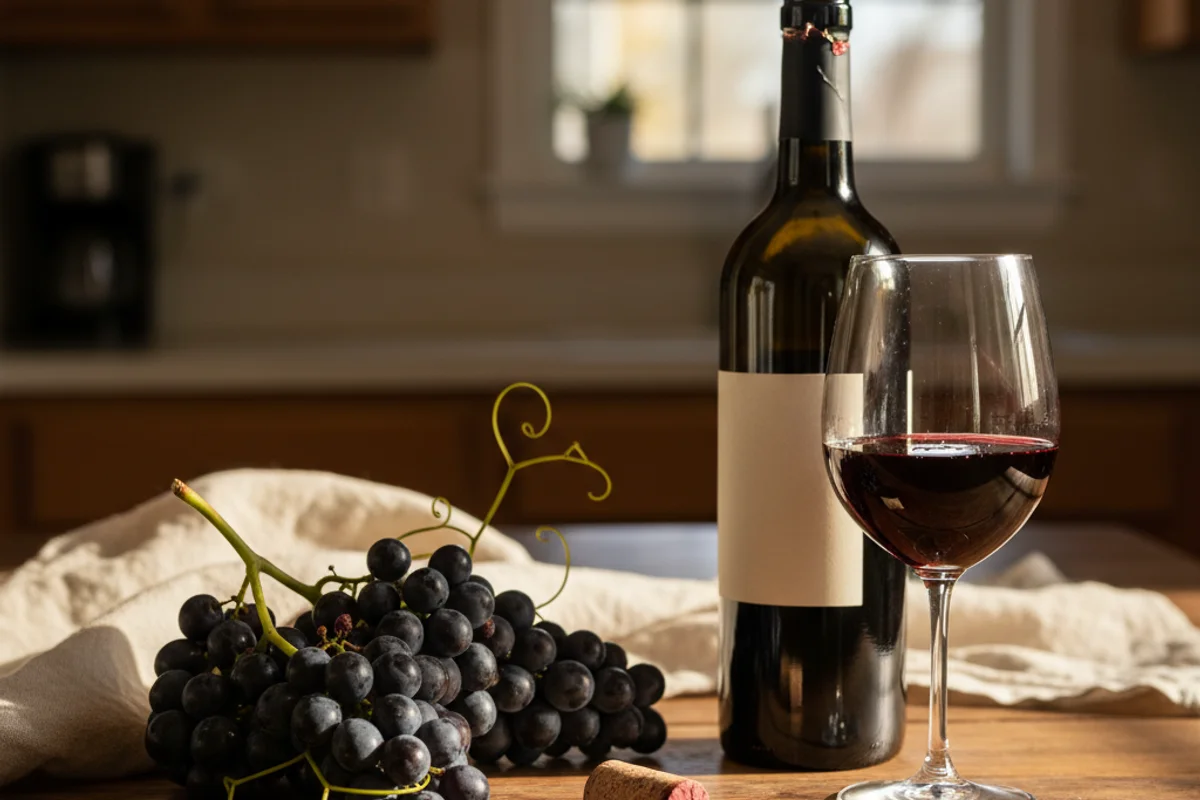
Wild Mustang grapes are the bruisers of the grape world — thick-skinned, intensely pigmented, and loaded with so much natural acid they’ll pucker your face like a lemon. Grown across Texas and the South, they produce a wine that starts bold, tannic, and almost aggressive, then slowly mellows into something genuinely complex and dark-fruited over several years in the bottle. This is a long game recipe. The payoff at year three or four is a deep, semi-sweet red with real character — not a sipping wine for the impatient.
The beginner trap: Mustang grapes are extremely high in acid, and skipping the acidity measurement before secondary fermentation will leave you with a wine that tastes sharp and harsh no matter how long you age it.
Ingredients
- 8 lbs. black Mustang grapes, fresh or frozen
- 2 lbs. granulated sugar
- 5 pints water
- 1 tsp. pectic enzyme
- 1 Campden tablet, crushed
- 1 packet Montrachet wine yeast (or any dry red wine yeast)
- 1 tsp. yeast nutrient
Method
- Bring the water to a boil. While it heats, remove stems from the grapes and rinse them well.
- Put on rubber gloves — Mustang grape juice stains skin and can irritate it — then crush the grapes by hand in a food-safe plastic bucket or ceramic crock.
- Add the sugar and yeast nutrient to the crushed grapes, then pour the boiling water over everything and stir until the sugar fully dissolves. Cover the bucket with a clean cloth.
- After 2 hours, stir in the crushed Campden tablet. Cover again.
- After 10 more hours (12 hours total from step 3), stir in the pectic enzyme. Cover again.
- Twelve hours after adding the pectic enzyme, sprinkle the yeast over the must and stir it in.
- Twice a day for the next 7 days, push the floating cap of skins and seeds down into the liquid and stir well.
- After 7 days, strain out the solids and press the pulp firmly to recover as much liquid as possible.
- Test the acidity with an acid testing kit. If the level is above 7 parts per thousand (ppt) tartaric, reduce it using potassium bicarbonate or cold stabilization before proceeding.
- Transfer the wine to a 1-gallon glass jug (secondary fermentation vessel), fit an airlock, and let it sit undisturbed for 30 days.
- Rack the wine into a clean jug, top it up to minimize headspace, and refit the airlock.
- Rack again after 3 months. Bottle once the wine is clear, using fining agents if it stubbornly refuses to drop bright.
- Wait at least 1 year before opening a bottle. Wait 3 to 4 years if you can stand it.
Why this works
Mustang grapes are naturally loaded with malic and tartaric acids, which is why acid management is the centerpiece of this recipe rather than an afterthought. The Campden tablet goes in first to knock out wild yeast and bacteria so they don’t hijack fermentation. Pectic enzyme follows later because sulfites (from the Campden tablet) can neutralize it if they’re added at the same time — spacing them out gives the enzyme a fighting chance to break down the pectin in the grape skins. That breakdown releases more juice, improves color extraction, and helps the finished wine clarify cleanly. The long skin contact during primary fermentation pulls out tannins and deep pigment, which is exactly what gives this wine its backbone and aging potential.
Notes
Frozen Mustang grapes work well here and may actually improve juice yield since freezing ruptures the cell walls. If you can’t find Montrachet yeast, any dry red wine yeast (Lalvin 71B or EC-1118) will do the job. An acid testing kit is not optional for this recipe — it’s about $10 at any homebrew shop or online, and skipping it is the fastest way to ruin an entire year of waiting.