MUSTANG GRAPE WINE (Semi-Sweet, Red) [3]
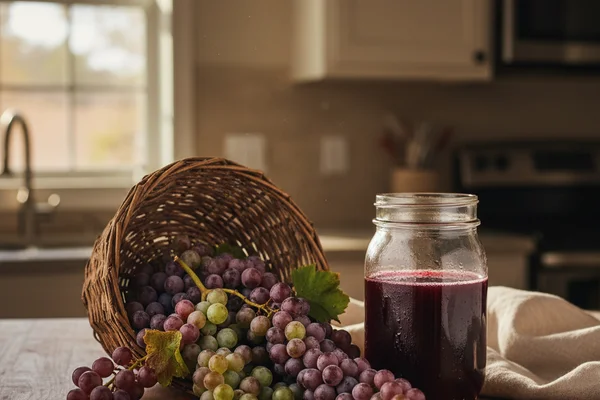
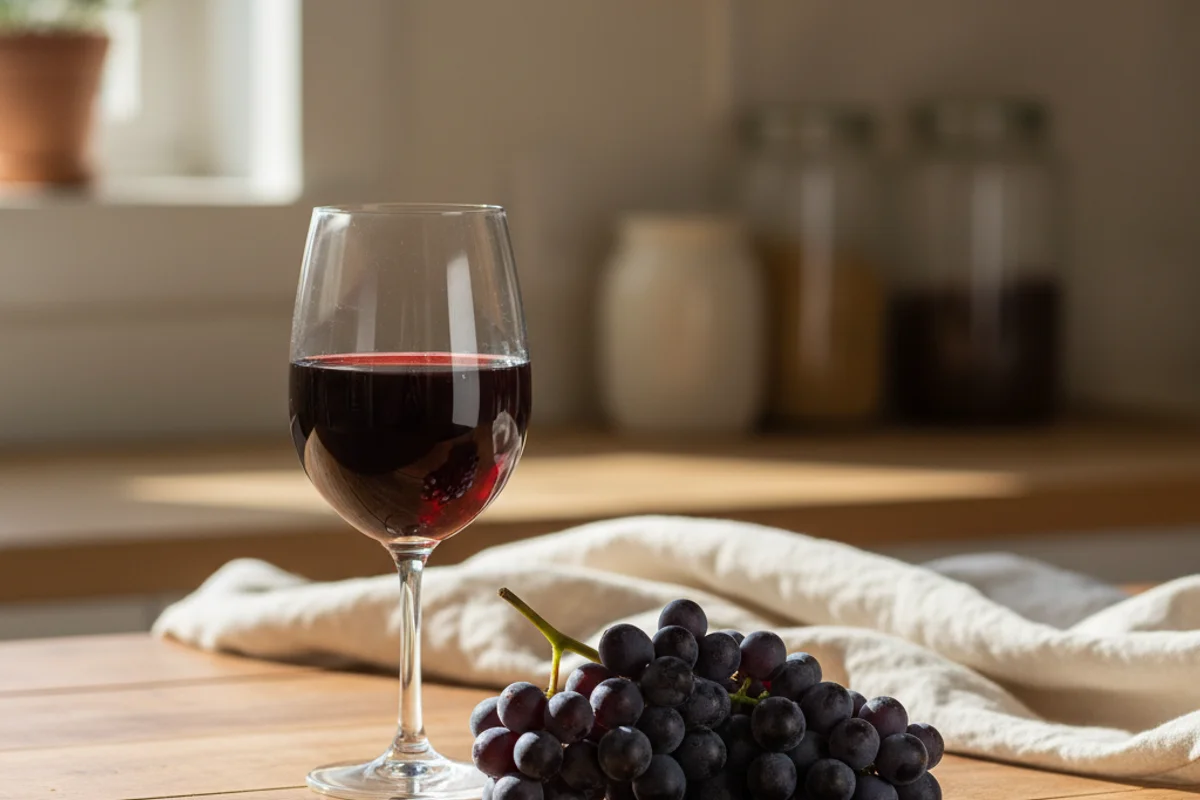
If you’ve ever bitten into a wild Mustang grape straight off the vine in a Texas summer, you know it bites back. The acidity is fierce, the tannins are grippy, and the dark, inky juice stains everything it touches. But that ferocity is exactly what makes this grape interesting in a glass. Tamed with water, softened with sugar, and given time to settle into itself, Mustang grape wine turns into something bold, fruity, and genuinely worth waiting for. This is Texas terroir in a bottle — untamed, unapologetic, and surprisingly good.
The beginner trap: Mustang grapes are notoriously high in acid, and skipping the acidity check before secondary fermentation will leave you with a wine so sharp it’s nearly undrinkable — always measure and adjust to around 7 parts per thousand tartaric.
Ingredients
- 8 lbs. black Mustang grapes, fresh or frozen, stems removed
- 2 lbs. granulated white sugar
- 5 pints (10 cups) water
- 1 tsp. pectic enzyme (found at homebrew shops or online)
- 1 Campden tablet, crushed (potassium or sodium metabisulfite; a campden tablet = roughly ¼ tsp. powder)
- 1 packet Montrachet wine yeast (or any dry red wine yeast such as EC-1118 or Red Star Côte des Blancs)
- 1 tsp. yeast nutrient
Method
- Bring the water to a boil. While it heats, remove all stems from the grapes, rinse them well, and put on rubber gloves — Mustang grape juice will stain and irritate bare skin.
- Crush the grapes by hand in a large food-safe plastic bucket or ceramic crock, breaking every grape open to release the juice and pulp.
- Add the sugar and pour the boiling water over the crushed grapes; stir thoroughly until all the sugar dissolves. Cover the vessel with a clean cloth or loose lid.
- After 2 hours, stir in the crushed Campden tablet. Re-cover and wait 10 more hours.
- After those 10 hours, stir in the pectic enzyme. Re-cover and wait another 12 hours.
- Add the yeast and yeast nutrient, stir well, and re-cover. This is now your fermenting must.
- Twice a day for 7 days, push the floating cap of skins and seeds back down into the liquid and stir — this extracts color, flavor, and tannin.
- After 7 days, strain out the solids and press the pulp firmly to squeeze out as much liquid as possible.
- Test the acidity of the liquid with an acid test kit (available at homebrew shops). If acidity is above 7 parts per thousand (ppt) tartaric, dilute carefully with a small amount of water or use an acid-reducing product like Acidex until you hit that target.
- Pour the wine into a clean secondary fermentation vessel (a glass carboy works great), fit an airlock, and let it sit undisturbed for 30 days.
- Rack the wine into a clean vessel, top it up to minimize headspace, then rack once more after 3 months.
- Once the wine runs clear, bottle it — use a fining agent like bentonite or Sparkolloid if it stays hazy. It’s drinkable young, but improves noticeably after 6–12 months in the bottle.
Why this works
Mustang grapes carry an unusually high acid load — mostly tartaric and malic acid — which is why the acidity check in Step 9 isn’t optional, it’s the whole game. The staggered addition schedule (sulfite first, then pectic enzyme, then yeast) is deliberate chemistry: the Campden tablet knocks out wild yeast and bacteria, the pectic enzyme breaks down pectin in the grape skins to improve juice clarity and extraction, and only then does your chosen yeast get a clean, competitive environment to do its job. The 7-day skin-contact period pulls anthocyanins (the deep red pigments) and tannins out of the skins — those tannins act as natural preservatives and give the finished wine its structure and aging potential.
Notes
Frozen Mustang grapes work well here — freezing actually ruptures the cell walls and makes crushing and juice extraction easier. If you can’t find Montrachet yeast locally, any dry red wine yeast packet from a homebrew store will do the job. For acid reduction, a cheap acid test kit (around $8–12 online) is all you need — don’t skip it just because it sounds technical.