PITAYA WINE
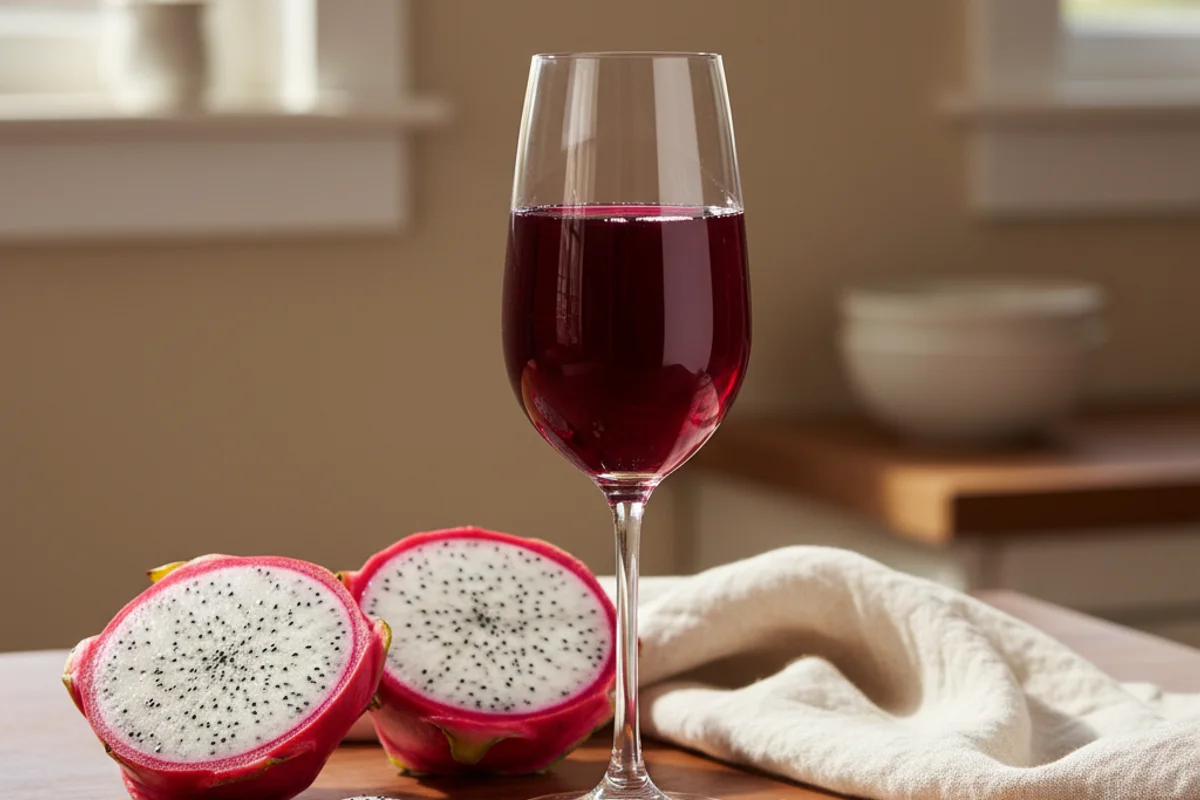
Dragon fruit — also called red pitaya — is a cactus fruit with hot-pink skin, speckled white or magenta flesh, and a flavor that sits somewhere between a mild kiwi and a ripe watermelon. Fresh ones show up in many Latin grocery stores and Asian supermarkets, and frozen versions work just as well here. The wine pours a stunning deep pink-red and finishes soft and slightly sweet, with a clean, almost floral character that makes it a crowd-pleaser even before it has had time to age.
The beginner trap: Skipping pectic enzyme — pitaya is loaded with pectin, and without it your wine will stay stubbornly cloudy no matter how long you wait.
Ingredients
- 6 lbs ripe red pitaya (dragon fruit), fresh or frozen
- 2 lbs granulated white sugar
- 6 pints (3 quarts) water
- 1½ tsp acid blend
- 1 tsp pectic enzyme
- 1 tsp yeast nutrient
- 1 Campden tablet, crushed
- 1 packet wine yeast (Lalvin 71B or EC-1118 work well)
Method
- Trim any green skin flaps from the fruit, wash it well, and chop it coarsely — skin and all if you want color, or peel to the white pulp for a lighter wine.
- Place the chopped fruit, sugar, acid blend, and yeast nutrient into your primary fermenter.
- Bring the water to a full boil, then pour it over the fruit and sugar; stir until the sugar fully dissolves.
- Cover the fermenter with a sanitized cloth and let it cool to room temperature (below 75°F).
- Stir in the crushed Campden tablet, re-cover, and wait 12 hours.
- Add the pectic enzyme, stir, re-cover, and wait another 12 hours.
- Prepare your yeast per packet instructions, then add it to the must; stir well.
- Stir the must once daily for 7 days.
- Strain the must through a nylon straining bag, squeezing the pulp firmly to extract all the juice.
- Transfer the liquid to a clean secondary fermenter, top up to the shoulder with water if needed, and fit an airlock.
- Rack into a clean vessel every 30 days, topping up and refitting the airlock each time, until the wine is clear and throws no new sediment over a full 30-day period.
- Stabilize with potassium sorbate and potassium metabisulfite, sweeten to taste if desired, wait 10 days, then rack into bottles.
Why this works
Pitaya flesh contains both pectin (a structural carbohydrate) and betacyanin pigments — the same compounds that make beets turn your cutting board red. Pectic enzyme breaks down the pectin chains before fermentation gets going, which lets the juice clarify properly later. The 12-hour wait after adding Campden (sulfite) before adding pectic enzyme matters: sulfite at high levels can deactivate the enzyme, so giving it time to off-gas protects your clarifying agent. The acid blend adjusts pH into the range where yeast thrive and spoilage bacteria don’t, while also brightening that gorgeous pink color — anthocyanin-type pigments are more vivid in acidic conditions.
Notes
Frozen dragon fruit works beautifully here and is often cheaper and more consistent than fresh — thaw completely and use all the juice. If you can’t find acid blend, a mix of citric and tartaric acid (half and half) is a solid substitute available online or at homebrew shops. If your finished wine is too pale, leaving the skin in contact with the must for the full 7-day primary fermentation will deepen the color.