PYRACANTHA WINE
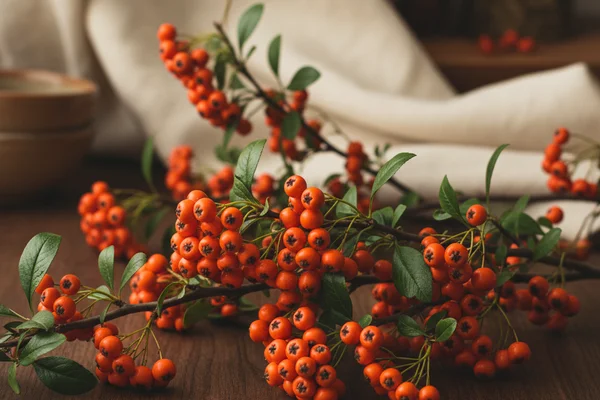
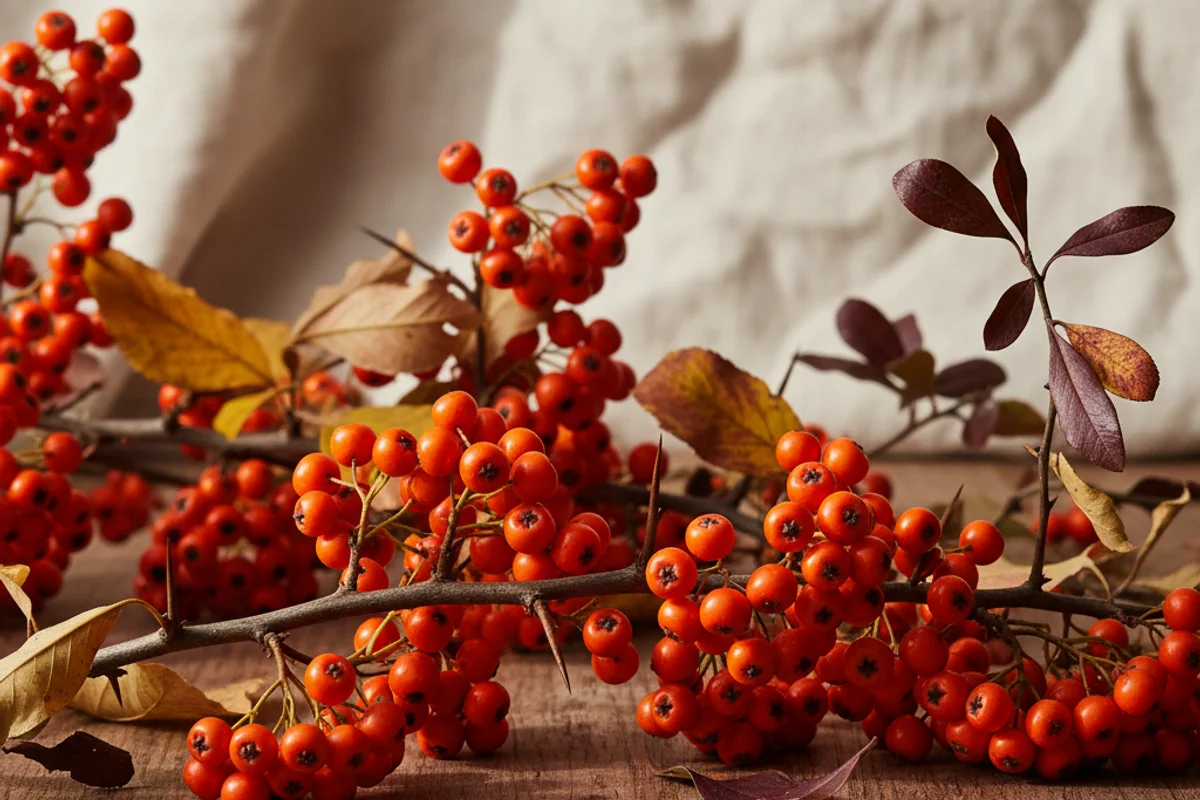
That spiky evergreen hedge lining your neighbor’s fence? It’s not just a burglar deterrent — it’s a winemaking opportunity. Pyracantha, also called firethorn, produces dense clusters of small berries that blaze orange to red each fall. Left alone, the birds claim them first. Beat the birds, and you’ve got the base for a light, orange-tinged rosé-style wine with a flavor that’s genuinely hard to compare to anything else. It mellows beautifully with age and works well dry or semi-sweet.
The beginner trap: Picking berries before they’re fully ripe produces a harsh, astringent wine — wait until the color deepens to bright red and the birds start showing interest.
Ingredients
- 1 quart pyracantha berries, fully ripe, fresh or frozen
- 1 cup golden raisins (fresh or frozen; adds body and nutrients)
- 2 lbs granulated white sugar, divided
- 2 lemons, juiced
- 1 large orange, juiced
- ¼ tsp pectic enzyme
- 1 tsp yeast nutrient
- 7½ pints water, divided
- 1 packet Champagne yeast or Lalvin RC-212 wine yeast
Method
- Bring 1 quart of water to a boil. Sort, destem, and rinse the berries, tossing any that look shriveled or unripe.
- Add the berries and raisins to the boiling water, reduce heat, and simmer for 20 minutes. Remove from heat and let cool to room temperature.
- Transfer the cooled berries and raisins to a blender and pulse until roughly chopped, then pour everything into your primary fermenter.
- Add the remaining water, 1 lb of sugar (half the total), the lemon and orange juice, pectic enzyme, and yeast nutrient. Stir thoroughly until the sugar fully dissolves.
- Cover the fermenter and let it sit for 12 hours.
- Activate your yeast according to the packet instructions, add it to the must, and re-cover the fermenter.
- Stir the must twice daily for 7 days.
- Pour the must through a nylon straining bag into a second fermenter. Let the bag drip-drain for 30–45 minutes — do not squeeze it.
- Discard the pulp. Stir the remaining 1 lb of sugar into the strained liquid until fully dissolved.
- Transfer the wine to a glass secondary fermenter (carboy), attach an airlock, and move it somewhere stable.
- Rack the wine every 30 days for 3 months, topping up the carboy and reseating the airlock each time.
- Let the wine rest undisturbed for 3 more months.
- To bottle dry, rack directly into bottles. To bottle semi-sweet, stabilize with potassium sorbate, sweeten to taste, wait 10 days, then rack into bottles.
Why this works
Simmering the berries before fermentation does two things: it softens the skins so more flavor and color extract during blending, and it helps neutralize some of the mildly toxic compounds (amygdalin) present in raw pyracantha seeds. The pectic enzyme breaks down pectin in the fruit, which would otherwise leave the finished wine cloudy and hazy. Splitting the sugar addition — half before fermentation, half after straining — keeps the initial sugar load from stressing the yeast. The raisins contribute unfermentable sugars and trace nutrients that give the final wine a fuller mouthfeel without added sweetness.
Notes
Frozen pyracantha berries work well here; freezing actually helps break down cell walls and can improve juice yield. If you forage your own berries, wash them well and avoid any shrubs treated with pesticides. Pectic enzyme is available at homebrew shops or online; there is no reliable grocery-store substitute, but skipping it risks a permanently hazy wine rather than a flawed-flavor one.