Pyracantha
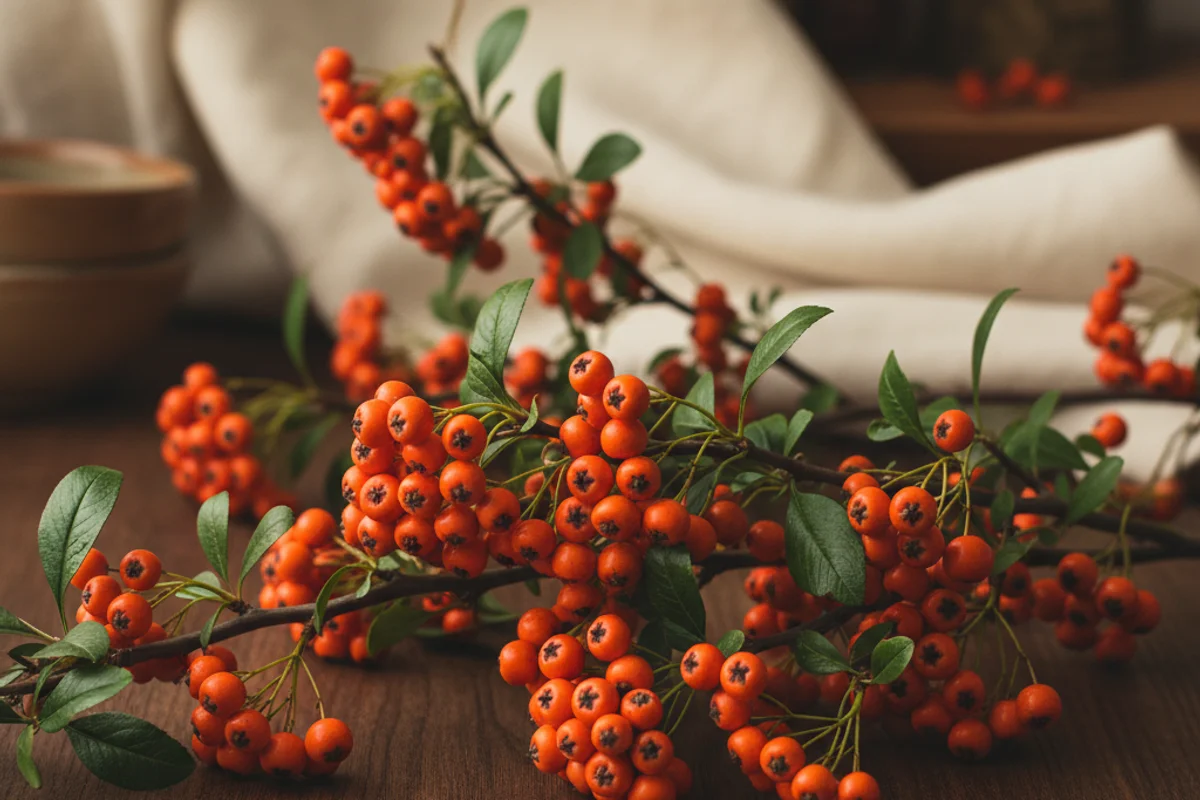
Firethorn — that spiky ornamental shrub lining suburban fences and parking lots — turns out to be one of the more surprising base fruits for country wine. When fully ripe, the small berries shift from orange to deep red and carry a mild, lightly floral flavor with just enough tartness to hold structure in the glass. The finished wine pours a soft orange-rosé, drinks clean and bright when young, and mellows into something genuinely complex after a year in bottle. Think of it as the wine hiding in plain sight in your neighbor’s landscaping.
The beginner trap: Picking the berries before they’re fully ripe produces harsh, tannic wine — wait until birds start feeding on the clusters, then harvest immediately.
Ingredients
- 1 quart (about 2 cups) pyracantha berries, fresh or frozen, sorted and destemmed
- 1 cup golden raisins (or sultanas from the baking aisle)
- 2½ lbs (about 5⅔ cups) granulated white sugar, divided
- 2 lemons, juiced
- 1 large orange, juiced
- ½ tsp pectic enzyme
- 1 tsp yeast nutrient
- 7½ pints (about 15 cups) water, divided
- 1 packet Champagne yeast or Lalvin RC-212 wine yeast
Method
- Bring 1 quart of water to a boil, then add the cleaned berries and raisins; reduce heat and simmer for 20 minutes.
- Remove from heat and let the mixture cool to room temperature.
- Transfer the berries and raisins to a blender and pulse until roughly chopped; pour into your primary fermenter.
- Add the remaining water, half the sugar, all the citrus juice, the pectic enzyme, and the yeast nutrient; stir thoroughly until the sugar fully dissolves.
- Cover the fermenter and let it sit for 12 hours.
- Activate your yeast according to the packet instructions, add it to the must, and re-cover the fermenter.
- Stir the must twice daily for 7 days.
- Strain the liquid through a nylon mesh bag into a second vessel; let the bag drip-drain for 30–45 minutes — do not squeeze it.
- Discard the pulp, then stir the remaining half of the sugar into the strained liquid until fully dissolved.
- Transfer to a glass secondary fermenter (carboy), attach an airlock, and move it somewhere cool and dark.
- Rack every 30 days for 3 months, topping up the carboy and resealing the airlock each time.
- Let the wine rest for 3 more months undisturbed.
- To bottle dry, rack directly into bottles; to bottle sweet, stabilize first, sweeten to taste, wait 10 days, then rack into bottles.
Why this works
Simmering the berries before fermentation does two things at once: it softens the fruit cells so more flavor and color compounds are released, and it partially breaks down pectin — the same gelling agent that makes jams set. That’s also why pectic enzyme is added after cooling; the enzyme destroys what pectin remains, which would otherwise turn your finished wine hazy. The raisins contribute fermentable sugars, body, and trace nutrients that keep the yeast healthy through a long fermentation. Splitting the sugar addition — half before fermentation, half after straining — prevents the yeast from being stressed by a high-sugar environment at the start, which reduces off-flavors and stuck ferments.
Notes
Frozen pyracantha berries work well and eliminate the need for the initial simmer step — just thaw completely and proceed directly to blending. If you can’t source pyracantha berries locally, check with native plant nurseries or forage from ornamental plantings (confirm no pesticide treatment first). This wine genuinely benefits from aging; plan to wait at least 12 months before opening your first bottle.