RED & WHITE CLOVER WINE
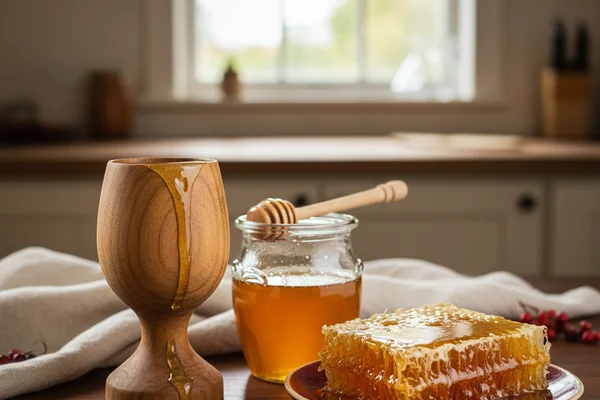
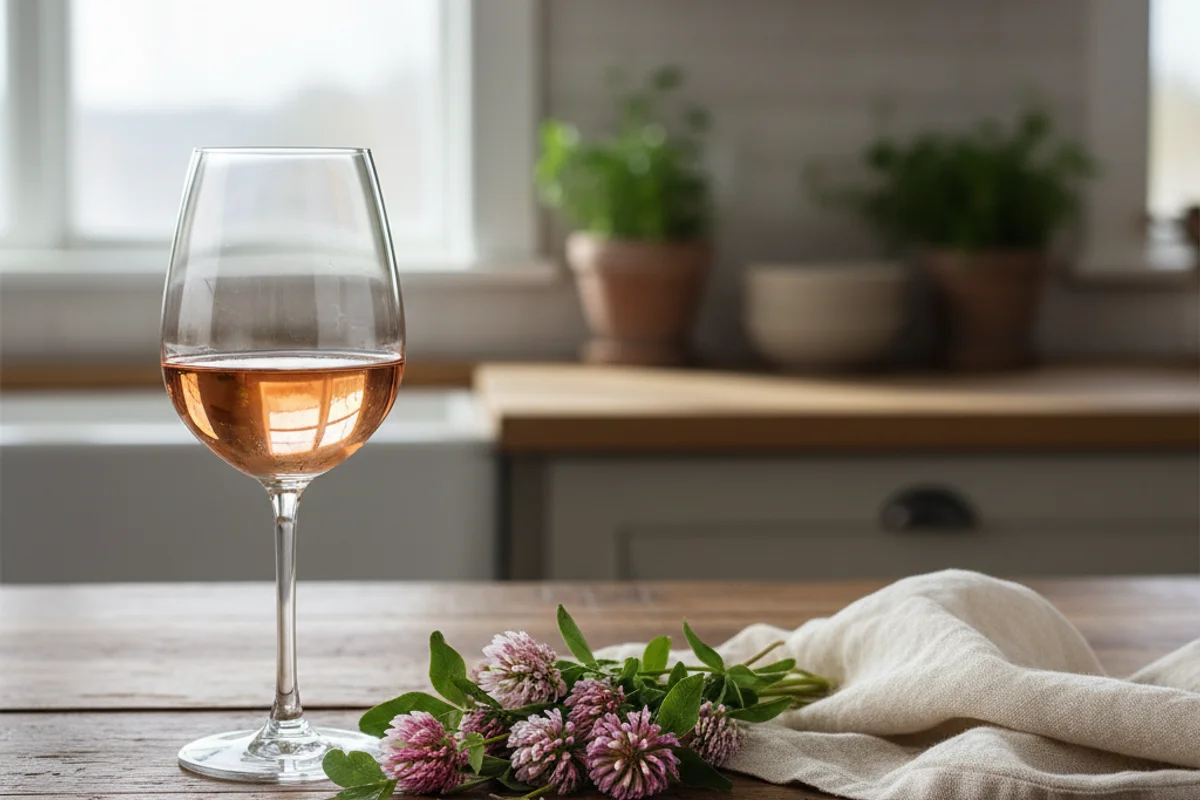
Clover honey is one of those ingredients that smells like a summer afternoon and tastes like it, too. Pair it with fresh red clover blossoms and a splash of white grape juice, and you get a wine that’s floral without being perfumy, lightly sweet without being cloying, and surprisingly complex for something you basically picked out of a field. This is a mead-adjacent country wine — honey does the heavy lifting on fermentable sugar, while the blossoms and juice build the flavor around it.
The beginner trap: Rushing the clearing and racking schedule — this wine needs patience and multiple rackings to drop its haze and fully develop its flavor.
Ingredients
- 1 quart fresh red clover flowers (blossoms only, green parts removed)
- 1 pint white grape juice (from frozen concentrate, reconstituted, or store-bought 100% white grape juice)
- 2½ lb white clover honey
- 2 tsp acid blend (found at homebrew shops; substitute 3 tsp lemon juice as a rough swap)
- 1 tsp yeast nutrient
- ¼ tsp tannin (grape tannin powder from a homebrew shop; substitute 2 oz strong unsweetened black tea)
- Water to make up 1 gallon total
- 1 packet wine yeast (e.g., Lalvin 71B or EC-1118)
Method
- Combine honey and 1 quart of water in a saucepan and bring to a low boil. Hold for 10 minutes, skimming off any foam that rises to the surface.
- Remove from heat, skim once more if needed, then pour the hot liquid directly over the clover flowers in your primary fermenter.
- Add water to bring the total volume to 1 gallon, then stir in the white grape juice, acid blend, yeast nutrient, and tannin.
- Cover the fermenter with a clean cloth and let it cool to lukewarm (around 70–75°F / 21–24°C).
- Sprinkle or stir in the wine yeast, then re-cover with the cloth.
- Push the floating flower cap back down into the liquid 2–3 times daily to keep it wet and prevent mold.
- After 10 days, strain out the solids and transfer the liquid into a 1-gallon glass secondary fermenter, then fit an airlock.
- After 30 days, rack the wine into a clean vessel, top up to reduce headspace, and refit the airlock. Repeat this every 2 months until the wine runs clear.
- Once clear, rack one final time and let the wine rest for 4 months undisturbed.
- Stabilize with potassium sorbate and potassium metabisulfite, wait 10 days, then rack and sweeten to taste if desired.
- Bottle, and wait at least 6 months before opening your first one.
Why this works
Honey is nearly all sugar, but it’s missing the nitrogen and nutrients yeast need to thrive. That’s why this recipe adds yeast nutrient — without it, fermentation can stall or produce off-flavors from stressed yeast. The white grape juice steps in as a secondary sugar and acid source, giving the yeast a familiar environment to start in while adding a soft fruit backbone. Boiling the honey briefly drives off wild yeast and any volatile compounds that could muddy the final flavor. Tannin, which comes naturally in grape wine from the skins, has to be added here since clover flowers have almost none — it gives the wine grip and helps it clarify and age properly.
Notes
If fresh clover flowers aren’t available, dried clover blossoms (available online or at herbal suppliers) can substitute at about ½ cup dried per quart fresh. Make sure flowers are pesticide-free before use — roadside clover that may have been sprayed is a hard pass. If acid blend isn’t accessible, fresh lemon juice works in a pinch, though it’s harder to measure precisely.