RIVERSIDE GRAPE WINE
Makes 1 Gallon
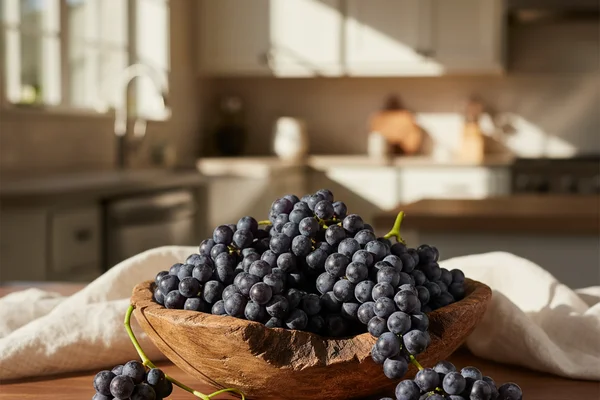
Riverside grapes are a muscadine variety — thick-skinned, boldly aromatic, and built nothing like the grapes you’d find in a California Cabernet. They carry a musky, almost floral depth that ferments into something genuinely wild and distinctive. This is a skin-contact wine at heart: you crush, ferment on the skins, press, then ferment again. The result is a full-bodied, richly colored wine with enough fruit character to drink young and enough structure to reward a year or two of patience.
The beginner trap: Skipping the twice-daily cap punch means your grape skins dry out on top, inviting bacteria and leaving color and flavor extraction half-finished — don’t skip it even once.
Ingredients
- 10 lbs Riverside grapes (or any muscadine variety; fresh or frozen)
- 1½ to 2 lbs granulated white sugar, divided
- About 1½ qts water, plus extra for topping up
- 1 tsp pectic enzyme
- 1 Campden tablet, crushed
- 1 tsp yeast nutrient
- 1 packet Montrachet wine yeast (or Red Star Premier Blanc, widely available online or at homebrew shops)
Method
- Harvest or source grapes at peak ripeness or just past it. Wash them thoroughly, remove all stems, and crush them by hand or with a potato masher into your primary fermentation bucket.
- Add 2 quarts of water to the crushed grapes and stir well. Scoop out enough juice to float a hydrometer and measure the specific gravity (S.G.), then pour that juice back in.
- Dissolve enough sugar in a small amount of boiling water (2 parts sugar to 1 part water by volume) to bring the S.G. up to 1.088. Let the syrup cool to room temperature before adding it to the bucket, then stir thoroughly.
- Add the crushed Campden tablet, stir, cover the bucket loosely, and wait 12 hours.
- Add the pectic enzyme and yeast nutrient, stir again, re-cover, and wait another 12 hours.
- Sprinkle the yeast over the surface, cover the bucket, and let fermentation begin.
- Punch the grape cap down twice a day for 7–10 days, until the S.G. reaches 1.010.
- Strain and press the grapes, collecting all the juice back into the primary bucket.
- Top the bucket up to one gallon using water with enough dissolved sugar stirred in to bring the S.G. back to 1.088. Cover and ferment for 2–3 more days until the S.G. drops to 1.010 again.
- Rack the wine into a clean one-gallon glass jug (secondary fermenter) and fit an airlock.
- After 30 days, rack into a freshly sanitized jug, top up to the shoulder, and refit the airlock.
- Rack again after two months, then once more two months after that.
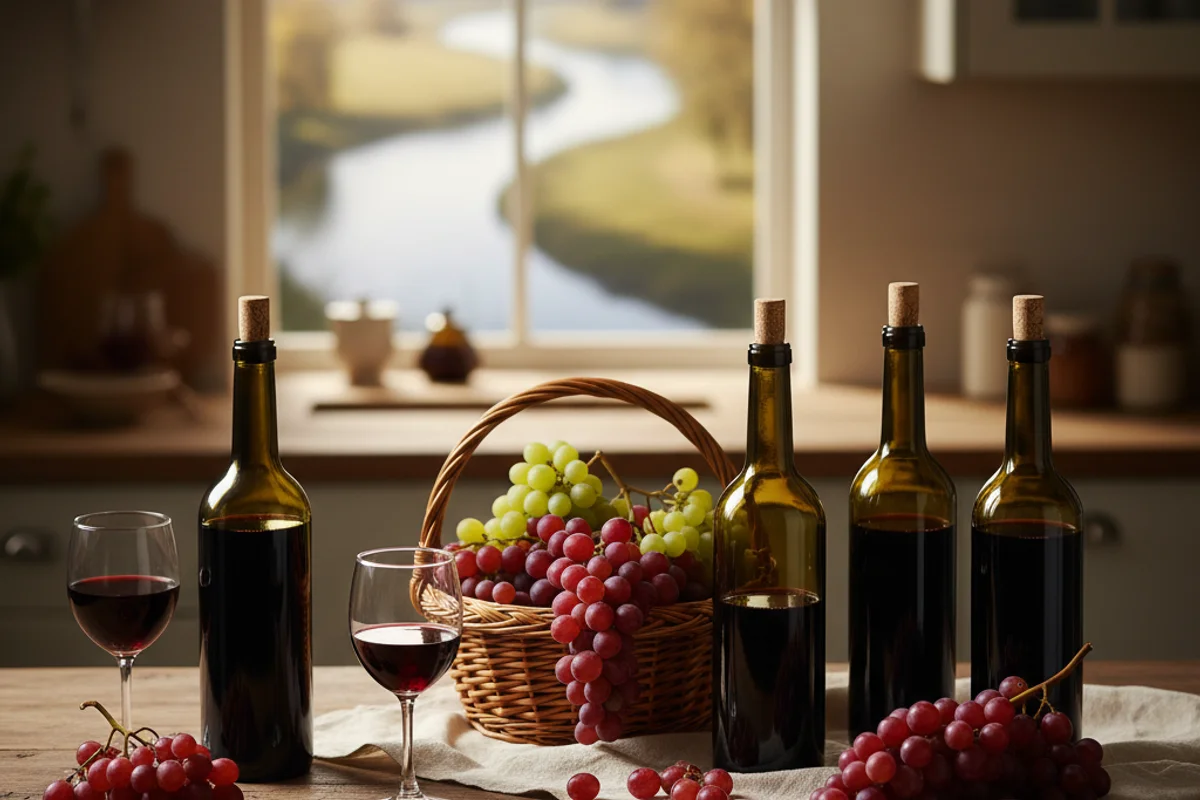
- Stabilize with potassium sorbate and potassium metabisulfite (follow package directions), wait 10 days for sediment to settle, then rack into bottles. Drink now or age for best results.
Why this works
Two fermentation phases sounds like extra work, but it serves a real purpose. The first phase — fermenting on the skins — pulls color, tannin, and flavor compounds out of those thick muscadine skins through a process called maceration. Alcohol acts as a solvent here, extracting things water alone can’t reach. Once you press and remove the skins, the second short fermentation finishes converting the remaining sugars without over-extracting harsh tannins. The pectic enzyme breaks down pectin in the grape pulp, which prevents a cloudy haze in the finished wine and helps sediment drop cleanly during aging. Campden tablets (sodium or potassium metabisulfite) knock out wild yeast and bacteria before your chosen yeast takes over, giving it a clean, competitive head start.
Notes
If fresh Riverside or muscadine grapes aren’t available in your area, frozen muscadines work very well — freezing actually breaks down the cell walls and can improve juice extraction. Any muscadine variety (Carlos, Noble, Scuppernong) can substitute one-for-one. If your finished wine tastes flat or sharp, a small addition of acid blend (½ tsp, available at homebrew shops) at step 5 can bring it into balance.