ROSE HIP WINE (1)
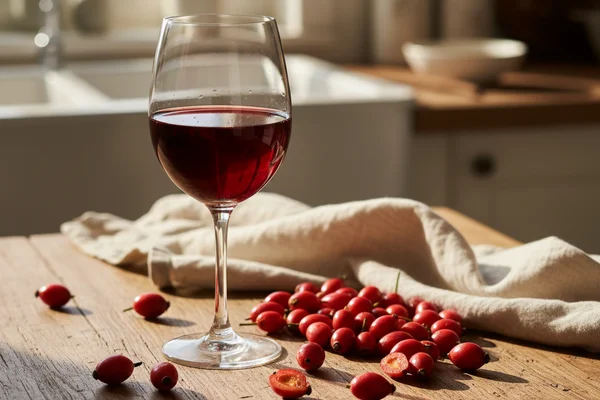
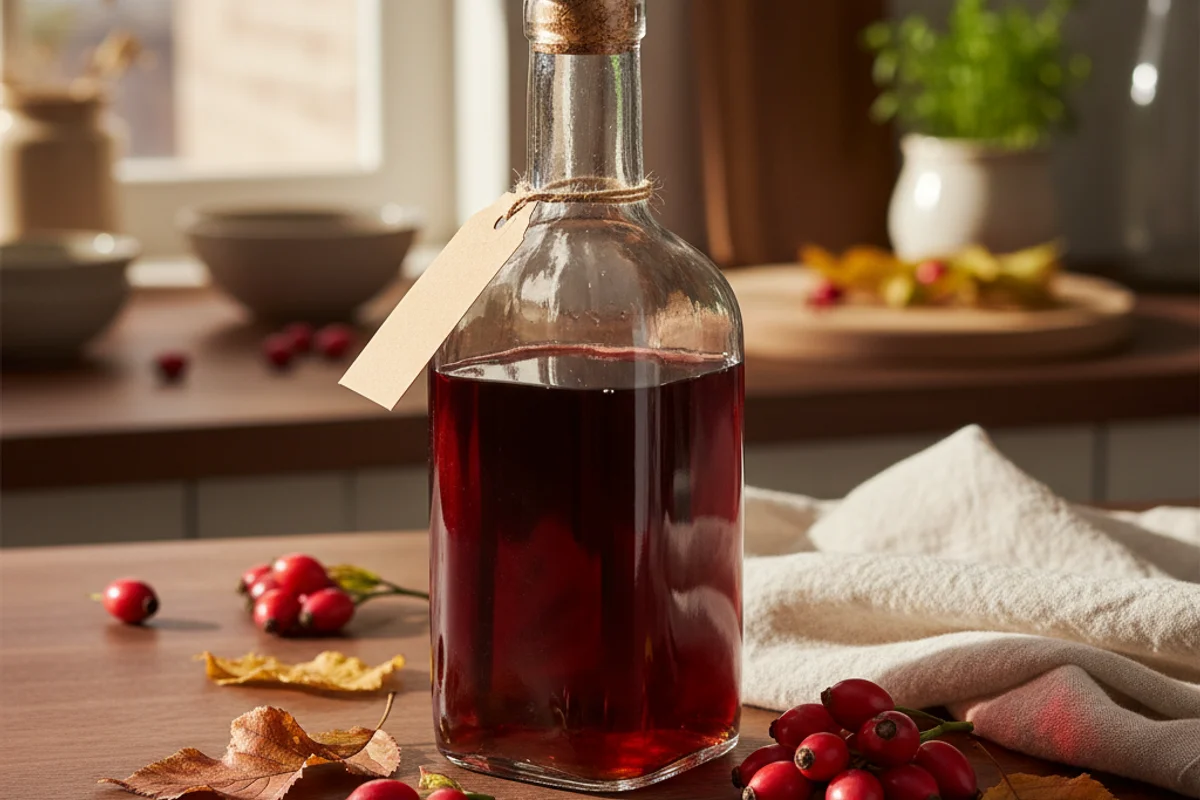
Rose hips are the fruit that roses leave behind after the petals drop — small, red, and packed with more vitamin C than an orange. They carry a tart, floral flavor that sits somewhere between cranberry and hibiscus tea, with a subtle earthiness underneath. That combination makes a wine that’s bright, aromatic, and genuinely surprising in the glass. This is a slow build — plan for two full years of aging — but the payoff is a wine with real depth and a gorgeous ruby color that needs no apology.
The beginner trap: Skipping the pectic enzyme step will leave you with a permanently cloudy wine, because rose hips are loaded with pectin that won’t break down on its own.
Ingredients
- 3½ lbs rose hips, fresh or frozen, stems and blossom ends removed
- 2⅔ lbs granulated white sugar
- 7⅓ pints (about 3.67 quarts) water
- 1 tsp acid blend (found at homebrew shops; citric acid from the grocery store works in a pinch)
- ½ tsp pectic enzyme
- 1 tsp yeast nutrient
- 1 packet Montrachet wine yeast (or any dry wine yeast such as Red Star Premier Classique)
Method
- Bring the water to a full boil.
- While the water heats, remove stems and blossom ends from the rose hips, then chop them coarsely.
- Place the chopped hips into a nylon straining bag and tie it closed.
- Set the bag and all the sugar into your primary fermenter.
- Pour the boiling water over the bag and sugar, then stir until the sugar is fully dissolved.
- Cover the fermenter and let it cool to room temperature.
- Once cooled, stir in the pectic enzyme, acid blend, and yeast nutrient. Cover again and wait 12 hours.
- Pitch the yeast, then stir the must twice daily for 8 to 9 days.
- Lift the straining bag and squeeze it firmly to extract as much juice as possible, then discard the solids.
- Transfer the juice to a sanitized secondary fermenter (carboy), fit an airlock, and move it to a dark location for 6 weeks.
- Rack into a clean secondary, top up to minimize headspace, refit the airlock, and return to the dark for 3 months.
- Rack again, top up, refit the airlock, and let it rest another 3 months.
- If the wine is still cloudy, stir in a gelatin fining agent, wait two weeks, then rack off the sediment.
- Once the wine is clear, bottle it and age for an additional 18 to 24 months before drinking.
Why this works
Rose hips contain high levels of pectin — the same stuff that makes jam thick. In a wine must, pectin creates a stubborn haze that heat alone won’t fix. Pectic enzyme (pectinase) breaks those long-chain molecules into smaller pieces that yeast and gravity can handle, allowing the wine to drop clear over time. The long aging schedule matters too: rose hips produce a lot of tannins and raw fruit compounds early on that mellow significantly with time. Rushing this wine to the bottle early gives you something harsh and thin. Waiting gives you something genuinely elegant.
Notes
Frozen rose hips work beautifully here and are often easier to source than fresh — the freeze-thaw cycle actually helps break down cell walls and improves juice extraction. If you can’t find acid blend at a homebrew store, substitute ¾ tsp of citric acid (sold near canning supplies at most grocery stores). For gelatin fining, plain unflavored gelatin packets from the baking aisle are the everyday equivalent of winemaking gelatin — use about ¼ tsp dissolved in warm water per gallon.