ROSE HIP WINE
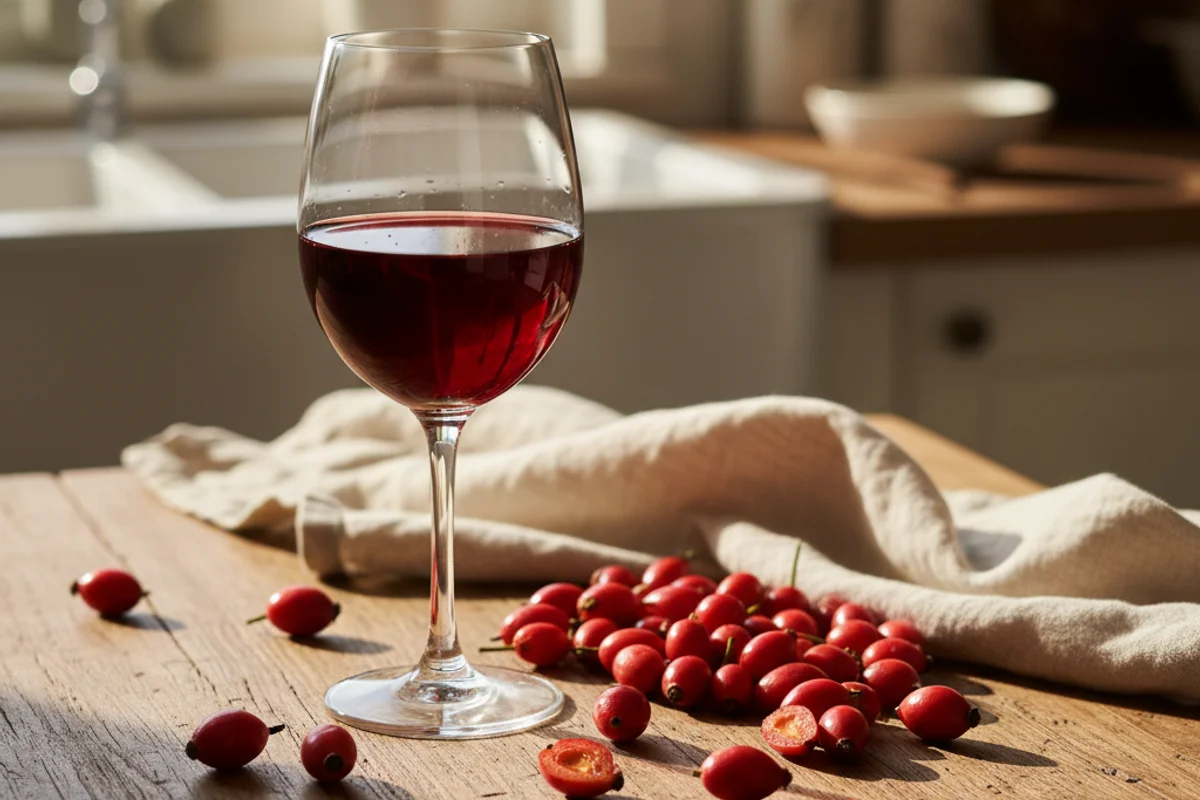
Rose hips are the small, round fruit left behind after a rose bloom fades — and they carry a flavor that’s tart, earthy, and faintly floral, somewhere between a cranberry and a dried apricot. That flavor, when fermented and aged properly, builds into a wine that serious home winemakers rank right alongside the best country wines around. The catch? Patience. This wine needs time the way a good brisket needs low heat — you can’t rush it and expect results worth drinking.
The beginner trap: Tasting this wine too early — rose hip wine is nearly undrinkable young and needs at least two full years in the bottle before it hits its stride.
Ingredients
- 3½ lbs fresh rose hips (or ½ lb dried, see Notes)
- 2 lbs granulated white sugar
- 7⅓ pts (about 3.7 quarts) water
- 1 tsp acid blend (find at homebrew shops, or use 1 tsp lemon juice as a rough stand-in)
- ½ tsp pectic enzyme
- 1 tsp yeast nutrient
- 1 packet Montrachet wine yeast (or any dry wine yeast)
Method
- Trim the stem and blossom ends off each rose hip, then chop them coarsely. Place the chopped hips into a nylon straining bag and tie it shut.
- Bring the water to a full boil, then dissolve the sugar into it completely. Place the bag in your primary fermenter and pour the hot sugar-water over it.
- Cover the fermenter and let it cool to room temperature. Once cool, add the pectic enzyme, acid blend, and yeast nutrient; stir to combine.
- Re-cover and wait 12 hours. Then pitch the yeast according to the packet instructions.
- Stir and gently squeeze the bag twice daily for 8–9 days to pull flavor from the hips.
- Remove and squeeze out the bag to recover all the juice, then transfer the liquid to a sanitized secondary fermenter (a 1-gallon glass jug works well).
- Fit an airlock and move the fermenter to a cool, dark spot for 2 months.
- Rack into a clean, sanitized secondary, top up to minimize headspace, and refit the airlock. Return to the dark.
- Rack again after 4 more months, top up, and refit the airlock. If the wine hasn’t cleared on its own, fine it with a gelatin fining agent, wait two weeks, then rack once more.
- Once the wine runs clear, stabilize with potassium sorbate and sweeten to taste if desired. Wait 10 days, then rack into bottles.
- Store bottles in a dark place for at least 18–24 months before opening.
Why this works
Rose hips are loaded with pectin — the same stuff that makes jam thick. Without pectic enzyme added before fermentation, that pectin breaks down into methanol during the process and, more visibly, leaves you with a haze that simply will not drop clear no matter how long you wait. The enzyme gets added at room temperature (not into hot must) because heat destroys it before it can do its job. The long aging time exists because rose hip wine is high in tannins and organic acids that taste harsh and sharp when young. Time lets those compounds mellow and bind together, transforming something almost unpleasant into something genuinely complex.
Notes
If fresh rose hips aren’t available, dried rose hips (sold in many health food stores and online) work well — use ½ lb dried in place of 3½ lbs fresh, and soak them overnight in cool water before starting. Frozen rose hips are also an excellent option; freeze-thaw cycles break down cell walls and actually improve juice extraction.