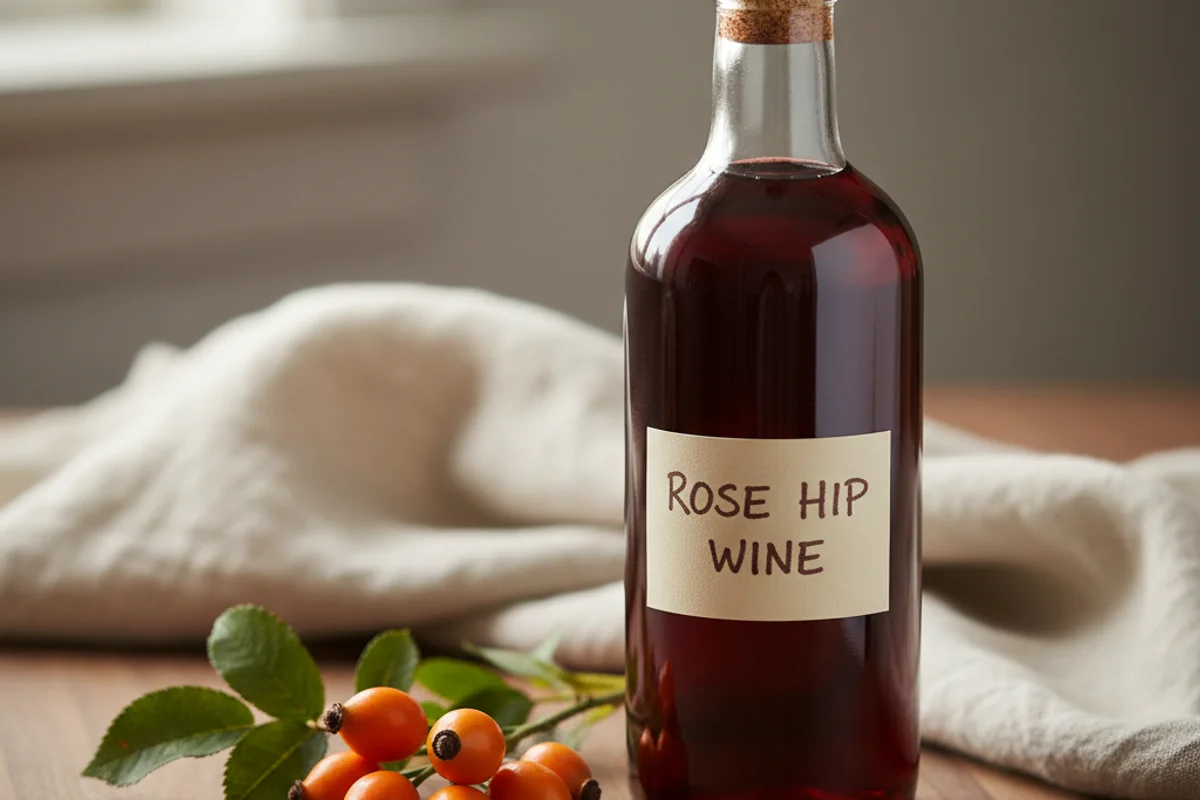
ROSE HIP WINE (2)
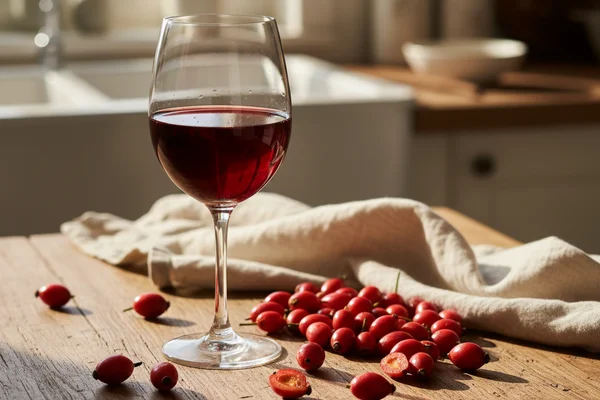
Rose hips are the fruit left behind after a rose blooms — small, tangy, vitamin C-packed pods that most gardeners rake up and toss without a second thought. That’s a mistake. When fermented, they produce a wine with a delicate floral backbone, a bright tartness reminiscent of hibiscus tea, and a dry, russet-colored finish that pairs surprisingly well with aged cheese or a quiet autumn evening. The flavor reward is real, but it demands patience. This is a slow wine — one that won’t show its full character for nearly two years after bottling.
The beginner trap: Skipping the pectic enzyme step (or adding yeast before the enzyme has had its 12-hour window) will leave you with a permanently hazy wine that refuses to clear, no matter how long you wait.
Ingredients
- 2 lbs rose hips, fresh or frozen
- 2½ lbs finely granulated white sugar
- 7¼ pts (roughly 3.6 quarts) water
- 1 tsp acid blend (or 1½ tsp lemon juice as a rough substitute)
- ½ tsp pectic enzyme
- 1 tsp yeast nutrient
- 1 packet Montrachet wine yeast (or any dry wine yeast, such as Lalvin EC-1118)
Method
- Combine the water and sugar in a large pot and bring to a full boil, stirring until the sugar dissolves completely.
- While the water heats, wash the rose hips thoroughly and pick out any insects or damaged fruit. Chop them coarsely in a blender or food processor.
- Place the chopped rose hips inside a nylon mesh straining bag and tie it closed. Set the bag in your primary fermenter (a food-safe bucket works fine).
- Pour the hot sugar-water over the bag, cover the fermenter, and let it cool to room temperature.
- Once cool, stir in the pectic enzyme, acid blend, and yeast nutrient. Re-cover and leave undisturbed for 12 hours.
- After 12 hours, sprinkle in the yeast, stir well, and re-cover the fermenter.
- For the next 8–9 days, stir and squeeze the bag twice daily to extract color and flavor from the hips.
- After fermentation slows and your squeeze sessions are done, press and drain the bag thoroughly, then discard the solids.
- Transfer the juice to a glass secondary fermenter (a 1-gallon jug or carboy), fit an airlock, and move it to a dark location for 2 months.
- Rack the wine into a clean, sanitized secondary, top up with water or similar wine to minimize headspace, refit the airlock, and return it to the dark for 4 more months.
- Rack one final time, top up, and wait for the wine to clear completely. Once clear, stabilize with potassium sorbate and sweeten to your taste preference.
- Wait 10 days after stabilizing, then rack into bottles. Age at least 18–24 months in a cool, dark place before drinking.
Why this works
Rose hips contain a lot of pectin — the same naturally occurring starch that makes jam gel. In a wine, pectin creates a stubborn, protein-like haze that won’t settle out on its own. Pectic enzyme (pectinase) breaks that pectin down into simple sugars before fermentation begins, clearing the path for a bright, transparent finished wine. This is also why you add the enzyme before the yeast: once alcohol is present in the must, the enzyme becomes less effective. The long aging period matters too — the tannins and acids in rose hips need time to marry and mellow before the wine stops tasting thin and starts tasting complete.
Notes
Frozen rose hips work just as well as fresh and are often easier to source; freezing actually helps break down the cell walls and improves juice extraction. If you can’t find acid blend at a homebrew shop, a small amount of fresh lemon juice is a workable stand-in, though less precise. If the wine is still hazy after 6 months, a fining agent like bentonite (available at homebrew stores) can help encourage stubborn particles to drop out.