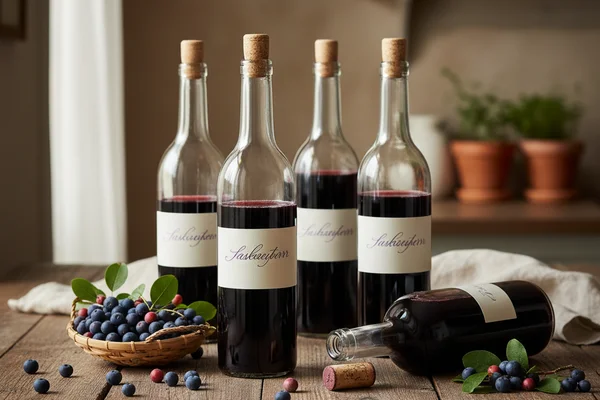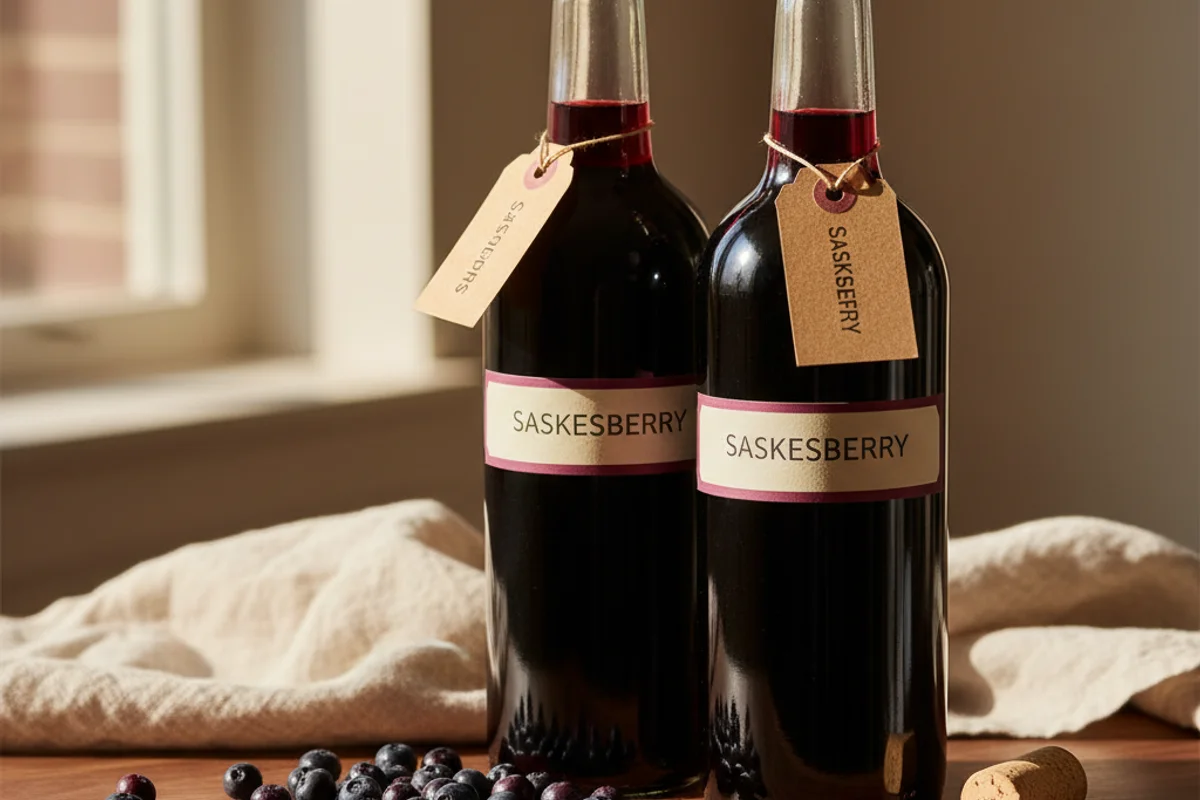
SASKATOON SERVICEBERRY WINE (3)
Saskatoon berries look like blueberries but taste like something else entirely — a cross between an almond and a wild cherry, with a deep, jammy backbone that holds up beautifully to fermentation. Native to the Canadian prairies and northern U.S., these small purple fruits produce a full-bodied wine with serious color and complex fruit character. The raisins here aren’t filler; they’re doing real work, adding body, tannin, and a subtle dried-fruit note that rounds out the finished wine.
The beginner trap: Skipping the simmering step or rushing past the drip-drain phase — both shortcuts leave behind bitter seed tannins and hazy, hard-to-clear wine.
Ingredients
- 2–3 lbs Saskatoon berries, fresh or frozen, washed and destemmed
- 1 lb raisins (golden or dark; Thompson seedless work fine), chopped or minced
- 2½ lbs granulated sugar
- 1 tsp pectic enzyme
- 5–7 pints water
- 1 packet wine yeast (Lalvin 71B or EC-1118 are solid choices)
- 1 tsp yeast nutrient
Method
- Crush the berries and bring them to a low boil in a pot. Reduce heat, cover, and simmer for 10 minutes; fold the top layer of berries down into the liquid, recover, and simmer another 10 minutes.
- Pour the berry mixture into a nylon straining bag and let it drip freely into your primary fermenter until the pulp has cooled completely — do not squeeze yet.
- While the berries drain, dissolve the sugar in 3 cups of boiling water to make a syrup, then let it cool to room temperature.
- Place the minced raisins in a second nylon straining bag and add it to the primary along with the berry bag, all but ⅔ cup of the cooled sugar syrup, the pectic enzyme, and the yeast nutrient.
- Cover the primary and wait at least 10 hours before adding your wine yeast — this gives the pectic enzyme time to work before fermentation kicks off.
- Stir the must twice a day and keep the fermenter in a warm spot (70–75°F). After 5 days, gently press the berry bag to extract the clear juice, then discard the spent pulp and seeds.
- Re-cover the fermenter and continue fermenting for another 5 days, then gently squeeze the raisin bag and discard its pulp.
- Siphon the wine off the sediment into a glass carboy (secondary fermenter), stir in the reserved ⅔ cup of sugar syrup, top up with water to the shoulder, and fit an airlock.
- Move the carboy to a cooler spot (60–65°F) and rack every 30 days for three months.
- Bottle when the wine runs clear, racking one extra time only if new sediment has settled. Store bottles in a dark place and wait at least 9 months before opening — this wine genuinely improves with age.
Why this works
Simmering the berries before fermentation does two things: it breaks down cell walls to release more color and flavor, and it kills off wild microbes that could compete with your wine yeast. Separating the juice into a straining bag — rather than fermenting on the full pulp for the whole run — lets you pull color and fruit character early, then cut the contact before bitter seed compounds have time to dissolve into the wine. The pectic enzyme breaks down pectin (a natural fruit gelling agent) that would otherwise leave your finished wine looking cloudy no matter how long you wait. Raisins contribute not just sugar but also a small dose of tannin and nutrients that keep the yeast healthy and the flavor structured.
Notes
Frozen Saskatoon berries work just as well as fresh — freezing actually helps break down the cell walls, so you may get even better color extraction. If you can’t find Saskatoon berries locally, check Eastern European grocery stores (they may be labeled “serviceberries” or amelanchier) or order online frozen. Pectic enzyme is available at any homebrew shop or online; there is no everyday substitute, but skipping it risks a permanently hazy wine.