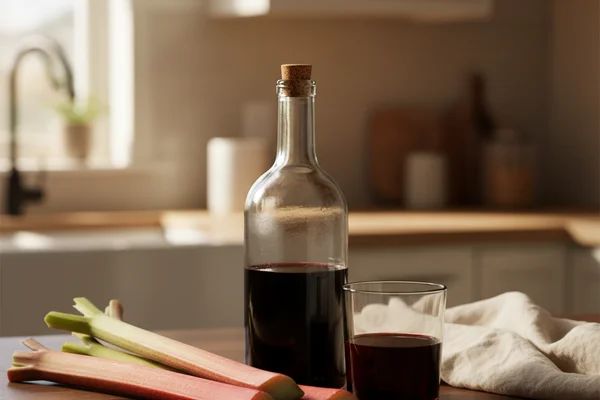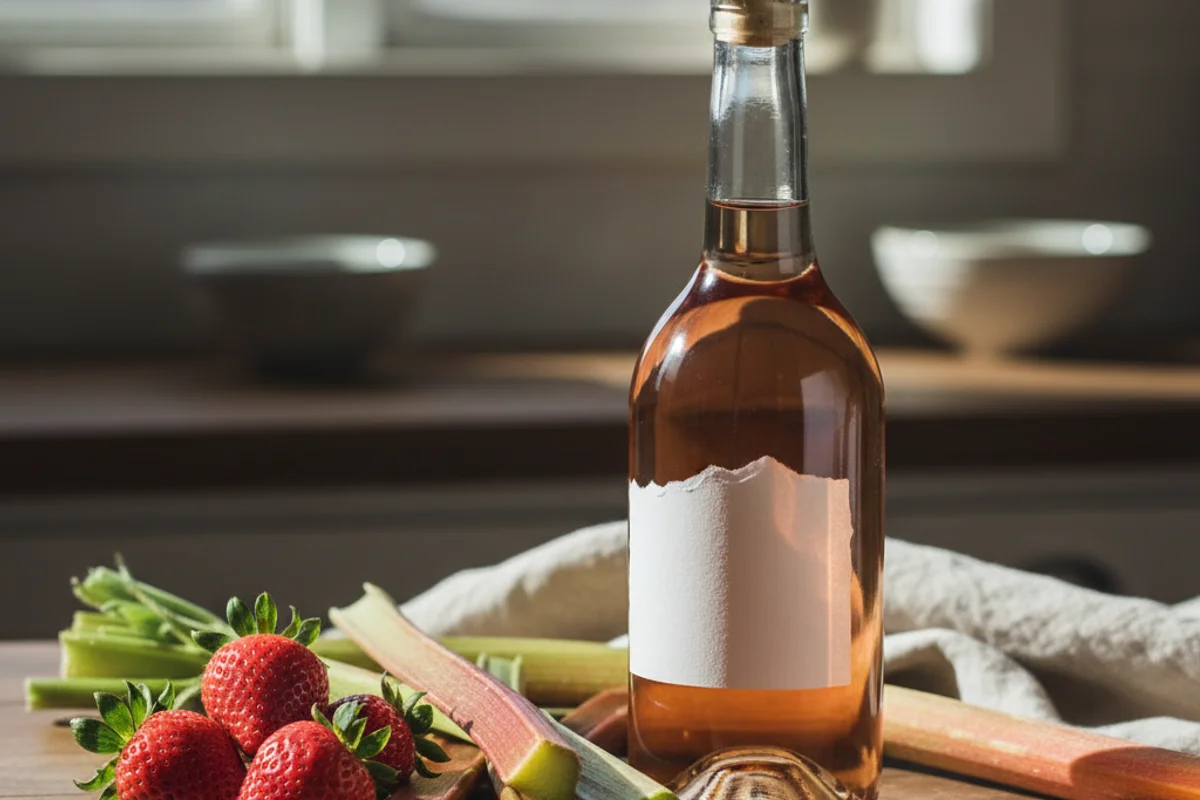
Strawberry-Rhubarb Wine
Think of strawberry-rhubarb pie in a glass — bright berry sweetness up front, then a tart, almost lemony backbone that keeps the whole thing from going soft. Rhubarb is the secret weapon here: it brings sharp acidity that balances strawberry’s low-to-medium acid profile, and it has a near-magical ability to amplify whatever fruit it’s paired with rather than fight it. A splash of white grape juice concentrate rounds out the body. The result is a light, fragrant country wine that mellows into something genuinely elegant after six months in the bottle.
The beginner trap: Squeezing the fruit bag when you pull it out — that one impatient move forces harsh, bitter compounds into your wine that no amount of aging will fix.
Ingredients
- 4 lbs. ripe strawberries, fresh or frozen
- 2 lbs. red rhubarb stalks, fresh or frozen (leaves removed)
- 1 cup frozen white grape juice concentrate (Welch’s 100% White or any store brand)
- 6 pints (12 cups) water
- 1¾ lbs. (about 3½ cups) white granulated sugar
- 1 tsp. citric acid
- ½ tsp. pectic enzyme
- ⅛ tsp. powdered tannin (or 1 black tea bag, steeped and cooled)
- 1 Campden tablet, crushed
- 1 tsp. yeast nutrient
- 1 packet wine yeast (Côte des Blancs, Lalvin 71B, or any fruit wine yeast)
Method
- Wipe rhubarb stalks clean, trim off all leaves, and cut into ¼-inch pieces — do not peel.
- Spread the rhubarb pieces across the bottom of your primary fermenter and pour all the sugar evenly over them. Cover with a clean cloth and let sit for 24 hours; the sugar will draw out the juice and form a thick syrup.
- Prepare your strawberries: slice fresh ones, or thaw and roughly chop frozen ones. Place them in a nylon straining bag.
- Using a sanitized spoon, scoop the rhubarb pieces into the straining bag with the strawberries. Tie the bag closed and lay it in the primary fermenter.
- Add the water, grape juice concentrate, citric acid, powdered tannin, crushed Campden tablet, and yeast nutrient. Stir well to combine. Cover and let rest for 12 hours.
- Add the pectic enzyme, stir, recover the fermenter, and wait another 12 hours.
- Stir the must once more to make sure all sugar is dissolved, then add your activated yeast. Cover the fermenter and set it aside in a warm spot (65–75°F).
- Punch the fruit cap down twice a day for 5 to 7 days.
- Lift out the straining bag and let it drip-drain over the fermenter for at least 30 minutes — do not squeeze it.
- Combine all the liquid and transfer it to a sanitized glass secondary fermenter (carboy), topping up with water if needed to minimize headspace. Fit an airlock.
- When bubbling stops — usually 3 to 8 weeks — rack the wine into a clean carboy, top up, and refit the airlock.
- Rack again every 6 weeks until the wine is clear and no longer dropping sediment.
- Stabilize with potassium sorbate and potassium metabisulfite, then sweeten to taste if desired. Wait 30 days; if no renewed fermentation starts, bottle the wine.
- Age at least 3 to 6 months before drinking; drink within one year for best fruit character.
Why this works
Strawberry sits in the low-to-medium acid range, while rhubarb is quite high in malic and oxalic acids. Together, they hit a natural acid balance that fermentation-friendly yeast love. The 24-hour sugar maceration on the rhubarb is essentially osmosis at work: sugar pulls water and flavor compounds out of the cell walls before fermentation even starts, giving you deeper extraction without needing heat. Pectic enzyme is added after the initial Campden rest because sulfites slow the enzyme down — waiting 12 hours lets the SO₂ off-gas enough that the enzyme can do its job: breaking down pectin so your finished wine clears bright instead of staying hazy.
Notes
Frozen strawberries and rhubarb work just as well as fresh — freezing ruptures cell walls, which actually improves juice yield. If you can’t find powdered tannin at a homebrew shop, steep one plain black tea bag in a cup of hot water, cool it completely, and add it in step 5. This wine peaks around 6 months but starts to lose its fresh strawberry pop after about a year, so don’t sit on it too long.