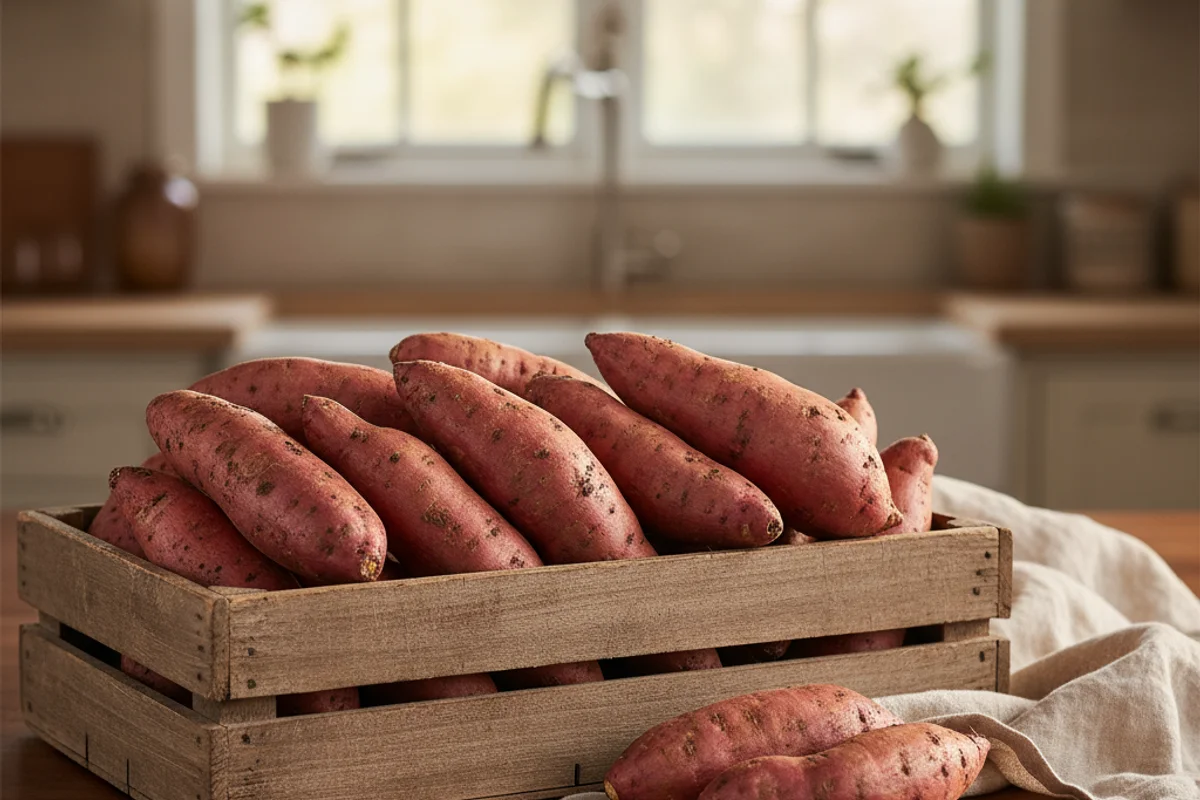
Sweet Potatoes
Sweet potato wine is a piece of American history in a bottle. Born out of post-Civil War necessity, this earthy, amber wine carries the same cozy warmth as a Thanksgiving side dish — think brown sugar, a hint of vanilla, and something almost nutty underneath. The raisins pull double duty here, adding body and a subtle dried-fruit depth that naked sweet potato juice alone could never deliver. Start a batch in early fall and you’ll have something worth opening by the following holiday season.
The beginner trap: Skipping the pectic enzyme means your wine may stay stubbornly cloudy for months, since sweet potatoes are loaded with pectin that won’t break down on its own.
Ingredients
- 6 lbs sweet potatoes, peeled and finely diced
- 2 lbs granulated sugar, divided
- 1 lb raisins, minced or finely chopped
- 1 tsp acid blend (or 3 tsp lemon juice as a substitute)
- ½ tsp pectic enzyme
- 1 tsp yeast nutrient
- 1 gallon water, divided
- 1 packet wine yeast (Lalvin EC-1118 or Red Star Côte des Blancs work well)
Method
- Place the diced sweet potatoes in a pot and add just enough water to cover. Bring to a boil, cover, then reduce to a simmer for 25 minutes.
- While the potatoes cook, add the minced raisins and 1 lb of the sugar to your primary fermenter.
- Strain the hot potato liquid directly into the primary over the raisins and sugar — set the cooked potatoes aside for eating.
- Add enough cold water to bring the total volume to 1 gallon, then stir until the sugar fully dissolves.
- Stir in the acid blend, yeast nutrient, and pectic enzyme. Cover the fermenter with a clean cloth.
- Wait 12 hours, then pitch the yeast. Re-cover and ferment for 5 to 7 days, stirring twice daily.
- Strain the must through a fine nylon straining bag, pressing gently to extract all the liquid.
- Stir in the remaining 1 lb of sugar until fully dissolved, pour into a secondary fermenter, and fit with an airlock.
- Rack every 30 days until the wine runs clear — this can take 4 to 5 months, so be patient.
- After one final 30-day rest post-clearing, stabilize with potassium sorbate and potassium metabisulfite, then rack again 10 days later.
- Sweeten to taste or bottle dry. Wait at least 6 months before tasting — longer is better.
Why this works
Sweet potatoes are starchy and pectin-rich, which sounds like a recipe for a murky, syrupy mess — and it would be, if you skipped a few key steps. Simmering rather than boiling keeps the starch mostly locked inside the potato cells, so it stays in the pot with the discarded solids instead of turning your must into paste. The pectic enzyme then attacks the pectin that did make it into the liquid, breaking it into smaller molecules that drop out of suspension over time. Raisins bring natural tannins and unfermentable flavor compounds that add structure and complexity, giving this wine a backbone it otherwise wouldn’t have from a root vegetable alone.
Notes
Golden raisins can substitute for regular raisins if you want a lighter color and a milder flavor. If you can’t find acid blend at a homebrew shop, fresh lemon juice works in a pinch — use about 3 teaspoons per teaspoon of acid blend called for. This wine genuinely benefits from a full year of aging, so resist the urge to crack it open early.