POTATO WINE
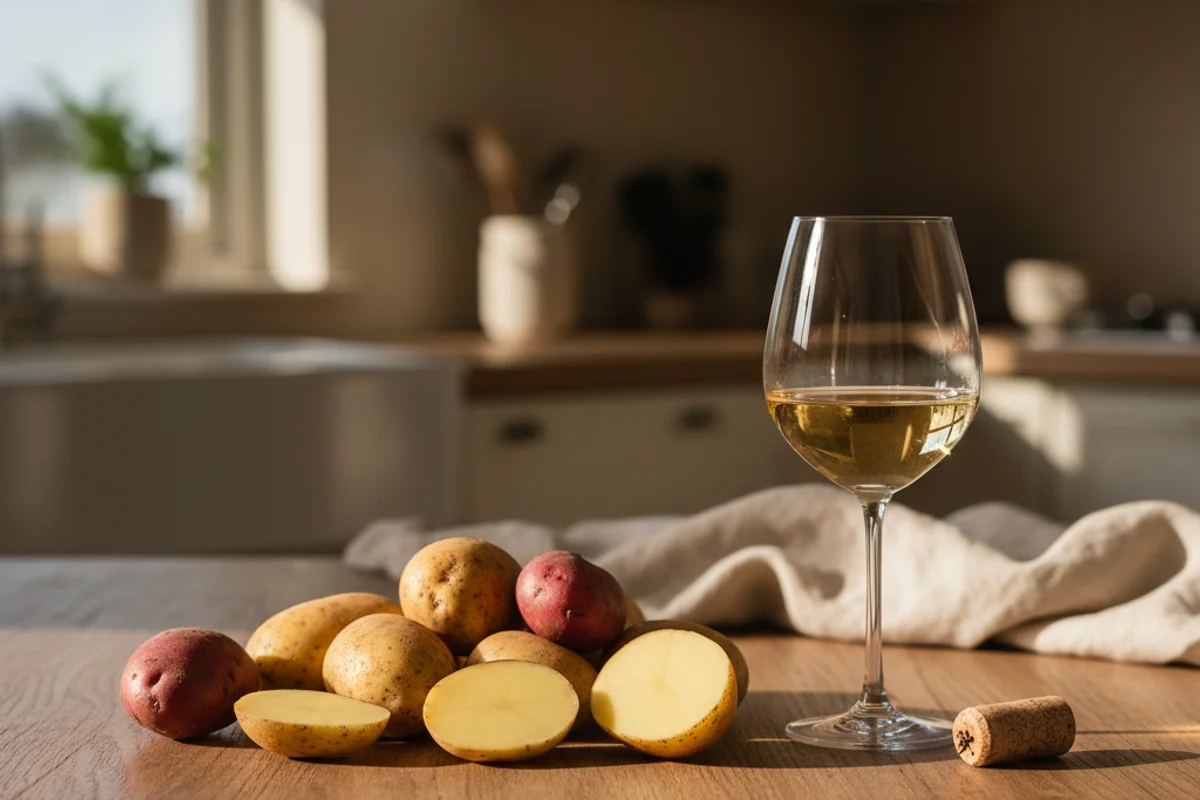
Potatoes in a wine glass sounds like a dare, but hear this out. When you boil starchy spuds, the water picks up subtle earthy, almost nutty notes. Pair that with citrus zest, fresh ginger, and dark brown sugar, and something genuinely interesting happens. The finished wine is dry, lightly spiced, and surprisingly clean — closer to a pale country wine than anything you’d associate with a root vegetable. It won’t remind you of mashed potatoes. It will make you curious enough to pour a second glass.
The beginner trap: Using green or sprouting potatoes — they contain solanine, a natural toxin, so check every potato before it goes in the pot.
Ingredients
- 5 lbs mature russet or Yukon Gold potatoes, well-scrubbed
- 2 lbs dark brown sugar, divided
- 2 lemons, zest (no white pith) and juice
- 2 oranges, zest (no white pith) and juice
- ½ oz fresh ginger root, thinly sliced (or ¼ tsp ground ginger in a pinch)
- ½ tsp pectic enzyme
- 1 tsp yeast nutrient
- 1 packet wine yeast (Lalvin EC-1118 or Red Star Côte des Blancs work well)
- Water to make 1 gallon total
Method
- Scrub the potatoes thoroughly and discard any that show green patches or sprouting. Boil them whole in 1 gallon of water until a fork slides in easily but the skins stay intact — about 25–30 minutes.
- Lift the potatoes out and set them aside for eating later. Keep all of the cooking water.
- Stir 1 lb of the brown sugar into the hot potato water until fully dissolved. Add the citrus zest, citrus juice, and sliced ginger.
- Bring the liquid back to a gentle boil, then reduce heat and simmer for 15 minutes, stirring occasionally.
- Remove from heat and strain the liquid through a fine mesh strainer or cheesecloth into your primary fermenter. Discard the solids.
- Cover the fermenter with a clean cloth and let it cool to around 70°F — do not add yeast to hot liquid.
- Once cooled, stir in the pectic enzyme and yeast nutrient. Re-cover and wait 12 hours.
- Activate your wine yeast according to the packet instructions, then add it to the must. Ferment for 7 days at room temperature, stirring once daily.
- Stir in the remaining 1 lb of brown sugar until fully dissolved. Let the fermenter sit overnight so sediment can settle.
- Siphon the clearing liquid into a 1-gallon glass jug (secondary fermenter), leaving the sediment behind. Fit an airlock and let fermentation finish — usually another 2–3 weeks.
- Rack after 60 days: siphon off the lees into a clean jug, top up with a little water or similar wine to minimize headspace, and reattach the airlock.
- When the wine runs clear, rack one more time, top up, and refit the airlock.
- After 4 months total from the start of fermentation, stabilize with potassium sorbate and potassium metabisulfite (follow package rates), then bottle.
Why this works
Potatoes are mostly water and starch — they contribute almost no fermentable sugar on their own. What they do give the wine is a faint mineral, earthy backbone that plain sugar water can’t replicate. The real flavor work here falls to the citrus zest and ginger. Citrus peel is loaded with aromatic compounds called terpenes, which survive boiling and end up in your must. Ginger brings gingerols — spicy, warming molecules that mellow considerably during fermentation. Splitting the sugar addition into two steps keeps the osmotic stress lower at the start, giving yeast a healthier environment to get established before facing a high-sugar load.
Notes
Ground ginger (¼ tsp) is a workable substitute if fresh root isn’t available, though the flavor will be sharper and less floral. If your finished wine smells musty or starchy after clearing, an extra rack and another month of patience usually sorts it out. This recipe produces approximately 1 gallon — scale all ingredients proportionally if you want to make more.