TEXAS WILD PLUM WINE
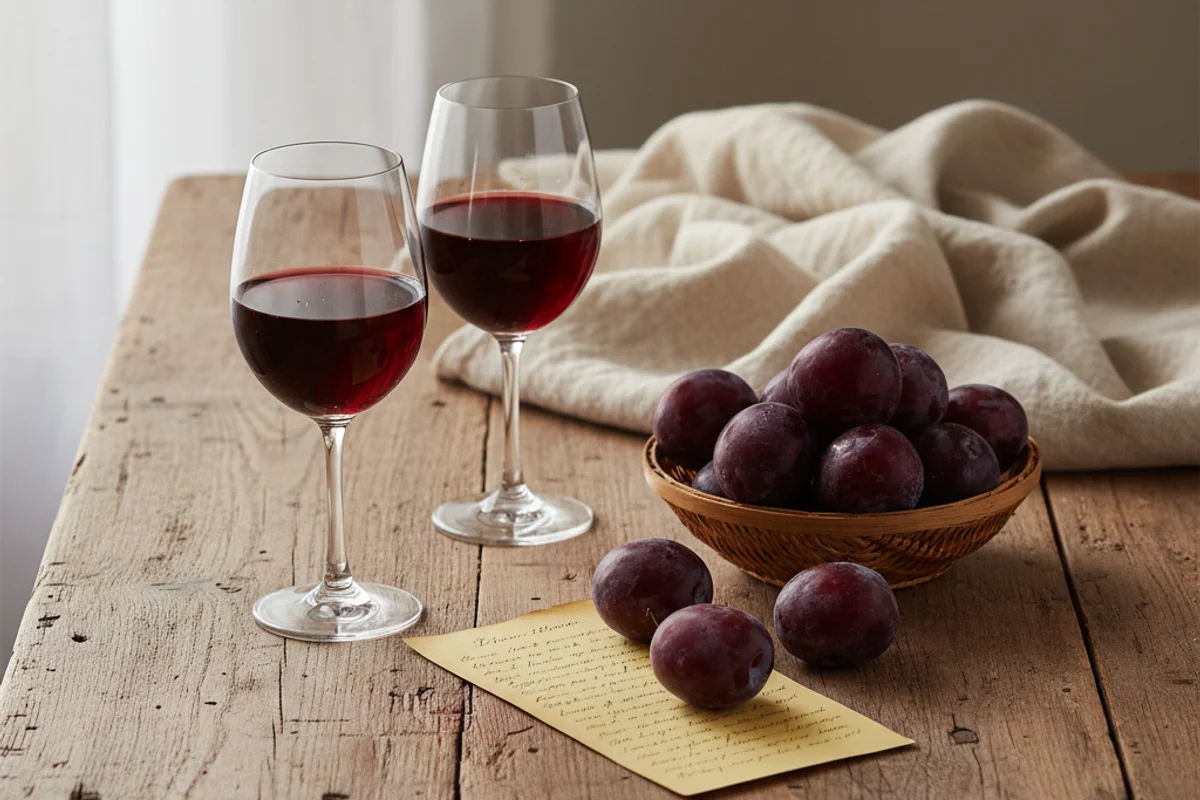
Texas wild plums are tiny, fierce little fruits. They ripen to a blush-orange by late spring, drop off the branch at a touch, and hit your palate with a one-two punch of sharp acid and gripping tannin. On their own, they’d make a lean, astringent wine — but that’s exactly why this recipe brings in golden raisins for body and overripe bananas for a smoothing, almost velvety backbone. The result is a deeply flavored country wine that rewards patience. A lot of patience. Think of it as a long-term investment with a very satisfying payout.
The beginner trap: Cracking the plum pits during mashing releases bitter compounds that will haunt every glass — mash firmly but stop before you hear any seeds crack.
Ingredients
- 5–6 lbs wild Texas plums (fresh or frozen; see Notes)
- 2/3 lb golden raisins, finely chopped or minced
- 2 lbs bananas, very ripe (spotted or slightly mushy is ideal)
- 1½ lbs granulated white sugar
- 7½ pints water
- 1 Campden tablet, crushed
- 1 tsp pectic enzyme
- 1 tsp yeast nutrient
- 1 packet wine yeast (Montrachet or Lalvin 71B work well)
Method
- Wash the plums, discard any with insect damage, and pat them dry. Spread them in a single layer in a bowl and refrigerate for 1–2 weeks until the skins darken significantly.
- While the plums cold-condition, let your bananas ripen on the counter until they are heavily spotted. Discard any flesh that has turned fully brown, but soft and yellow-brown is perfect.
- Bring the water to a full boil. While it heats, finely chop or mince the raisins.
- Place the plums in a sanitized primary fermenter (food-grade plastic bucket works great) and crush them firmly by hand or with a blunt, sanitized tool — mash the flesh but do not split the pits.
- Peel the bananas, slice them no thicker than ½ inch, and add them to the fermenter along with the raisins and sugar.
- Pour the boiling water over everything and stir thoroughly until the sugar fully dissolves. Cover loosely with a clean cloth.
- Once the must cools to 70–75°F, stir in the crushed Campden tablet. Re-cover and rest for 12 hours.
- Stir in the pectic enzyme and yeast nutrient. Re-cover and rest another 12 hours.
- Sprinkle dry yeast over the surface — do not stir — and re-cover. If using a pre-started liquid yeast, stir it in gently.
- Once fermentation is clearly active (2–3 days for dry yeast), punch the fruit cap down twice daily to keep it submerged and prevent mold.
- After 7 days of active fermentation, draw off a small sample and check the specific gravity. Continue fermenting until S.G. reaches 1.020 (up to 10 days total).
- Pour the must through a sanitized mesh straining bag, squeeze firmly to extract all juice, and discard the pulp. Return all liquid to the fermenter and let it ferment for 2 more days.
- Siphon the wine off the sediment into a sanitized glass carboy and fit an airlock.
- When bubbling slows to a steady, lazy pace, top up the carboy to within 1 inch of the airlock.
- After 60 days, rack into a clean carboy, top up, and refit the airlock. Repeat at 60 days, and again at 60 days after that.
- Once the wine is fully clear and fermentation has completely stopped, rack into bottles. Age at least 2 years before opening — 3 years is strongly recommended.
Why this works
Texas wild plums are loaded with tannins (from both skin and pit) and sharp malic acid — great for structure, brutal without balance. Overripe bananas bring pectin-derived body and natural sugars, plus compounds that soften mouthfeel as they break down during fermentation. Golden raisins add not just body but also a small nitrogen boost that helps yeast stay healthy. Pectic enzyme is critical here: it breaks down the pectin in both plums and bananas that would otherwise leave your wine permanently hazy. The long cold-conditioning step in the fridge darkens the plum skins, which softens some of those harsh tannins through mild oxidative changes before fermentation even begins. Time does the rest.
Notes
If you can’t source fresh Texas wild plums, frozen wild plums from a specialty grocer or online supplier work well — thaw them fully before mashing, as freezing already breaks down the cell walls. Standard grocery-store Italian prune plums (about 5 lbs) make a reasonable substitute, though they carry less tannin and more sweetness; reduce sugar by about 2–3 oz if substituting. Campden tablets are sold at homebrew shops; one crushed standard tablet (67 mg potassium metabisulfite) per gallon is the correct dose.