WALNUT LEAF WINE
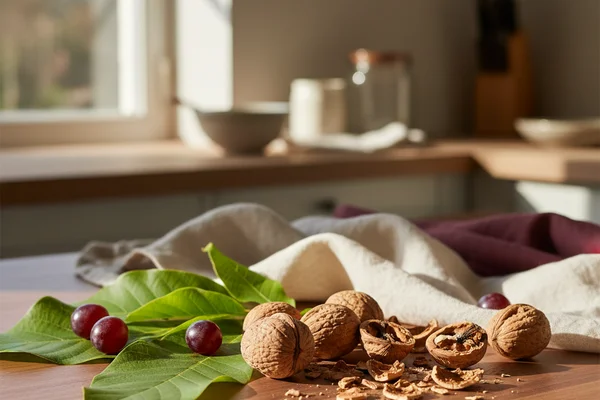
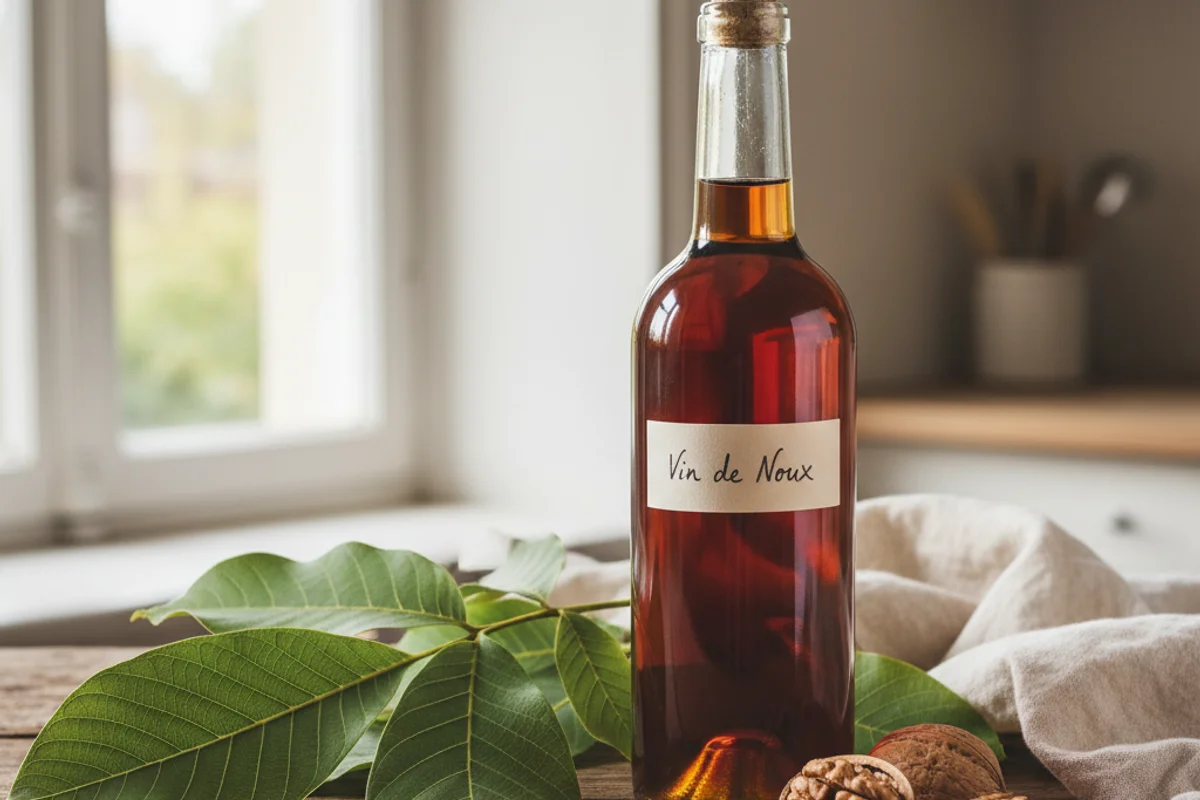
Walnut leaves sit in a quiet corner of folk winemaking history, producing a wine that’s earthy, faintly tannic, and surprisingly complex for something foraged from your backyard. The honey and demerara sugar build a warm, amber base while the leaves steep out their bitter, almost tea-like character. The result drinks more like a botanical country wine than anything you’d expect from a tree. Give it a full year of patience and you’ll have something genuinely worth talking about.
The beginner trap: Skipping the full twelve months of aging — this wine tastes harsh and medicinal young, but mellows into something genuinely pleasant with time.
Ingredients
- 3½ liters (7 pints) water
- 680 g (1½ lbs) demerara sugar (raw turbinado sugar works fine)
- 454 g (1 lb) honey, any mild variety
- 1 pint fresh walnut leaves, lightly packed (any walnut species)
- 1 tsp acid blend (or the juice of 1½ lemons)
- 1 tsp yeast nutrient
- 1 packet Montrachet wine yeast (or any general-purpose wine yeast)
Method
- Bring the water to a boil, then stir in the sugar and honey until fully dissolved. Remove from heat and skim off any foam that rises to the surface.
- Place the walnut leaves in your primary fermenter and pour the hot liquid over them. Cover and let steep for 24 hours.
- Strain out the leaves and discard them. Stir the acid blend and yeast nutrient into the liquid until dissolved.
- Activate your yeast according to the packet instructions, then add it to the must.
- Cover the fermenter loosely and ferment in a warm spot for 5–7 days, until the vigorous bubbling slows.
- Transfer to a sanitized secondary fermenter (1-gallon glass jug works well) and fit an airlock. Keep it in a warm place until all fermentation stops completely.
- Rack into a fresh sanitized secondary, top up to minimize headspace, and refit the airlock. Move to a cool, stable location for six months.
- Rack into clean bottles and age for an additional six months before opening.
Why this works
Walnut leaves contain tannins and juglone, a natural compound that gives them their bitter, astringent edge. Hot water draws those compounds out during the steep, much like brewing a strong herbal tea. The tannins actually help the wine age and clarify — they bind with proteins and drop out of suspension over time. That’s why patience isn’t just a virtue here; it’s chemistry doing its job. The honey adds fermentable sugars plus trace aromatic compounds that survive fermentation and add subtle floral depth. Demerara sugar’s light molasses character layers in just enough complexity to keep the finished wine from tasting thin.
Notes
If you can’t find demerara sugar, raw turbinado (sold at most grocery stores as “Sugar in the Raw”) is a direct substitute. Walnut leaves are most flavorful and aromatic when picked in late spring to early summer — avoid leaves that are yellowing or show signs of disease. If you’re short on fresh leaves, dried walnut leaves from an herbal supplier can pinch-hit; use about half the volume.