Walnut Leaves
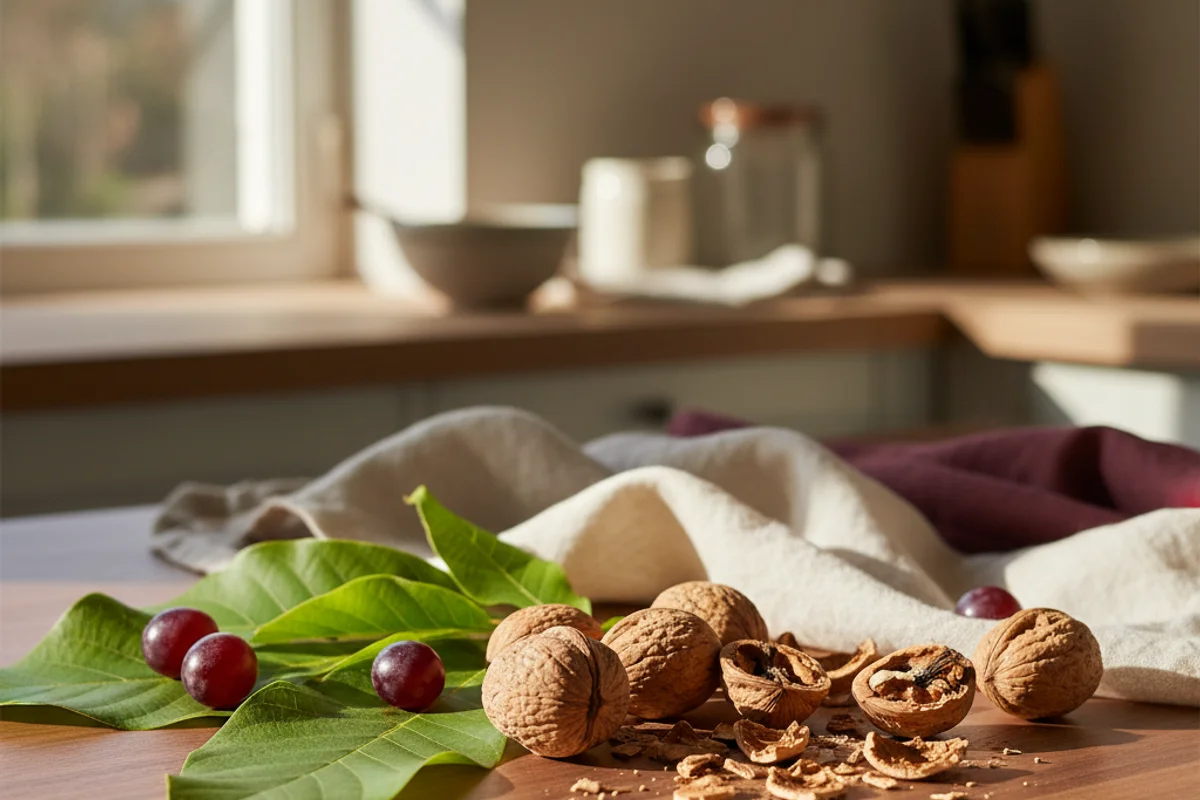
Most country wines start with fruit. This one starts with a tree’s foliage — and that’s exactly what makes it interesting. Walnut leaves carry subtle tannins and a faintly earthy, almost herbal quality that honey and raw sugar transform into something genuinely drinkable. The result is a light, pale wine that leans slightly sweet, with a quiet complexity most people can’t quite place. It’s the kind of thing you open at a dinner party and watch people squint pleasantly, trying to figure out what they’re tasting.
The beginner trap: Skipping the full cold-aging period — this wine needs at least six months of cold rest to clarify and mellow; rushing it produces a harsh, murky result.
Ingredients
- 1 pint walnut leaves, fresh, firmly packed
- 2½ pounds demerara sugar (dark brown sugar works as a substitute)
- 1 pound honey (any mild variety — clover or wildflower)
- 1 tsp acid blend (available at homebrew shops; or substitute ½ tsp citric acid)
- 1 tsp yeast nutrient
- 7 pints water
- 1 packet Montrachet wine yeast (or any dry white wine yeast)
Method
- Combine water, sugar, and honey in a large pot and bring to a boil, stirring until fully dissolved. Once boiling, remove from heat and skim any foam from the surface.
- Place the walnut leaves in your primary fermenter and pour the hot liquid over them. Cover and let steep for 24 hours.
- Strain out the leaves and discard them. Stir in the acid blend and yeast nutrient until dissolved.
- Activate your yeast according to packet directions, then add it to the must.
- Cover loosely and let ferment in a warm spot for 5–7 days, until vigorous bubbling slows.
- Transfer to a sanitized secondary fermenter (glass jug or carboy), fit an airlock, and leave in a warm place until fermentation stops completely.
- Rack into a clean secondary, top up to reduce headspace, refit the airlock, and move to a cool or cold location for six months. Check the airlock periodically and refill if needed.
- Sweeten to taste if desired, rack into sanitized bottles, and age for an additional six months before drinking.
Why this works
Walnut leaves contain tannins and trace phenolic compounds — the same structural chemicals that give red wine its grip and aging potential. Steeping the leaves in hot liquid extracts those compounds without a prolonged cold maceration. Honey adds fermentable sugars and subtle floral esters that fruit-free wines often lack. Demerara sugar contributes a faint molasses depth that keeps the finished wine from tasting thin. The long cold-aging phase lets proteins and tannin particles bond and drop out of suspension, leaving a clearer, smoother wine. Acid blend keeps the pH in a range where yeast stays healthy and the wine resists spoilage organisms.
Notes
Any variety of walnut tree should work here — black walnut, English walnut, or whatever grows locally. If you can’t find demerara sugar, dark brown sugar is a reliable grocery-store swap with a similar molasses profile. If the finished wine tastes astringent after aging, try back-sweetening slightly — a touch of residual sugar softens tannin perception considerably.