Watermelon-Banana-Persimmon Wine (makes 1 gallon)
Watermelon brings the juice and the brightness. Banana brings body and a silky texture you’d never expect from fruit you normally just peel and eat. Persimmon brings an almost honey-like depth that sits somewhere between apricot and brown sugar. Together, these three fruits make a wine that starts out tropical and slowly mellows — with enough patience — into something genuinely sherry-like. This is a slow-burn recipe. The reward scales directly with how long you leave it alone.
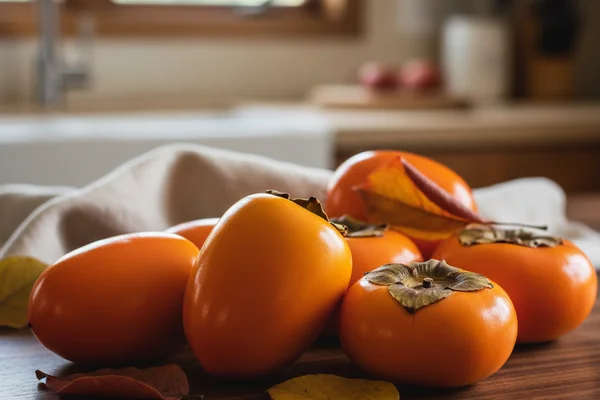
The beginner trap: Using underripe persimmons will load your wine with mouth-puckering tannins that never fully fade — wait until your persimmons are soft and almost jelly-like before you use them.
Ingredients
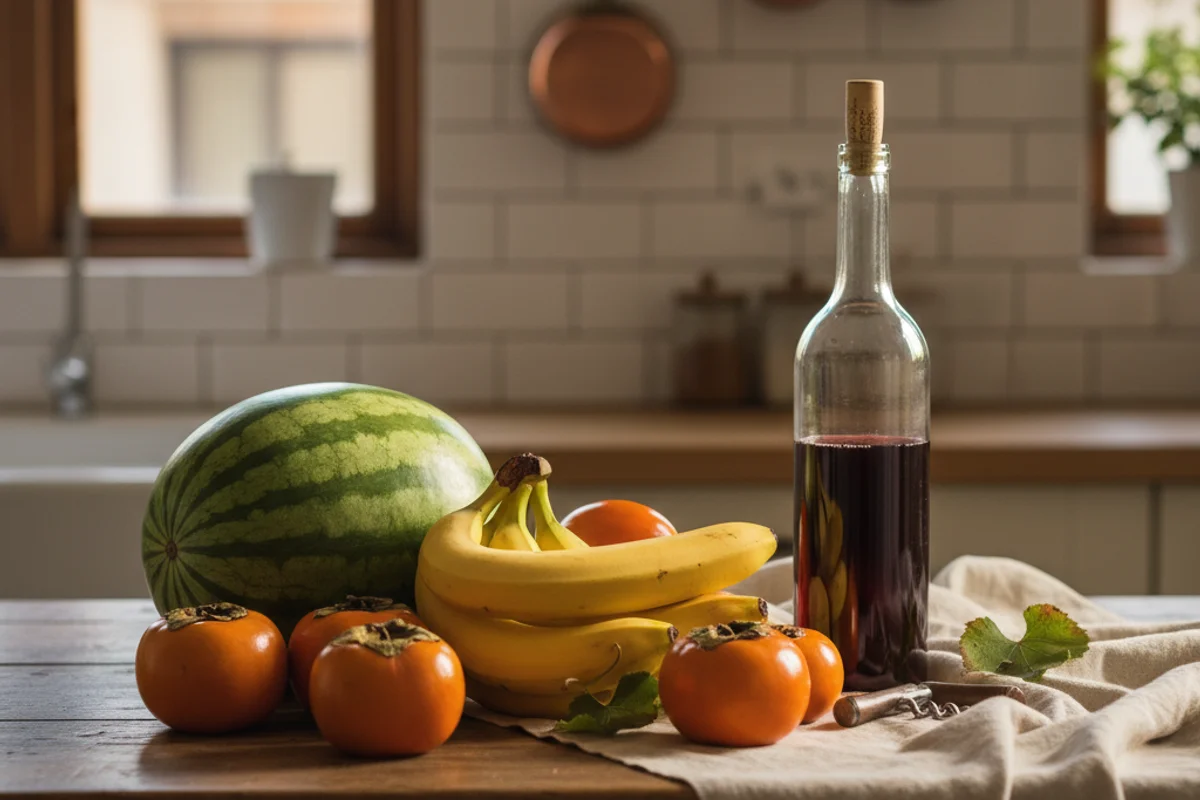
- 1 large watermelon (enough to yield roughly 10–11 cups of juice)
- 2 very ripe bananas, peeled and thinly sliced
- 2 very ripe persimmons (Fuyu or Hachiya both work; Hachiya must be fully soft)
- ¼ cup golden raisins, finely chopped
- 3½ cups granulated white sugar
- ¾ tsp acid blend (available at homebrew shops; or substitute 1 tsp lemon juice as a rough stand-in)
- 1 tsp pectic enzyme
- 1 tsp yeast nutrient
- 1 packet wine yeast (Lalvin EC-1118 or Red Star Côte des Blancs work well)
- Water to top up to 1 gallon total
Method
- Place the sliced bananas in 2 cups of water, bring to a boil, then reduce heat and simmer for 15 minutes.
- Turn off the heat, skim off any foam, and strain the banana-infused liquid into your primary fermenter — discard the cooked banana slices.
- Scoop the soft pulp from both persimmons and add it directly to the primary fermenter; cover loosely with plastic wrap and let the mixture cool to room temperature.
- Cut open the watermelon, scoop out the flesh, and press or blend it to extract the juice; strain out seeds and discard the squeezed pulp.
- Pour the watermelon juice into the primary fermenter, then add the chopped raisins, sugar, acid blend, pectic enzyme, and yeast nutrient.
- Add enough water to bring the total volume to 1 gallon, then stir thoroughly until all the sugar has dissolved.
- Cover the primary fermenter and wait 12 hours, then pitch your yeast.
- Stir the must once daily for 7–10 days, then strain out the raisin pieces and persimmon pulp.
- Let the strained wine settle for 24 hours, then rack it off the sediment into a clean secondary vessel and fit an airlock.
- Set aside for 4 weeks, then rack again, top up to minimize headspace, and wait another 4 weeks.
- Rack once more and allow the wine to clear naturally; once clear, rack again and age under airlock for 4–6 months.
- Stabilize with potassium sorbate and potassium metabisulfite, wait 10 days, then rack one final time, sweeten to taste, and bottle.
- Age the bottled wine for at least 6 more months before drinking — a full year will push it toward a genuine sherry-like character.
Why this works
The banana simmer step is doing real structural work. Bananas are loaded with starch and pectin, and simmering them in water pulls out long-chain carbohydrates that yeast can slowly break down. This adds body to what would otherwise be a very thin, watery wine. The raisins pull a similar trick — they’re concentrated grape sugars and flavor compounds that round out the fruit profile and add a bit of complexity. Pectic enzyme is non-negotiable here: watermelon and persimmon are both high in pectin, and without it, you’ll end up with a hazy wine that refuses to clear no matter how long you wait. The enzyme breaks those pectin chains apart early, making clarification far easier down the road.
Notes
If fresh persimmons aren’t available, look for frozen persimmon pulp at Asian grocery stores — it’s a reliable substitute and often already perfectly ripe. Frozen watermelon chunks can also be thawed and pressed for juice with no flavor penalty. If you can’t find acid blend, a small amount of tartaric acid (also sold at homebrew shops) is a cleaner substitute than lemon juice, which introduces its own flavors.