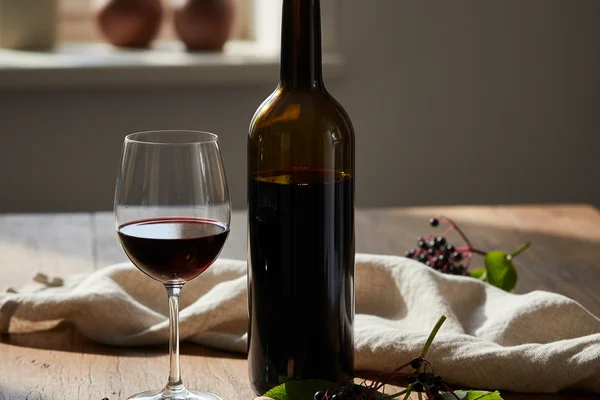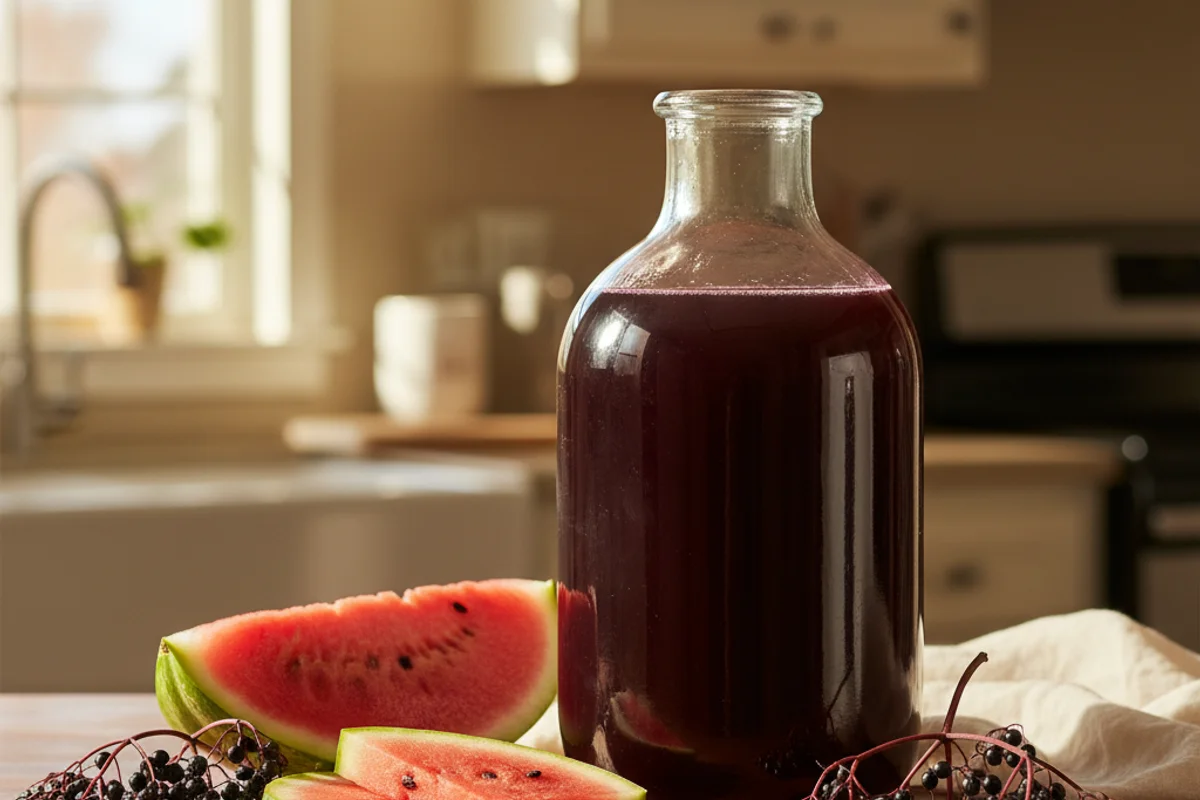
Watermelon-Elderberry Wine (makes 1 gallon)
Watermelon is roughly 92% water, which makes it either a terrible candidate for winemaking or a brilliant canvas — depending on what you pair it with. Enter dried elderberries: small, dark, and loaded with tannin, pigment, and a deep jammy flavor that watermelon completely lacks. Together they pull in opposite directions and somehow land in the same place: a rosé-adjacent, fruit-forward wine with real structure and a finish that lingers. Lemon zest keeps the whole thing from going flat. The result is surprisingly complex for something that started as a pile of pink fruit on a cutting board.
The beginner trap: Skipping or shortening the aging time — this wine tastes sharp and raw at bottling and genuinely needs at least six months in the bottle before it shows you what it’s capable of.
Ingredients
- 8–10 lb watermelon (flesh only, seeds removed)
- ¼ lb dried elderberries (found online or at homebrew shops; dried blueberries can substitute in a pinch but the flavor will differ)
- Zest and juice of 2 lemons
- 4 cups granulated sugar, plus ⅓ cup reserved for topping up
- 1 tsp pectic enzyme
- 1 tsp yeast nutrient
- 2 Campden tablets (potassium metabisulfite), used at separate stages
- ¼ tsp potassium sorbate (for stabilizing before bottling)
- 1 packet wine yeast (Lalvin 71B or EC-1118 work well)
- Water to bring total volume to 1 gallon
Method
- Remove the rind from the watermelon, cut the flesh into rough 1-inch chunks, and transfer everything — fruit and any juice — into your primary fermenter.
- Zest the lemons using the fine side of a grater, stopping before you hit the white pith, then juice them and add both the zest and juice to the fermenter.
- Add the dried elderberries, pectic enzyme, and yeast nutrient; top up with water to reach 1 gallon total volume.
- Stir in the sugar until fully dissolved, then cover the fermenter with a clean cloth or loose lid.
- Wait 12 hours, then pitch your wine yeast; cover and let it ferment at room temperature for 3 days, stirring the must twice daily.
- Strain the liquid into a glass secondary fermenter (carboy or jug), pressing the solids gently to extract juice; fit an airlock.
- Ferment for 30 days, then rack the wine off its sediment into a clean vessel; top up with water that has ⅓ cup of sugar dissolved into it.
- Crush and stir in one Campden tablet, refit the airlock, and continue racking every 30 days for 6 months total.
- About 10 days before you plan to bottle, stabilize the wine by stirring in ¼ tsp potassium sorbate and one more crushed Campden tablet; refit the airlock.
- Bottle the wine and age at least 6 months before opening — longer is better.
Why this works
Watermelon is high in water and sugar but very low in tannins and acid — the two things that give wine structure and shelf stability. Dried elderberries fix both problems at once: their skins are rich in tannins and anthocyanins (the pigments that also act as natural antioxidants), which add body and a deep ruby color to an otherwise pale must. Pectic enzyme breaks down the pectin in the fruit cell walls, which prevents a permanent haze in the finished wine. The Campden tablets (potassium metabisulfite) release sulfur dioxide at two key moments — before fermentation to knock back wild yeast and bacteria, and again before bottling to prevent oxidation. Potassium sorbate at the end stops any remaining yeast from restarting fermentation once the wine is in the bottle.
Notes
Frozen seedless watermelon works well here and is actually easier to work with — freezing ruptures the cell walls and releases more juice during fermentation. If you can’t find dried elderberries at a local homebrew shop, they’re widely available online; do not substitute fresh or raw elderberries without cooking them first, as unprocessed elderberries can cause stomach upset. If your finished wine tastes thin after aging, a small addition of grape tannin powder (available at homebrew stores) can help add body.