Watermelon Wine
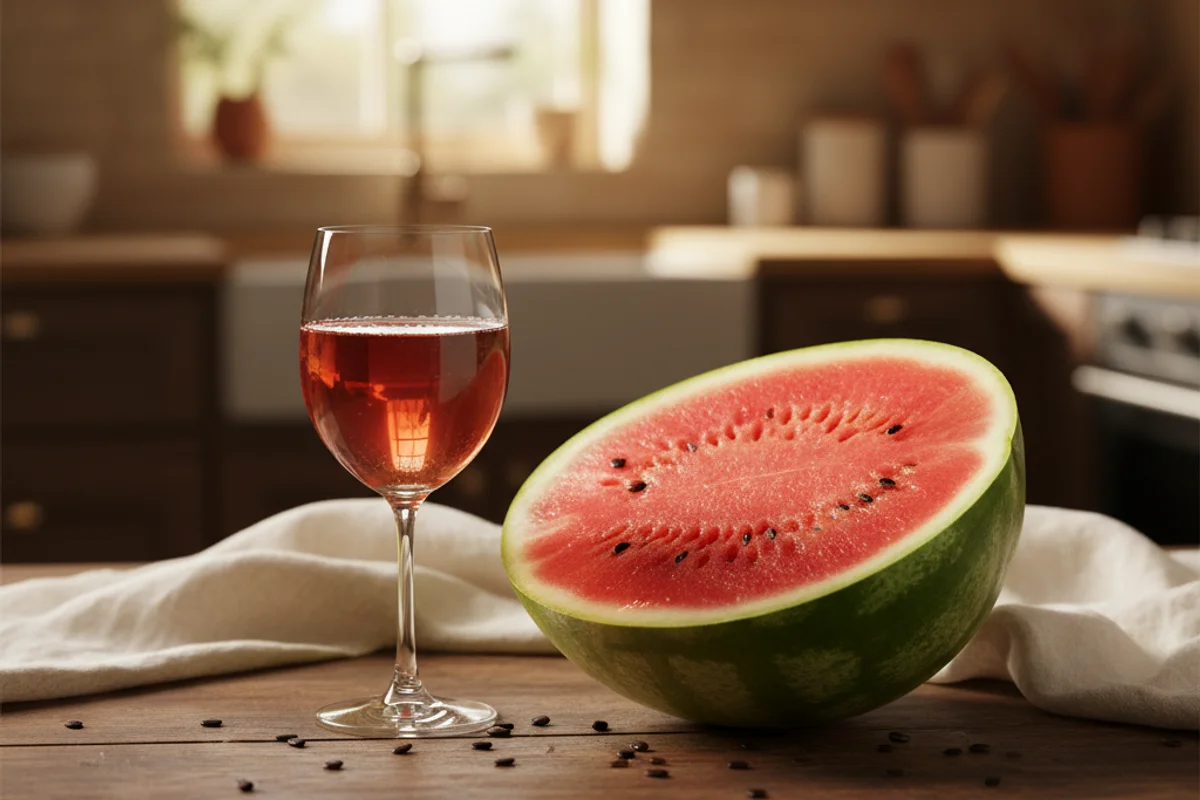
Watermelon is basically a water balloon with ambitions. It’s 92% water, mildly sweet, and carries a flavor that tastes bold in your mouth but vanishes the moment you try to capture it in a glass. That’s the challenge — and the opportunity. Pair it with ripe peaches and you get the body and depth watermelon can’t provide on its own. Add lime juice for brightness, raisins for tannin and texture, and suddenly that shy summer fruit has something to say. The result is a pale, refreshing wine that tastes like a back-porch afternoon in a bottle.
The beginner trap: Skipping the pulp-boiling step to save time — that step extracts the color, flavor compounds, and body that keep this wine from tasting like sweetened water.
Ingredients
- 2 lbs (about 6 cups) seedless watermelon flesh, cubed
- 2 medium peaches, peeled, pitted, and roughly chopped
- 2 lbs granulated white sugar
- ¼ cup raisins, roughly chopped
- Juice of 3 limes (about 6 tablespoons)
- 1 tsp acid blend (or substitute an extra tablespoon of lime juice)
- 1 tsp yeast nutrient
- 1 Campden tablet, crushed
- 1 packet wine yeast (Lalvin EC-1118 or Red Star Côte des Blancs work well)
- Water to bring total volume to 1 gallon
Method
- Juice the watermelon and peaches by squeezing or pressing the flesh through a fine mesh strainer or cheesecloth into a large bowl. Set the juice aside and keep the pulp.
- Place the pulp in a saucepan with 1 quart of water. Bring to a boil, then reduce heat and simmer for 30 minutes.
- Strain the boiled pulp liquid through cheesecloth or a fine strainer, discarding the solids. Combine this liquid with the reserved juice.
- Let the mixture cool to lukewarm (around 70–75°F), then pour it into your primary fermentation vessel.
- Add water to bring the total volume to 1 gallon. Stir in the sugar, lime juice, raisins, acid blend, yeast nutrient, and crushed Campden tablet. Stir well until the sugar fully dissolves.
- Cover the vessel with a clean cloth secured with a rubber band. Let it sit for 24 hours to allow the Campden tablet to do its sanitizing work.
- After 24 hours, sprinkle the wine yeast over the surface and stir it in. Re-cover with the cloth.
- Stir the must once daily for 7 days, then strain out and discard the raisins.
- Let the liquid settle for another 24 hours, then rack (siphon) it off the sediment into a 1-gallon glass jug (secondary fermentation vessel).
- Fit an airlock to the jug and set it somewhere cool and dark for 4 weeks.
- Rack again into a clean jug, refit the airlock, and wait another 4 weeks.
- Rack one final time once the wine has cleared completely, then bottle it. Wait at least 6 months before opening a bottle — longer is better.
Why this works
Watermelon’s high water content and low tannin level make it a structurally weak base for wine. Boiling the pulp breaks down the cell walls and pulls out more of the flavor compounds and pigments that juice alone can’t capture — think of it like making a stock. Peaches bring natural pectin and mild acidity that help give the finished wine a rounder mouthfeel. The chopped raisins act as a tannin source during primary fermentation, adding just enough backbone to keep the wine from tasting flat. Lime juice and acid blend keep the pH in a range where yeast thrive and spoilage bacteria don’t. The Campden tablet (sodium or potassium metabisulfite) neutralizes wild yeast and bacteria at the start so your chosen yeast can take over cleanly.
Notes
If fresh peaches aren’t available, frozen sliced peaches work just as well — thaw them completely and use the juice that collects. Acid blend is available at homebrew shops; if you can’t find it, an extra tablespoon of lime or lemon juice is a reasonable substitute. If your wine is still hazy after the second 4-week rest, a dose of pectic enzyme added at the very beginning (before the yeast) can help — watermelon and peaches are both high in pectin, which can cause stubborn cloudiness.