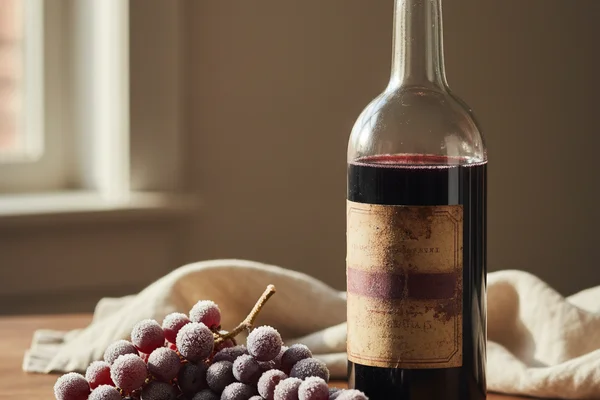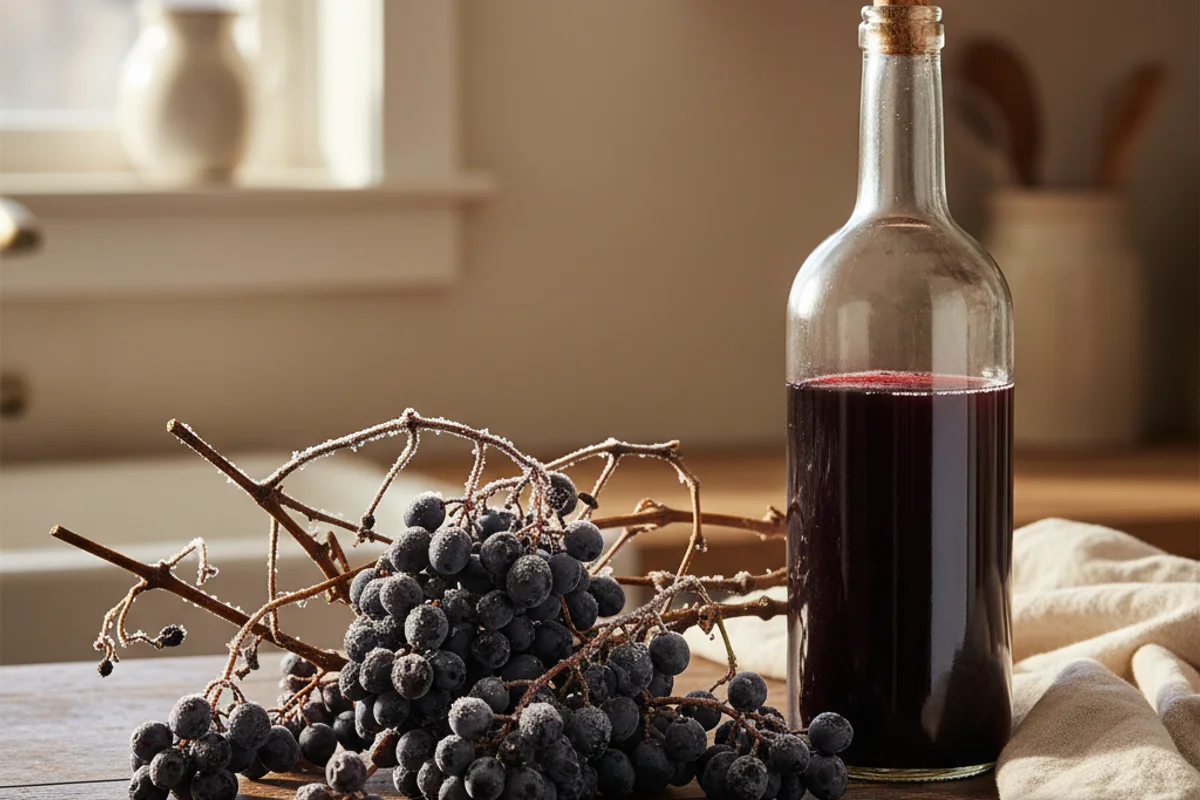
WILD FROST GRAPE WINE
If you’ve ever walked a Pennsylvania hedgerow in late September and spotted clusters of small, dark grapes clinging to the vine after the first cold snap, you’ve found Vitis riparia — the frost grape. These little wild grapes pack serious tannin, deep color, and a tartness that commercial grapes rarely match. Ferment them right and you get a medium-bodied dry red with real backbone. This recipe makes 5 gallons and rewards patience — the wine is drinkable young but genuinely improves with a year or two in the bottle.
The beginner trap: Skipping the two-stage sugar addition leads to a wine that finishes either too thin or too sweet — follow both sugar steps exactly and hit your gravity targets.
Ingredients
- 45–50 lbs fresh frost grapes (Vitis riparia), washed and destemmed
- 7–10 lbs granulated white sugar, divided across two additions (see Method)
- ~2 gallons water, for topping up (amount varies)
- 3½ tsp pectic enzyme
- 5 Campden tablets, crushed (or ¼ tsp potassium metabisulfite powder)
- 1 tsp acid blend (available at homebrew shops; citric acid from the grocery store is a rough stand-in)
- 5 tsp yeast nutrient
- 1 packet Montrachet wine yeast (or any dry red wine yeast such as EC-1118 or Red Star Premier Classique)
Method
- Harvest grapes when fully ripe or just slightly past — the skins should feel the faintest bit slack. Wash, destem, and crush them in your primary fermentation bucket.
- Strain off a small sample of juice, float your hydrometer, and record the specific gravity. Return the juice to the bucket.
- Dissolve enough sugar in boiling water (2 parts sugar to 1 part water by volume) to raise the must’s specific gravity to 1.088. Let the syrup cool to room temperature, then stir it into the must.
- Add the crushed Campden tablets, stir well, cover the bucket loosely, and wait 12 hours.
- Add the pectic enzyme, acid blend, and yeast nutrient. Stir, re-cover, and wait another 12 hours.
- Sprinkle in the yeast, cover the bucket, and punch the grape cap down twice a day for 7–10 days until the specific gravity reaches 1.010.
- Strain and press the grape solids. Measure the juice volume and calculate how much water you need to reach 5 gallons total.
- Return the juice to the primary bucket and cover it. Bring the measured water to a boil and stir in 2 lbs 5 oz of sugar per gallon of water. Let this syrup cool completely.
- Add the cooled sugar-water to the bucket, cover it, and let it ferment another 3–5 days until the gravity drops back to 1.010.
- Rack the wine into a 5-gallon carboy and fit an airlock. After 7 days, top up the carboy if the level has dropped.
- Three weeks later, rack again into a clean, sanitized carboy, top up, and refit the airlock. Set aside for 4 months.
- Stabilize the wine, wait 10 days for sediment to settle, then rack into bottles. Drink it now or cellar it — it gets better with time.
Why this works
Wild frost grapes are naturally high in both tannin and acid, which is great for structure but can make a wine harsh if you ferment on the skins too long or undershoot your sugar targets. The two-stage sugar addition is the key move here: the first addition sets your starting gravity before the skins go to work, and the second dials in your final volume and alcohol after pressing. This prevents you from guessing how much water the grape solids absorbed. Pectic enzyme breaks down the pectin in grape skins, which clears the wine and prevents a stubborn haze from forming later. Campden tablets (sulfite) knock back wild yeast and bacteria before your chosen yeast takes over, giving you a cleaner, more predictable ferment.
Notes
If fresh frost grapes aren’t available, frozen wild grapes work well — freezing actually breaks down the cell walls and can improve juice extraction. For the acid blend, a mix of equal parts tartaric and citric acid (both available at grocery stores or online) is a workable substitute. If your finished wine tastes overly tannic after aging, a small amount of food-grade glycerin stirred in at bottling can smooth it out.