FROST GRAPE WINE
Makes 5 Gallons
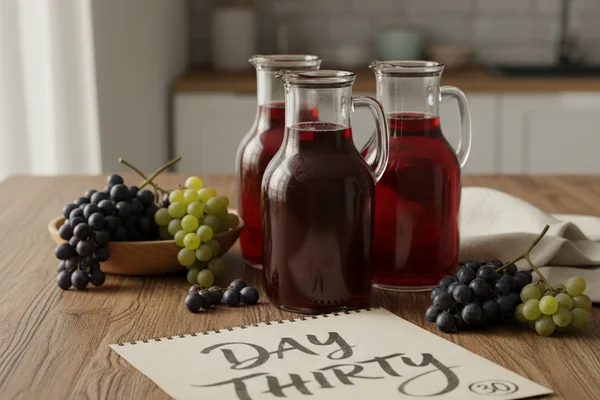
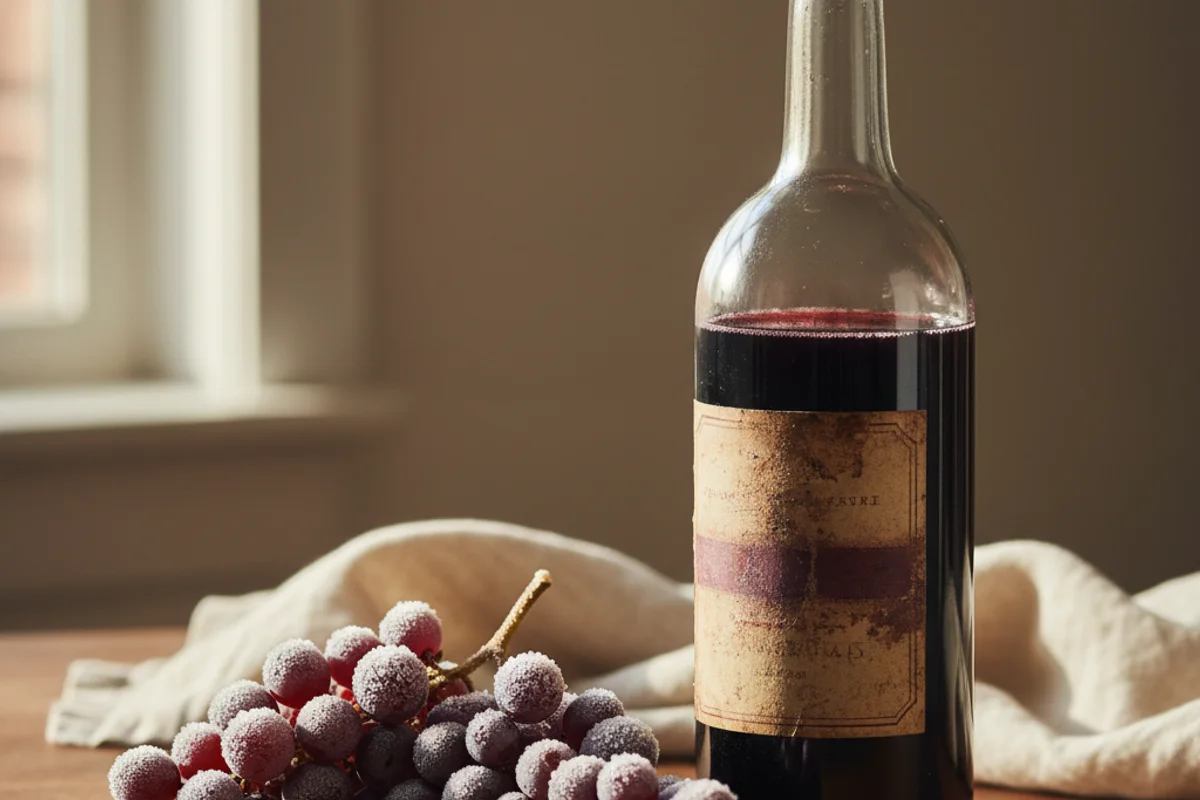
Frost grapes are the wild child of the grape world — small, tannic, and stubbornly tart until the first hard freeze softens their attitude. That cold snap breaks down the skin, concentrates the sugars, and unlocks a deep, inky flavor that sits somewhere between blackberry jam and a forest floor after rain. These are not grocery-store Concords. They’re feral, they’re free, and with a little patience they make a wine that rewards anyone willing to wait for it.
The beginner trap: Skipping the two-stage sugar addition means your yeast gets overwhelmed early and stalls out before the wine reaches full volume — always add the dilution sugar separately after pressing.
Ingredients
- 45–50 lbs frost grapes, fresh (picked just after the first autumn frost)
- 7–10 lbs granulated white sugar, divided (see Method)
- ~2 gallons water, for topping up
- 3½ tsp pectic enzyme
- 5 Campden tablets, crushed — or ¼ tsp potassium metabisulfite (sold at homebrew shops)
- 1 tsp acid blend (a tartaric/malic/citric mix; find it at homebrew stores)
- 5 tsp yeast nutrient
- 1 packet Montrachet wine yeast (Red Star or Lalvin EC-1118 are common grocery-adjacent substitutes)
Method
- Pick the grapes just after the first hard autumn frost, when the skins feel slightly loose. Wash them, remove the stems, and crush them in your primary fermentation bucket.
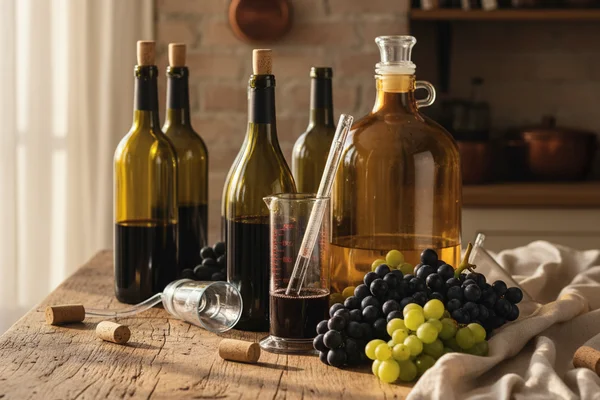
- Strain off just enough juice to float your hydrometer, take a specific gravity reading, then pour that juice back in.
- Dissolve sugar in boiling water using a 2-to-1 ratio by volume (sugar to water), let it cool completely, then stir it into the must until the specific gravity reads 1.088.
- Add the crushed Campden tablets or potassium metabisulfite, stir well, cover the bucket, and wait 12 hours.
- Add the pectic enzyme, acid blend, and yeast nutrient; stir, recover the bucket, and wait another 12 hours.
- Sprinkle in the yeast, cover the bucket, and push the grape cap down into the liquid twice a day for 7–10 days until specific gravity falls to 1.010.
- Strain and press the grapes, then measure the total juice volume to figure out how much water you need to reach 5 gallons.
- Bring that measured water to a boil, stir in 2 lbs 5 oz of sugar per gallon of water required, and let it cool completely before adding it to the juice.
- Cover and ferment 3–5 more days until specific gravity drops back to 1.010, then rack into a clean secondary vessel and fit an airlock.
- After 7 days, top up the vessel if there is headspace, then rack again 3 weeks later into a freshly sanitized secondary, top up, and refit the airlock.
- Leave undisturbed for 4 months, then stabilize the wine, wait 30 days for sediment to settle, and rack into bottles.
Why this works
The two-stage sugar process is doing real work here. If you dump all the sugar in at the start, you push the osmotic pressure so high that the yeast struggle to get going — or quit entirely, leaving you with a sweet, half-fermented mess. By adding the first round to hit 1.088 and reserving the rest for after pressing, you give the yeast a manageable environment during the skin-contact phase, then reload the fuel tank once the solids are out of the way. The pectic enzyme is equally important: wild grapes are loaded with pectin, and without it you’ll end up with a hazy, gel-like wine that refuses to clear no matter how long you wait.
Notes
Frost grapes are a foraging find, not a store item — if you can’t source them locally, this recipe works well with frozen wild grape juice or even frozen Concord grapes thawed and crushed; look for unsweetened frozen grape juice at natural food stores as a starting point. Acid blend is sold at any homebrew retailer and online; in a pinch, a small amount of cream of tartar (tartaric acid) from the baking aisle can substitute. This wine is drinkable young but genuinely improves with 1–2 years of bottle aging.