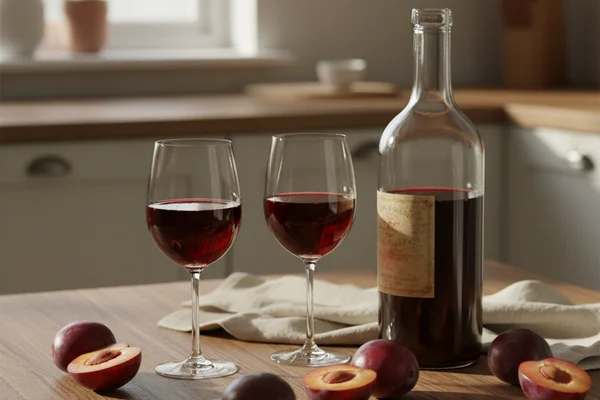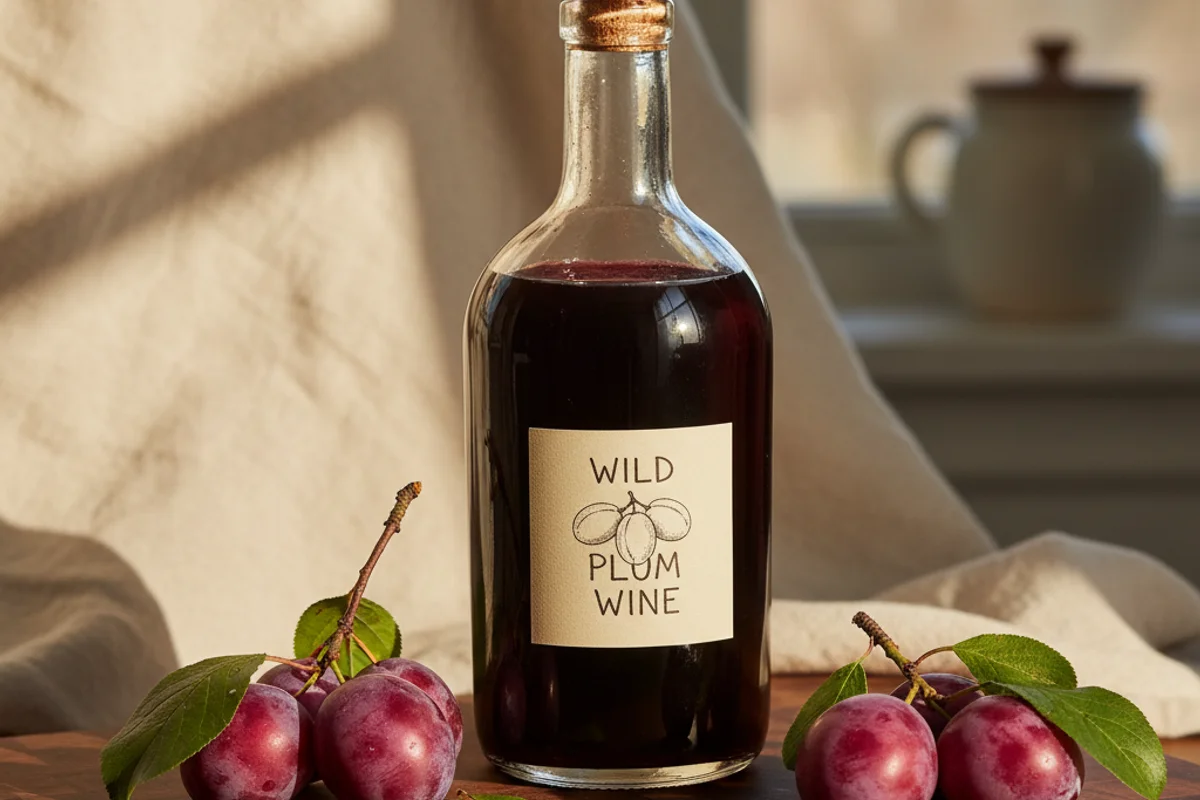
WILD PLUM WINE (1)
Wild plums are the scrappy cousins of the cultivated fruit aisle — smaller, more tart, and packed with a jammy, almost feral depth that grocery-store plums can’t touch. When fermented with a full-bodied wine yeast, that rustic intensity transforms into something genuinely complex: dark fruit on the nose, a tannic backbone, and just enough acid to keep things lively. This is a one-gallon recipe built for patience. The fruit needs time, the wine needs time, and your reward — about a year from now — is a glass that tastes like a summer hedgerow in the best possible way.
The beginner trap: Skipping the hydrometer after pulling the fruit bag means you’ll guess at your final sugar addition and almost certainly miss your target alcohol level.
Ingredients
- 4 lbs ripe wild plums (fresh or frozen; pitted, stemmed)
- 2 lbs granulated white sugar, divided
- 1 cup red or white grape juice concentrate (store-bought frozen concentrate works fine)
- 1 tsp acid blend (or substitute 1½ tsp lemon juice per tsp as a rough stand-in)
- 1 tsp pectic enzyme
- ¼ tsp wine tannin (or substitute 1 tsp strong unsweetened black tea)
- 1 Campden tablet, crushed (potassium metabisulfite; find it at homebrew shops or online)
- 1 tsp yeast nutrient
- 1 packet Bordeaux or Burgundy wine yeast (Red Star or Lalvin EC-1118 work as backups)
- Water to make 1 gallon total
Method
- Bring ½ gallon of water to a boil. While it heats, wash, pit, and destem the plums — chop any large ones and save every drop of juice.
- Place the fruit and juice into a nylon mesh straining bag set inside a primary fermenter marked by the pint up to one gallon. Pour in the grape concentrate and the boiling water, then cover and let everything cool to lukewarm (around 75–80°F).
- Add the crushed Campden tablet, re-cover the fermenter, and wait 12 hours.
- Squeeze the fruit bag firmly by hand to crush the plums, then stir in half the sugar until it fully dissolves.
- Lift the bag and let it drain for about 2 minutes, then add water until the liquid reaches the 7-pint mark. Return the bag to the liquid.
- Take a hydrometer reading and write it down. Stir in the acid blend, tannin, pectic enzyme, and yeast nutrient.
- After 12 more hours, sprinkle in the yeast. Squeeze the fruit bag twice a day for the next 7 days to push color and flavor into the must.
- After 7 days, lift the bag and let it drip-drain for 2–3 hours; give it one final gentle squeeze at the end. Add that liquid back into the fermenter.
- Use your hydrometer and a sugar addition chart to figure out how much of the remaining sugar to add to reach a specific gravity of 1.095. Stir until fully dissolved.
- Let the must settle overnight, then rack into a 1-gallon secondary fermenter (glass jug or carboy) and fit an airlock — do not top up yet.
- After 7 days, top up the secondary with water or a neutral wine to minimize headspace.
- Rack again at the 1-month mark, top up, and refit the airlock. Repeat this same step 2 months later.
- Once the wine runs clear, wait one more month, rack a final time, top up, and set it aside for bulk aging. Check the airlock water level every month.
- After 6 months of bulk aging, stabilize with potassium sorbate and potassium metabisulfite, wait 10 days, rack if sediment has formed, sweeten to taste, and bottle. Wait at least 1 year from bottling before opening.
Why this works
Pectic enzyme is the unsung hero here. Plums are loaded with pectin — the same stuff that makes jam gel — and without this enzyme, your wine can end up hazy no matter how long you wait. The enzyme breaks those pectin chains apart, freeing trapped juice and letting the wine eventually drop clear. The Campden tablet added early does a different job: it knocks out wild yeast and bacteria on the fruit so your chosen wine yeast can take over cleanly rather than fighting for dominance. Splitting the sugar addition — half before fermentation, the rest calculated after pulling the fruit bag — keeps the starting gravity from overwhelming the yeast before they’ve even had a chance to get going.
Notes
Frozen wild plums work beautifully here; freezing actually ruptures the cell walls and releases more juice, which means better color and flavor extraction. If wild plums aren’t available, small Italian prune plums or fresh damson plums from a farmers market are the closest substitutes. If your wine stalls before reaching dryness, check that fermentation temperature hasn’t dropped below 65°F — these yeasts like it warmer.