WILD PLUM WINE (3)
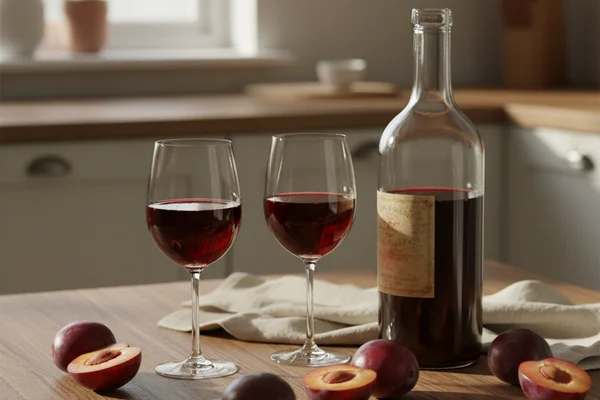
Wild plums punch well above their weight. They’re small, tart, and borderline aggressive straight off the branch — exactly the kind of fruit that turns into something deeply complex once fermentation works it over. This recipe adds a quiet twist: barley steeped in hot water for two days before a single drop of plum goes in. The result is a wine with a soft, almost silky body, a faint earthiness underneath the fruit, and a tart finish that mellows beautifully with age. Give it a full year in the bottle and you’ll be glad you waited.
The beginner trap: Skipping the full one-year bottle aging is the most common mistake — this wine tastes harsh and unbalanced young, so patience isn’t optional here.
Ingredients
- 6 lbs ripe wild plums, fresh or frozen, washed, pitted, and chopped
- 3 lbs granulated white sugar
- ½ lb pearl barley (standard grocery-store variety)
- 1 large orange, juice only (about ⅓ cup)
- ½ tsp pectic enzyme
- 1 gallon water
- 1 tsp yeast nutrient
- 1 packet wine yeast (Bordeaux, Tokay, or Sauternes style; Lalvin 71B is a solid everyday substitute)
Method
- Bring 1 gallon of water to a boil, stir in the barley, cover, and let it sit at room temperature for two full days.
- Strain out and discard the barley (or save it for soup — it’s perfectly good), then split the barley water roughly in half.
- Wash, destem, pit, and chop the plums, saving every drop of juice; place the prepared plums in your primary fermenter.
- Bring one half of the barley water back to a boil and pour it over the plums; cover and let the mixture steep for 5 hours.
- Strain the liquid off the pulp into a separate container, then pour the remaining (cool) half of the barley water over the pulp and let it soak for 1 hour; strain again and combine both batches of liquid.
- Bring the combined liquid to a boil, then pour it over the sugar and stir until fully dissolved.
- Once the must cools to room temperature, stir in the pectic enzyme, orange juice, and yeast nutrient; cover and wait 12 hours.
- Sprinkle in the yeast, cover loosely, and allow fermentation to begin — usually within 24–48 hours.
- Once fermentation is vigorous and steady, carefully transfer the must to a glass secondary fermenter (carboy) and fit an airlock.
- When the wine starts to clear and bubble slows significantly, rack it off the sediment into a clean carboy, top up to minimize headspace, and refit the airlock.
- Set the carboy aside for 4 months, then stabilize with potassium sorbate and potassium metabisulfite; wait 10 days, then rack again.
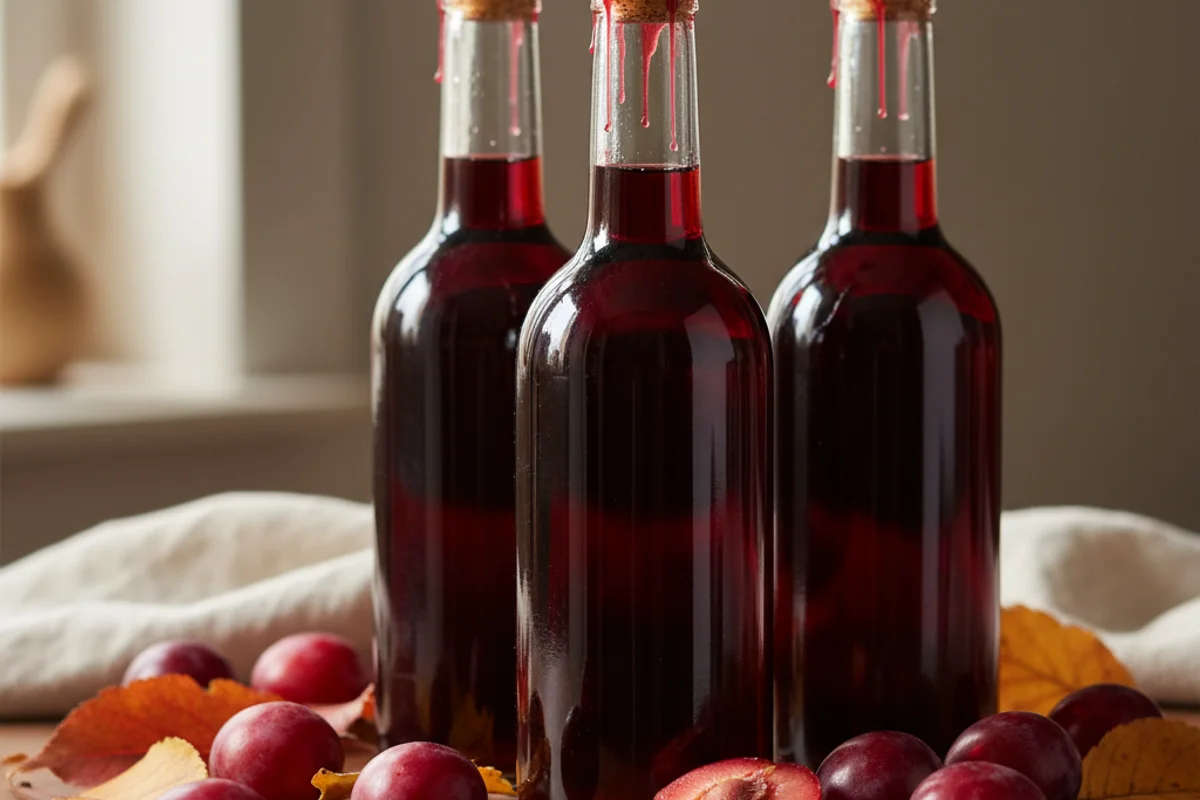
- Taste and sweeten to your preference, then bottle; do not open for at least one year.
Why this works
The barley steep is the sleeper ingredient here. Barley contains starches and beta-glucans that partially dissolve into hot water, releasing compounds that add a subtle body and mouthfeel without contributing flavor that competes with the fruit. Think of it as a natural body builder — similar in concept to adding grape tannin or oak, but softer. The pectic enzyme is equally important: wild plums are loaded with pectin, a natural gelling agent that will leave your finished wine hazy and dull if left unchecked. Pectic enzyme breaks those pectin chains apart so the wine can clarify properly. The orange juice brings a small acid boost and a bright top note that balances the plums’ deep, tannic character.
Notes
Frozen wild plums work just as well as fresh — freeze-thaw cycles actually break down cell walls and release more juice, which is a net win. If wild plums aren’t available in your area, small tart Italian prune plums or even damson plums from the grocery store are close substitutes. If your finished wine is too tart before bottling, dissolve sugar in a small amount of warm wine before stirring it back in to avoid re-starting fermentation unexpectedly.