Wine Accessories
The glass you pour into matters more than most people think. A wide, bowl-shaped glass isn’t just fancy — it puts more wine surface area in contact with air, which unlocks aroma compounds that a narrow tumbler traps. The shape of the rim directs the wine to specific parts of your tongue. In short, the right glass is a delivery system, engineered to make good wine taste better and great wine taste extraordinary.
The beginner trap: Buying cheap, thick-rimmed glasses and wondering why your carefully made wine smells flat in the glass.
Ingredients
This page covers equipment, not a fermentation recipe. No fermentable ingredients apply.
- 1 set of wine glasses matched to your wine style (white, red, sparkling, or all-purpose)
- 1 reliable corkscrew or wine opener suited to your comfort level
Method
- Choose your glass style. For a single all-purpose option, pick a mid-size tulip-shaped glass with a thin rim — it works well for both red and white wines.
- Match glass to wine if you want to go deeper. Wider, rounder bowls suit full-bodied reds; narrower bowls with a taller shape work better for whites and aromatics; tall, slender flutes are designed for sparkling wines.
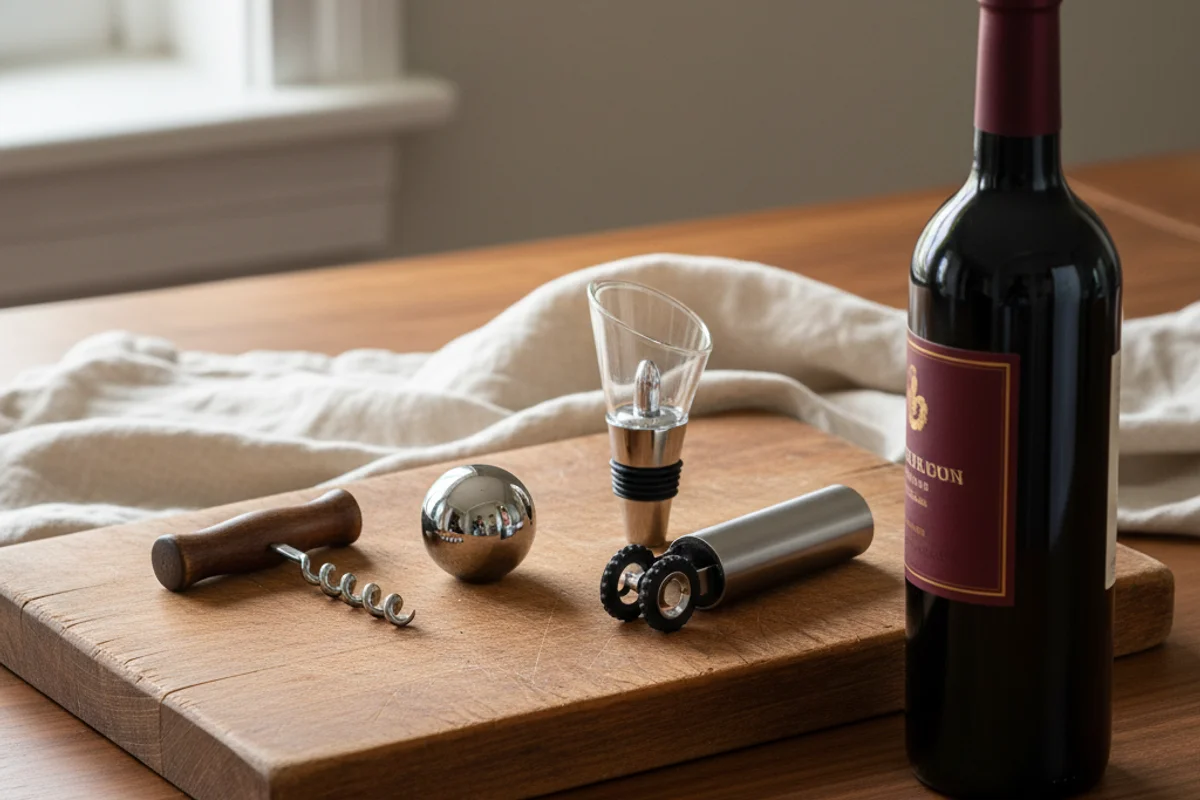
- Pick a corkscrew that fits your hands. A waiter’s friend (the folding lever type) is compact and reliable; a rabbit-style or lever corkscrew removes corks with almost no effort and is a good choice if hand strength is a concern.
- Hand-wash your good glasses. Dishwasher detergent leaves a residue that dulls aroma — rinse with hot water and let air dry upright.
Why this works
Glass shape is not decoration — it is applied fluid dynamics. A wider bowl lets more wine sit exposed to air, speeding up the release of volatile aroma compounds called esters and terpenes. The tapered rim then concentrates those vapors toward your nose as you sip. Thinner glass gets out of the way, so your lip registers wine, not hardware. Higher-end crystal (whether lead or lead-free) is made thinner and more uniform than standard glass, which is why it feels different in your hand and why the wine seems to smell more vivid. You are not imagining it — the physics are real.
Notes
Entry-level all-purpose glasses from brands like Libbey (widely available at grocery and discount stores) give you the right basic shape without the high price tag. If your wine has a foil capsule, a foil cutter — often included with better corkscrews — makes a cleaner cut than a knife. For sparkling wines you bottle yourself, champagne pliers grip the cage and cork safely and are far easier to control than a bare-hand twist.