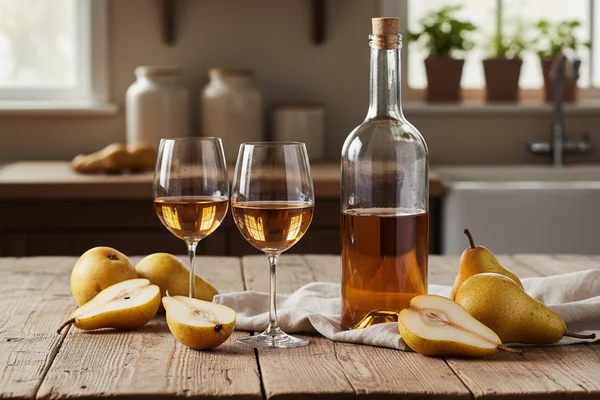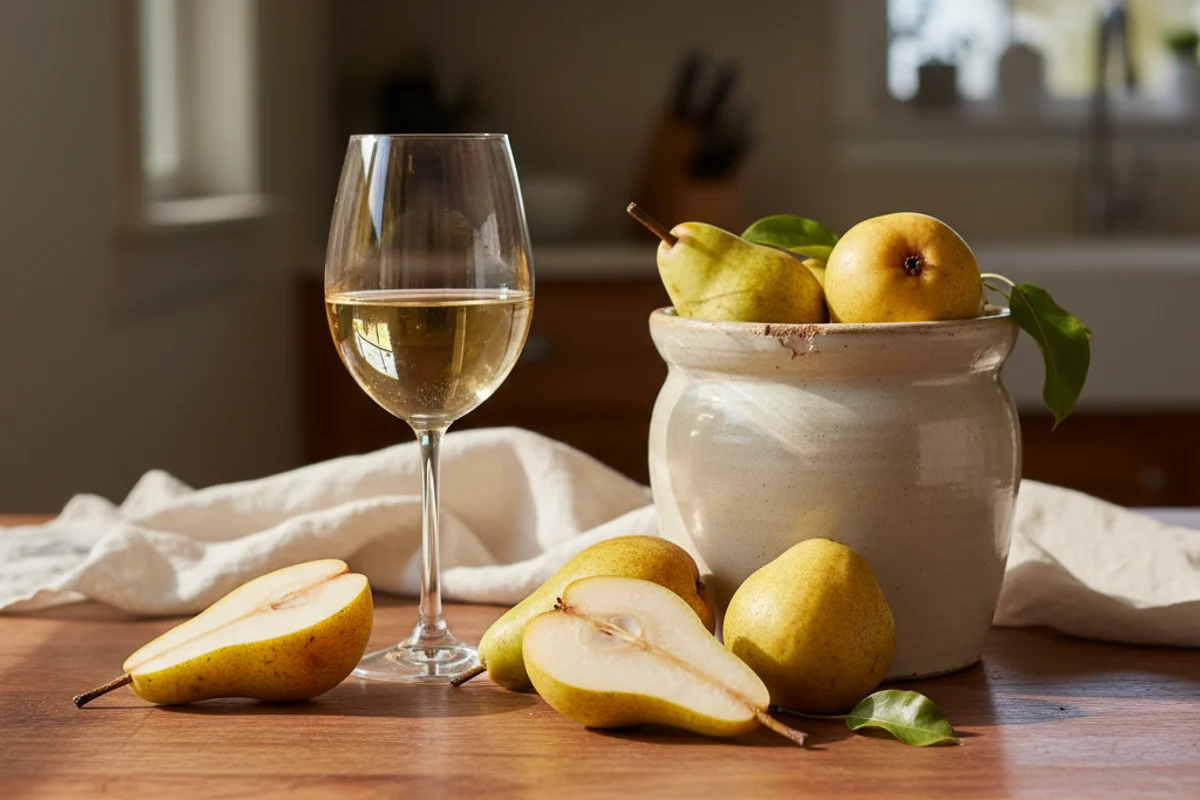
winemaking: Bradford pear wine
Bradford pears line suburban streets across the South, dropping tiny, marble-hard fruit that nobody wants to eat. And fair enough — they’re astringent, seedy, and barely the size of a cherry. But here’s the thing: that dense, tannin-rich flesh has real character hiding inside it, and with the right technique you can coax out a dry, lightly floral wine that’s genuinely worth drinking. Freeze the fruit first, add some lemon for acid, and let time do the heavy lifting.
The beginner trap: Cutting or chopping the fruit releases bitter compounds from the seeds — crush just enough to break the pulp and stop there.
Ingredients
- 5 lb. Bradford pears, washed, destemmed, and lightly crushed (fresh, then frozen)
- 2 lb. granulated white sugar
- Juice of 2 lemons (about ¼ cup; bottled lemon juice works fine)
- 1½ tsp. pectic enzyme
- 7 pints (3½ quarts) water, divided
- 1 tsp. yeast nutrient
- 1 packet wine yeast (Lalvin EC-1118 or Red Star Côte des Blancs)
- 1 Campden tablet (sodium or potassium metabisulfite)
Method
- Wash, destem, and lightly crush the pears — just enough to crack the pulp. Leave skins and seeds intact; do not chop or slice.
- Place crushed fruit in a zip-top bag or sealed container and freeze for at least two weeks.
- Remove from the freezer and let thaw just enough to transfer into a nylon straining bag set inside your primary fermenter.
- Pour 2 quarts of water over the bagged fruit, stir in the pectic enzyme, cover the fermenter, and leave overnight (8–12 hours).
- Dissolve the sugar in the remaining 3 pints of water, then stir in the lemon juice and yeast nutrient; add this syrup to the primary.
- Activate your yeast in a small amount of warm water per packet instructions, then add it to the must.
- Cover the fermenter and squeeze the fruit bag 2–3 times daily for 7–10 days, until active fermentation slows noticeably.
- Lift the bag, let it drip-drain fully, and discard the spent fruit. Do not press hard.
- Crush and dissolve one Campden tablet, stir it into the liquid, then transfer everything to a glass secondary fermenter and attach an airlock.
- Rack after one month, then every two months until the wine is clear and dropping no more sediment.
- Bottle when clear. If the wine is too dry, stabilize with potassium sorbate, sweeten to taste, and wait 30 days before bottling to confirm fermentation has stopped.
- Taste at 3 months, but expect the best flavor and body between 9 and 12 months.
Why this works
Bradford pears are low in juice and high in pectin — the same structural carbohydrate that makes jam gel. Without pectic enzyme, that pectin holds onto color, flavor, and clarity like a sponge, leaving you with a hazy, flat-tasting wine no matter how long you wait. The enzyme breaks pectin chains apart, freeing up juice and allowing the wine to eventually drop clear on its own. Freezing the fruit first ruptures cell walls (water expands when it freezes, tearing through plant tissue), which releases more juice without any aggressive pressing. That matters here because hard pressing would also release tannins and bitter compounds from the seeds — exactly what you’re trying to avoid.
Notes
If you want a spiced holiday version, add two 3-inch cinnamon sticks and 15–20 whole cloves in a small muslin spice bag at the start of primary fermentation; remove the bag before transferring to secondary. The resulting wine is excellent around Christmas — plan to bottle it by late summer if that’s your goal. Potassium metabisulfite powder (¼ tsp. = roughly 1 Campden tablet) is a direct substitute if you can’t find Campden tablets at your local homebrew shop.