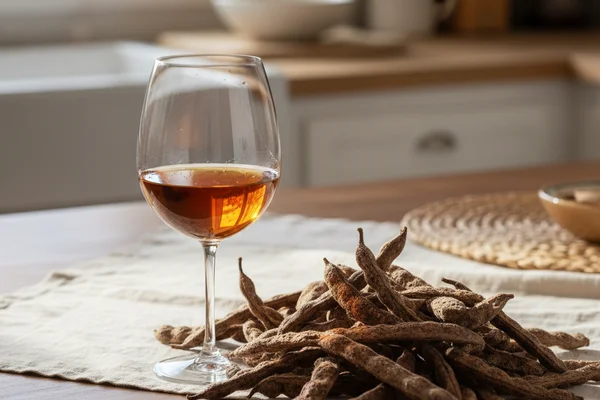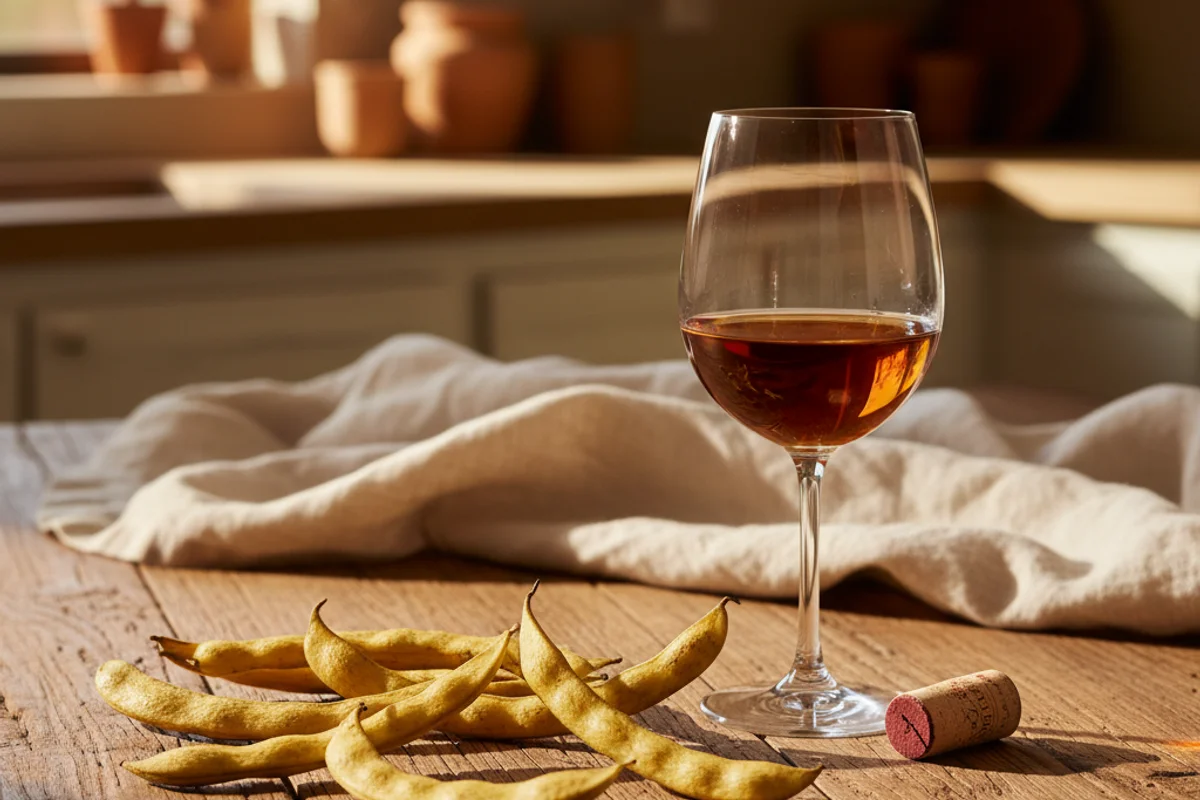
winemaking: Mesquite Bean Wine
Mesquite trees thrive where almost nothing else will, baking in alkaline soil under a relentless sun. Their bean pods reward that toughness with a surprising sweetness — somewhere between vanilla, molasses, and toasted grain — that has fed people across the American Southwest for centuries. Ferment those pods low and slow, let the wine rest a full year, and you end up with something genuinely unusual: a dry, amber wine with a nutty, caramel backbone that tastes like the desert smells right after rain.
The beginner trap: Rushing the aging — this wine tastes thin and harsh at six months but transforms dramatically by twelve, so bottle it and walk away.
Ingredients
- 3 lbs mesquite bean pods, broken into 1-inch pieces (fresh or foraged; harvest when pods are turning yellow-brown)
- 1½–2 lbs granulated white sugar, divided (enough to reach a starting gravity of 1.090)
- 11 oz frozen white grape juice concentrate (Welch’s 100% White Grape works well; thaw before use)
- 1½–2 tsp acid blend (find it at any homebrew shop; or substitute 1 tsp tartaric acid)
- ½ tsp pectic enzyme
- 1 tsp yeast nutrient
- 1 packet Champagne wine yeast (Lalvin EC-1118 is a reliable grocery-store-accessible choice)
- Water to make 1 gallon total
Method
- Wash the bean pods thoroughly, then break or snap them into roughly 1-inch pieces.
- Place the pieces in a large pot, cover with about 3 quarts of water, and simmer covered on low heat for one hour.
- Strain out and discard the pods, then pour the hot liquid into your primary fermenter.
- Stir in half the sugar until fully dissolved, then add the thawed grape juice concentrate and stir again.
- Cover the fermenter with a clean cloth and let it cool to room temperature — do not rush this step.
- Once cool, add the acid blend, yeast nutrient, and pectic enzyme; stir well, then cover and let sit for 12 hours.
- Activate your yeast according to package directions, then add it to the must and re-cover the fermenter.
- Stir the must once daily for 7 days, keeping it covered between stirrings.
- On day 7, stir in the remaining sugar until fully dissolved, then transfer the wine to a clean secondary fermenter, top up to 1 gallon with water, and fit an airlock.
- Rack into a fresh, sanitized secondary every 30 days for the next 4 months, topping up and refitting the airlock each time.
- After 4 months, stabilize with potassium sorbate and potassium metabisulfite, then bottle.
- Age bottled wine for at least 1 year before drinking — patience is the secret ingredient here.
Why this works
Mesquite pods are loaded with simple sugars, mostly sucrose and fructose, which is why they ferment naturally in the wild. Simmering extracts those sugars along with amino acids and complex plant compounds called tannins and phenolics that give the finished wine its structure and nutty character. The grape juice concentrate isn’t just filler — it adds body, a light fruitiness, and natural grape tannins that help the wine hold together during the long aging period. Pectic enzyme breaks down pectins in the plant material that would otherwise make the wine hazy no matter how many times you rack it. The slow, staged sugar addition keeps yeast stress low and fermentation steady, which is the difference between a clean wine and a hot, unpleasant one.
Notes
If you can’t find mesquite pods locally, check Hispanic grocery stores, Southwestern specialty food shops, or online retailers — dried pods work and are sometimes easier to source than fresh. Acid blend is available at any homebrew supply store, but in a pinch, a teaspoon of lemon juice per gallon will provide some acidity, though the balance will be less precise. If your finished wine still tastes harsh after a year, give it another six months — mesquite wine is genuinely one that rewards the most patient winemakers.